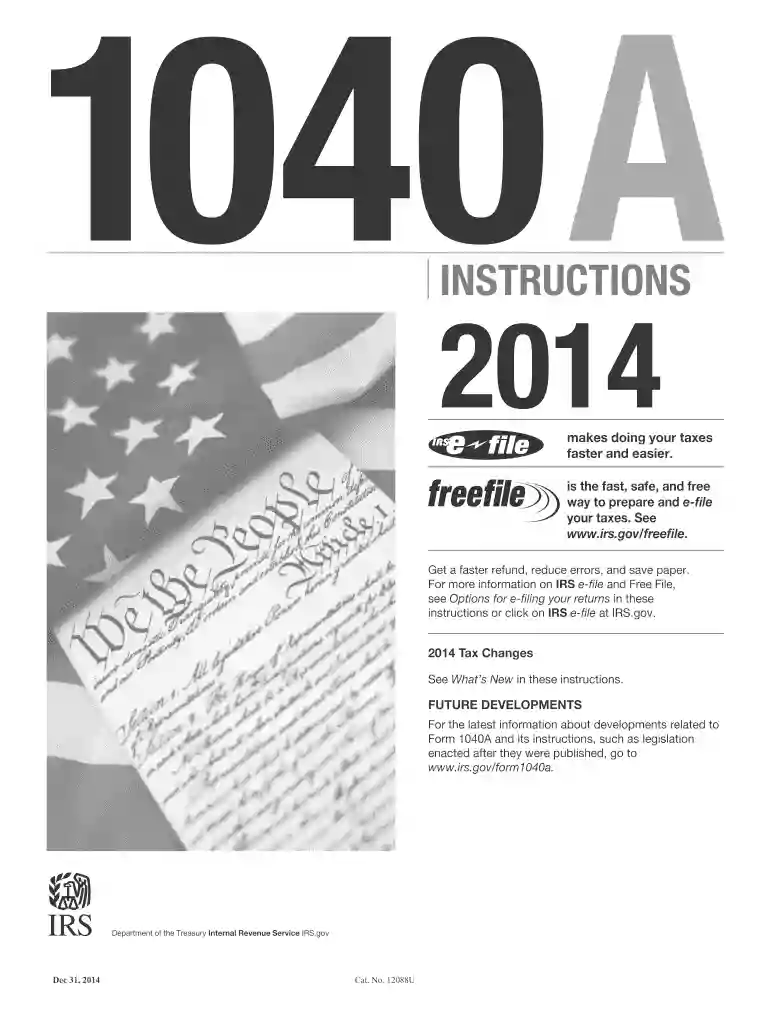
Definition and Meaning
Form 1040A, often referred to as the "short form," was a simplified version of the IRS 1040 form used by U.S. taxpayers to file their annual income tax returns. It was designed for individuals with less complex financial situations who needed to report income, claim credits, and calculate their tax liability efficiently. Form 1040A provided a streamlined approach compared to the more detailed Form 1040, yet it allowed for reporting of various income types, like wages, interest, dividends, and capital gains. It also supported essential credits, such as the child tax credit and education credits, making it a versatile choice for many taxpayers.
How to Use the 2A Instructions Form
- Familiarize with the Form: Start by reviewing the structure of Form 1040A, noting sections such as personal information, filing status, exemptions, and income types.
- Gather Necessary Documents: Collect all income statements, such as W-2s and 1099s, before starting the form to ensure accurate reporting.
- Fill Out Personal Information: Enter your personal details, including your name, address, and Social Security Number, at the top of the form.
- Determine Filing Status: Decide if you will file as Single, Married Filing Jointly, Married Filing Separately, or Head of Household.
- Report Your Income: Accurately enter all income and, if applicable, deductions for your situation. Form 1040A supports basic itemized deductions such as student loan interest.
- Claim Credits and Adjustments: Use the instructions to understand and claim eligible credits, such as the earned income credit, child tax credit, and education credits.
How to Obtain the 2A Instructions Form
- IRS Website: Access the form directly by visiting the IRS official website. Look for archived forms or enter the specific year and form number in the search bar.
- Local IRS Office: Visit a nearby IRS office where printed versions of forms and instructions from past years may be available.
- Online Document Services: Utilize platforms like DocHub that allow access, modification, and download of IRS forms and instructions from a certain year.
- Tax Preparation Software: Many tax software programs archive forms and offer instructional guides from previous years for reference.
Steps to Complete the 2A Instructions Form
- Fill in Personal Information: Include your name, Social Security Number, and dependents.
- Select Your Filing Status: Choose from five filing statuses to determine your tax rate and eligibility for credits and deductions.
- Enter Income: Record taxable income sources accurately, using the instructions to identify where to report different income types.
- Deductions and Adjustments: Use the form to claim basic deductions available to 1040A filers, ensuring all are valid for the 2014 tax year.
- Tax Credits: Apply the instruction form to understand the fine details of credits like the Child Tax Credit and Education Credits.
- Calculate Tax Owed or Refund: Follow the instructions to accurately perform calculations to determine your tax liability or refund.
Key Elements of the 2A Instructions Form
- Personal Information Section: Includes data entry points for taxpayer identification and filing status.
- Exemptions and Dependents: Details exemptions for the taxpayer and qualified dependents.
- Income Reporting: Structured guidance on declaring specific types of income, such as wages and dividends.
- Credit and Tax Information: Information on available tax credits and their required documentation.
- Deduction Details: Guidelines on permissible deductions under the special provisions of Form 1040A, addressing education and family credits.
- Signature Requirements: Emphasizes the importance of taxpayer signatures and dates as per IRS requirements.
Filing Deadlines and Important Dates
- Standard Tax Filing Deadline: April 15, 2015, was the deadline for submitting your 2014 Form 1040A.
- Extension Requests: Taxpayers seeking an extension of time to file must have submitted Form 4868 by April 15 for an automatic six-month extension.
- Amended Return Period: Allows three years from the original filing deadline to submit amendments using Form 1040X, should corrections be necessary for accuracy.
Required Documents
- Income Statements: W-2s for employment income and 1099s for other income sources.
- Documentation for Deductions: Receipts, invoices, or statements justifying itemized deductions.
- Tax Credit Evidence: Required forms and documents indicating eligibility for credits like the education credit or the earned income credit.
- Proof of Payments: Any documentation of estimated payments or credits applicable to the 2014 tax year.
IRS Guidelines
The IRS's primary guidelines centered around accurate and truthful reporting on the 1040A form. It emphasized the importance of ensuring all figures and calculations adhered to the provided instructions. The guidelines include using correct Social Security Numbers, ensuring correct taxpayer identification, adherence to defined income thresholds, and applying credits and deductions with valid substantiation. Non-compliance, such as underreporting income or inappropriately claiming credits, could result in fines, penalties, and additional audits.