
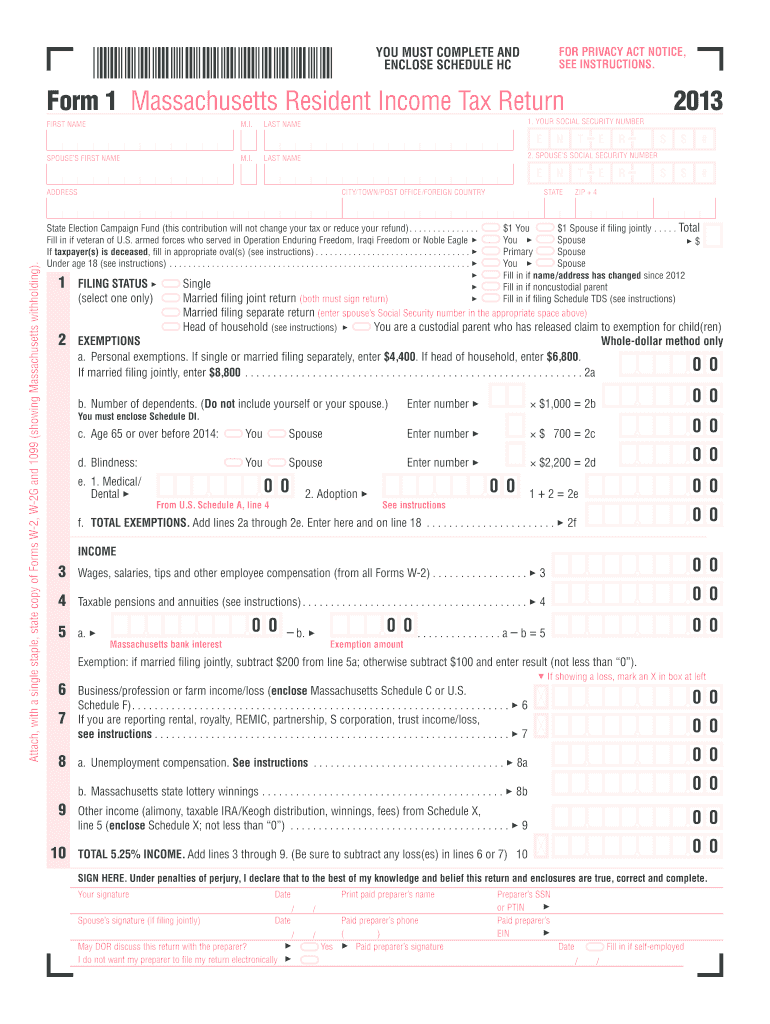







Definition and Meaning
The Massachusetts Resident Income Tax Return (Form 1) from Mass.Gov is a critical document for residents of Massachusetts who are required to report their annual income to the state's Department of Revenue. This form encompasses details related to personal information, income sources, and any applicable deductions, credits, or exemptions. It serves as both a summary of taxable income and a record of taxes paid or owed for the tax year in question. Understanding the intricacies of this form is vital to ensure accurate reporting and compliance with state tax laws.
How to Use the Massachusetts Resident Income Tax Return (Form 1)
Filing the Massachusetts Resident Income Tax Return (Form 1) involves gathering personal and financial information for precise reporting. To use this form effectively:
-
Collect Personal Information: Include details such as your name, Social Security Number (SSN), and residential address in Massachusetts. If married, similar information for your spouse is necessary.
-
Determine Filing Status: Choose your filing status based on your current situation — single, married filing jointly, or separately.
-
Report Income: List all income sources such as wages, dividends, interest, and any other form of earnings.
-
Calculate Deductions, Exemptions, and Credits: Use the form to itemize deductions and claim exemptions or credits to reduce taxable income.
-
Compute Taxes Owed or Refund Expected: Perform the necessary calculations to establish whether you owe additional taxes or are eligible for a refund.
Steps to Complete the Massachusetts Resident Income Tax Return (Form 1)
Completing Form 1 involves a detailed approach to ensure accuracy and compliance:
-
Personal Information Section: Fill out your name, SSN, and filing status.
-
Income Details:
- Report wages and salaries.
- Include interest and dividend income.
- List any self-employment earnings and other income.
-
Adjustments and Deductions:
- Enter deductions like tuition fees if applicable.
- Adjust total income for retirement contributions or health savings.
-
Tax Calculation Section: Calculate state tax owed using the rates provided in the instructions associated with Form 1.
-
Credits and Payments:
- Apply eligible tax credits.
- Add any estimated tax payments made during the year.
-
Signature and Date: Ensure both you and, if applicable, your spouse sign and date the form.
Filing Deadlines and Important Dates
Massachusetts income tax returns using Form 1 must be submitted by April 15th of the following year. If this date falls on a weekend or holiday, the deadline extends to the next business day. It's crucial to meet these deadlines to avoid penalties and interest on unpaid taxes. Be aware of earlier dates if applying for tax refunds or making electronic payments.
Required Documents
When preparing to file the Massachusetts Resident Income Tax Return (Form 1), having the following documents on hand ensures completeness and accuracy:
- W-2 Form(s): For wage and salary information from each employer.
- 1099 Forms: For additional income like dividends, interest, or non-employee compensation.
- Deduction and Credit Documentation: Receipts or statements that verify deductions or credits claimed.
- Previous Year’s Tax Return: Useful for comparing information and ensuring all data is up-to-date.
Form Submission Methods (Online / Mail / In-Person)
Massachusetts residents have multiple options for submitting Form 1:
- Online Filing: Use the state’s Department of Revenue web service for electronic submission. This method offers quick processing and instant confirmation.
- Mailing: Print and send the completed form to the designated mailing address provided in the instructions. Remember to retain proof of mailing.
- In-Person: Visit a local Department of Revenue office to submit the form in person, though this option may vary based on current operations and public health guidelines.
Penalties for Non-Compliance
Failing to file Form 1 can result in significant penalties. These include:
- Late Filing Fee: A percentage of unpaid tax for returns submitted past the deadline.
- Interest Charges: Additional costs on any overdue tax amounts.
- Legal Action: Persistent non-compliance might invite legal repercussions, including liens or wage garnishments.
Adhering to all filing requirements and deadlines is essential to eschew these penalties. Taxpayers should consider an extension if unable to complete the return by the April deadline, although this does not postpone payment obligations.
Software Compatibility (TurboTax, QuickBooks, etc.)
Form 1 can be completed using various tax software applications that streamline the process:
- TurboTax: Guides users through the form, ensuring all income and deductions are appropriately reported.
- QuickBooks: Helpful for small business owners to extract financial data necessary for accurate filing.
- H&R Block Software: Offers tax professionals and individuals resources for detailed form completion.
These software options often have features that allow integration with bank accounts and other financial tools, enhancing accuracy and convenience in preparing your Massachusetts tax return.




