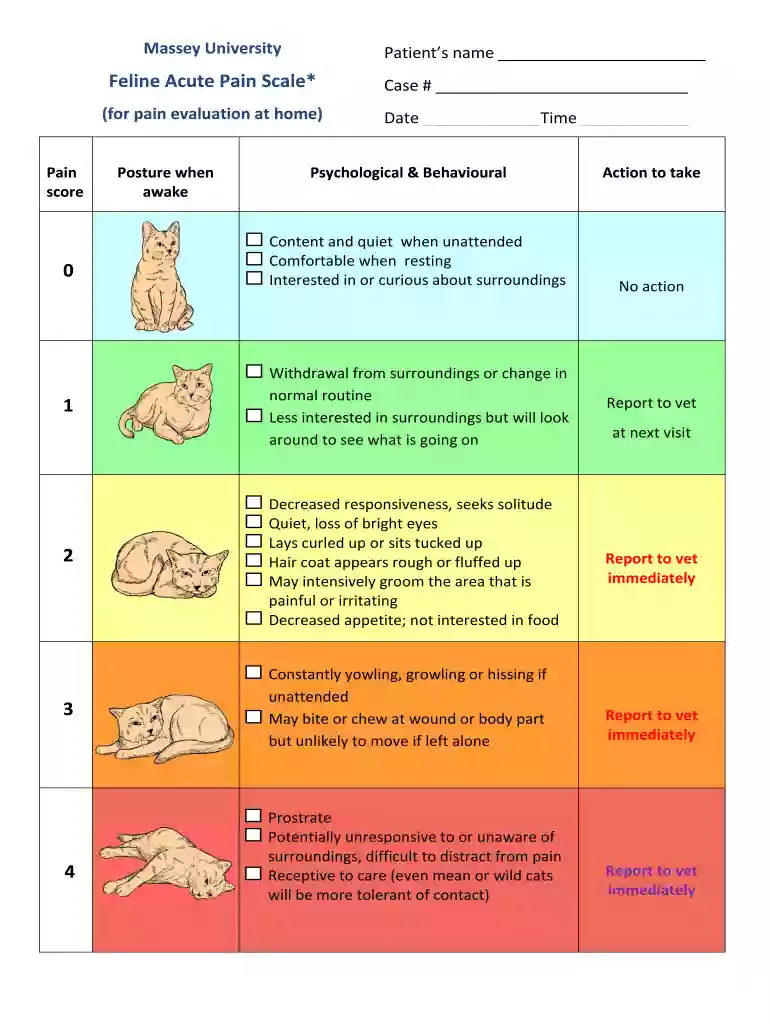
Aaha pain scale 2026

Get Form
aaha pain scale Preview on Page 1

Here's how it works

01. Edit your aaha pain scale online
Type text, add images, blackout confidential details, add comments, highlights and more.

02. Sign it in a few clicks
Draw your signature, type it, upload its image, or use your mobile device as a signature pad.

03. Share your form with others
Send canine pain score via email, link, or fax. You can also download it, export it or print it out.

Understanding the AHA Pain Scale

The AHA pain scale is designed to assess and quantify pain in pets, specifically for use in veterinary settings. This scale helps veterinarians evaluate the severity of pain in their animal patients and guide treatment decisions. It is essential for pet owners as well, as it aids in monitoring their pets’ pain levels at home. The scale generally consists of several categories, each corresponding to different observable signs and symptoms exhibited by an animal.

How to Utilize the AHA Pain Scale

Using the AHA pain scale involves a straightforward yet careful assessment process. Pet owners and veterinary professionals can follow these steps for accurate pain evaluation:

  1. Observe Animal Behavior: Look for changes in how your pet engages in normal activities, such as eating, playing, and interacting with people and other animals.
  2. Assess Physical Changes: Note any physical changes such as limping, stiffness, or changes in posture, which can signal pain.
  3. Use the Scale: Rate your observations on a scale from zero to ten, where zero indicates no pain and ten represents the most severe pain imaginable.
  4. Document Findings: Keep a record of your assessments to share with your veterinarian, ensuring a clear picture of your pet’s pain status over time.

Key Components of the AHA Pain Scale

The AHA pain scale offers several components that allow for a thorough assessment of pain:

  • Behavioral Indicators: Changes in behavior can indicate discomfort or pain. Common signs include aggression, withdrawal, or unusual vocalizations.
  • Physical Examination: Palpation and observation of physical signs, like rapid breathing or elevated heart rate, can help gauge pain severity.
  • Responses to Touch: An animal's reaction to being touched or handled can be indicative of pain levels, especially in previously social pets.

Understanding these key components enables more accurate assessments, resulting in better pain management strategies.

Common Pain Indicators in Animals

Recognizing pain indicators is crucial for utilizing the AHA pain scale effectively. Here are some common signs to be aware of:

  • Vocalizations: Changes in your pet’s vocal patterns can signify pain. Signs may include whimpering, growling, or excessive barking.
  • Altered Posture: Animals in pain may exhibit a hunched posture or position themselves in ways that relieve discomfort.
  • Activity Level: Reduced engagement in play or reluctance to engage in previously enjoyed activities can reflect pain issues.

These observable signs play an essential role in accurately assessing pain levels through the AHA pain scale.

Age and Breed Considerations

Different ages and breeds may exhibit pain differently. For example:

  • Younger Pets vs. Older Pets: Puppies and kittens might display more energy despite being in pain, while older pets may show more obvious signs of discomfort due to arthritis or chronic conditions.
  • Specific Breeds: Certain breeds may be genetically predisposed to specific pain disorders, influencing how they respond on the AHA pain scale.

Understanding these considerations is vital for tailoring assessments to each individual animal.

Long-Term Monitoring and Management

Long-term monitoring of your pet’s pain using the AHA pain scale can significantly enhance management strategies, particularly for chronic conditions. Regular assessments can help:

  • Customize Pain Management: Adjust pain relief medication types or dosages based on the scale's findings.
  • Set Veterinary Appointments: Use data from the scale to determine when a veterinary visit is necessary.
  • Enhance Quality of Life: Regularly gauging pain levels allows for timely interventions that can improve overall well-being.

By utilizing the AHA pain scale for ongoing assessments, pet owners can work collaboratively with veterinarians to ensure their pets remain comfortable and happy.

Case Studies: Effective Use of the AHA Pain Scale

The AHA pain scale has been effectively employed in various case scenarios:

  1. Post-Surgical Recovery: After a surgical procedure, a patient displayed decreased interest in food and socialization. Through the AHA pain scale, the veterinarian determined the need for further analgesics, improving recovery experience.

  2. Chronic Pain Management: An older dog with arthritis experienced fluctuating pain levels, which were tracked over months. Using the AHA pain scale, adjustments to medication were made, allowing the owner to manage pain more proactively.

These case studies illustrate the practical utility of the AHA pain scale in ensuring comprehensive pain management for pets.

be ready to get more

Complete this form in 5 minutes or less

Get form

Got questions?

We have answers to the most popular questions from our customers. If you can't find an answer to your question, please contact us.
Contact us

Sure, electronically drawing your signature is acceptable, but only if you use a tool that complies with industry regulations and policies. Consider DocHub, which guarantees eSignature validity under ESIGN and UETA requirements. All you need to approve your aaha pain scale electronically is an account with DocHub and an internet connection. When you open your file in our editor, click Sign and choose the Draw tool.

When you edit your aaha pain scale with DocHub, you will not need to look for other software or solutions to sign it. An electronic signature is a component of DocHub’s extensive editing toolset, which allows you to implement changes in your form without switching between platforms. Simply complete your form, double-check the correctness of the information and place your electronic signature at the end to make it submission-ready in minutes.

4 = Moderate pain. If you are involved in an activity, youre able to ignore the pain for a while. But it is still distracting.
Numeric rating scales (NRS) This pain scale is most commonly used. A person rates their pain on a scale of 0 to 10 or 0 to 5. Zero means no pain, and 5 or 10 means the worst possible pain. These pain intensity levels may be assessed upon initial treatment, or periodically after treatment.
The pain score is the sum of the rank scores, with a maximum score of 24 (20 if mobility is impossible to assess). The total score is a useful indicator of analgesic requirement; the recommended analgesic intervention level is 6/24 (or 5/20).

Security and compliance

At DocHub, your data security is our priority. We follow HIPAA, SOC2, GDPR, and other standards, so you can work on your documents with confidence.

Learn more
ccpa2
pci-dss
gdpr-compliance
hipaa
soc-compliance

People also ask

4 Moderate pain. If you are deeply involved in an activity, it can be ignored for a period of time, but is still distracting. 5 Moderately strong pain. It cant be ignored for more than a few minutes, but with effort you still can manage to work or participate in some social activities.
Pain Score: 4 Psychological and Behavioral Signs: The dog groans or screams continuously when unattended, may bite or chew at the wound, and is potentially unresponsive to its surroundings. It may be difficult to distract the dog from its pain.
Scores are interpreted as follows: 0: Relaxed and comfortable. 1 to 3: Mild discomfort. 4 to 6: Moderate pain.
The CBPI asks owners to assign a score to 11 domains. Four domains involve pain severity: the owner assigns a numerical rating score of 0 (no pain) to 10 (severe pain) to the pets Worst, Least, Current, and Average pain over the previous 7 days.
The Visual Analogue Scale (VAS), Numerical Rating Scale (NRS), Verbal Rating Scale (VRS), and the Faces Pain Scale-Revised (FPS-R) are among the most commonly used measures of pain intensity in clinical and research settings.

Related links