




01. Edit your no longer employed verification letter template word online
Type text, add images, blackout confidential details, add comments, highlights and more.

Type text, add images, blackout confidential details, add comments, highlights and more.

Draw your signature, type it, upload its image, or use your mobile device as a signature pad.

Send last day of employment verification letter via email, link, or fax. You can also download it, export it or print it out.
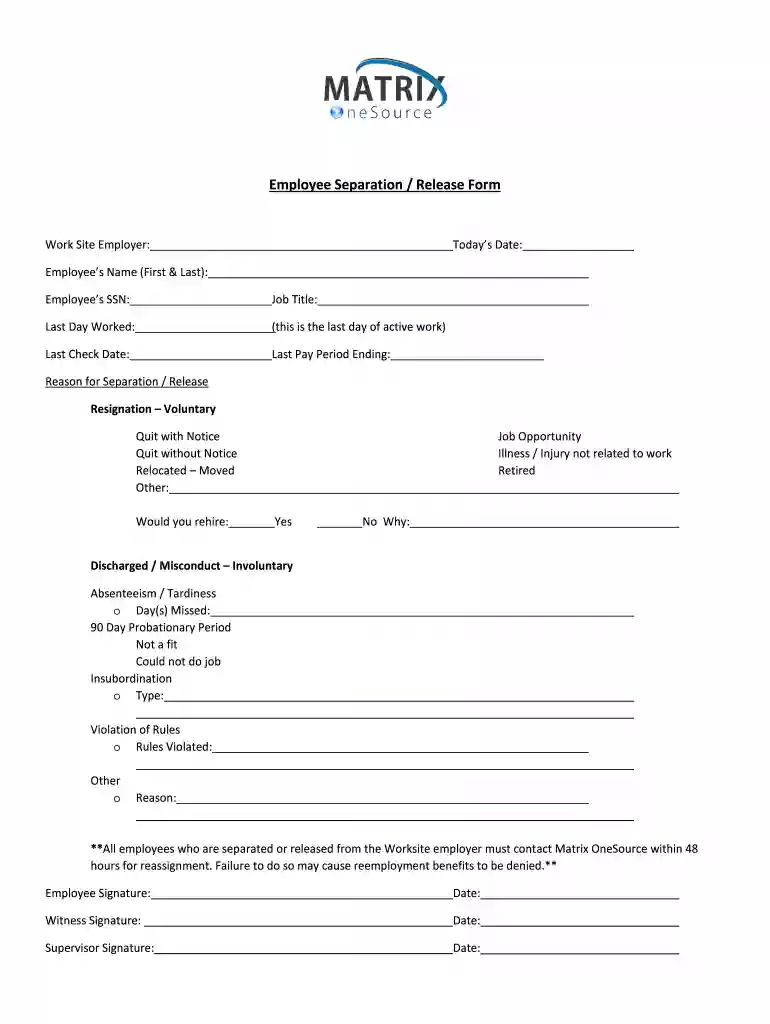
The end of employment verification form is a crucial document used to officially confirm the details surrounding an employee's departure from a company. This form serves both employees and employers, providing a structured method to document the separation process. It typically captures essential information such as the employee’s name, job title, the last working day, reasons for separation, and rehire eligibility.
Employers use this form to maintain accurate records and ensure compliance with legal conventions regarding employment termination. For employees, it acts as an official record that can be presented for various purposes such as applying for unemployment benefits, verifying employment history, or seeking new job opportunities.
Using the end of employment verification form efficiently involves several steps. Here’s a structured approach to ensure clarity and accuracy:
Gather Necessary Information: Collect all relevant details about the employee, including their full name, job title, last day of employment, and the reason for separation. It is also important to determine if the employee is eligible for rehire.
Complete the Form: Use a standardized template to fill out the form. Ensure all fields are accurately completed. If using digital forms, utilize tools that allow for easy input and signing.
Provide Necessary Signatures: Once the form is filled, it should be signed by both the employer representative and the employee (if applicable), ensuring both parties acknowledge the information.
Distribute Copies: After completion, distribute copies of the signed form to relevant parties. This includes the employee, HR department, and any other departments that may require the information.
Store for Future Reference: Keep the completed form in the employee's personnel file for future reference. This can be useful for both record-keeping and any future inquiries regarding the employment history.
Accessing the end of employment verification form can be straightforward. Here are several avenues to acquire a copy:
Company HR Department: The first point of contact should be the human resources department of the organization. They can provide the official form or template used within the company.
Online Templates: Many HR websites and online document platforms, such as DocHub, offer templates that can be downloaded and customized. Ensure that the template complies with applicable laws and company policies.
State Employment Agencies: Some state websites may provide standard forms that employers can utilize. This is particularly useful for compliance with state-specific regulations regarding employment verification.
Legal Resources: For companies seeking to ensure legal compliance, consulting with a legal advisor or employment law resource may result in obtaining a validated version of the form.
Completing the end of employment verification form requires attention to detail and accurate information. Here is a concise guide on how to accomplish this:
Identify the Employee: Record the employee's full legal name and job title. Verify this information to ensure accuracy.
Specify Employment Details: Clearly state the last working day. This date is significant for both payroll processing and eligibility for benefits.
Detail the Reason for Separation: Provide a concise explanation for the employee's departure. This could range from voluntary resignation to termination due to company restructuring.
Rehire Eligibility: Include a section indicating whether the employee is eligible for rehire. This is important for future employment considerations and transparency.
Signatures and Date: Once all sections are completed, ensure that both the employer and employee (if applicable) sign and date the form. This finalizes the document and confirms mutual agreement on the information provided.
The effectiveness of the end of employment verification form hinges on several key elements that must be meticulously documented:
Employee Identification: Basic personal details such as name and contact information enhance the clarity of records.
Job Title and Department: Including these details helps contextualize the employee's role within the organization.
Termination Date: Precise identification of the last working day is critical for both records and potential benefits.
Reason for Termination: This section outlines the circumstances of the employment separation, which is particularly useful for documentation and compliance.
Rehire Eligibility: Clearly stating whether the employee is eligible for rehire can prevent confusion in future employment consideration.
By detailing these key elements, employers ensure that the form serves its purpose effectively, aiding both the company's and the employee's future endeavors.
The end of employment verification form serves multiple purposes, making it beneficial for various stakeholders:
Unemployment Benefits: Employees can present this form when applying for unemployment benefits, providing official verification of their job loss status.
New Job Applications: Prospective employers may request a verification letter to confirm past employment, using the end of employment verification form as a reference.
Loan Applications: Financial institutions often require proof of employment and income, and this form can serve as a reliable source of employment status.
Legal Compliance: Companies must maintain accurate records for compliance with labor laws, making this form integral to their documentation processes.
Understanding the utility of the end of employment verification form enhances its importance in employment practices, supporting both employee rights and organizational responsibilities.
With the advancement of technology, organizations often choose between a digital or paper version of the end of employment verification form. Both formats have their merits:
Digital Version:
Paper Version:
Selecting between a digital or paper version depends on organizational preferences, the specific needs of stakeholders, and relevant legal frameworks governing employment practices.
We've got more versions of the no longer employed verification letter template word form. Select the right no longer employed verification letter template word version from the list and start editing it straight away!
At DocHub, your data security is our priority. We follow HIPAA, SOC2, GDPR, and other standards, so you can work on your documents with confidence.
Dec 9, 2025 How to Submit Your Request. To determine who to contact to obtain employment verification information, select the appropriate choice below.Read more
May 2, 2017 If you file more than one type of employment tax form, group Forms W-2 of the same type with a separate Form W-3 for each type, and send them in.Read more


