CONSUMER TO BUSINESS 2026

Get Form
CONSUMER TO BUSINESS Preview on Page 1

Here's how it works

01. Edit your form online
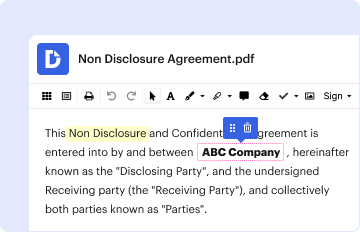
Type text, add images, blackout confidential details, add comments, highlights and more.

02. Sign it in a few clicks
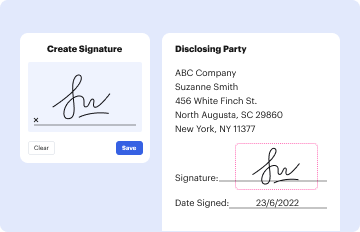
Draw your signature, type it, upload its image, or use your mobile device as a signature pad.
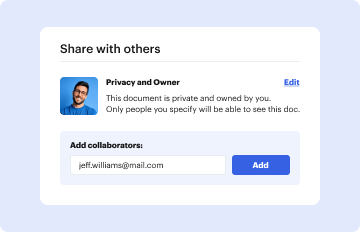
03. Share your form with others
Send it via email, link, or fax. You can also download it, export it or print it out.

How to use or fill out CONSUMER TO BUSINESS with our platform

Form edit decoration
9.5
Ease of Setup
DocHub User Ratings on G2
9.0
Ease of Use
DocHub User Ratings on G2
  1. Click ‘Get Form’ to open the CONSUMER TO BUSINESS application in the editor.
  2. Begin with Part A, where the Outgoing Customer lists all services to be transferred. Ensure you have your account numbers ready, which can be found on your latest bill.
  3. Specify whether you want to transfer all services or individual ones. If transferring individual services, list their numbers accordingly.
  4. Fill in the Transfer Date, ensuring it is at least 7 working days from submission.
  5. In Part B, provide details of the Outgoing Customer including full name, contact information, and billing address. Make sure this information is accurate for smooth processing.
  6. Proceed to Part C for Incoming Customer details. If they are an existing Telstra customer, complete Section 1; otherwise, fill out Section 2 for new customers.
  7. Finally, complete Part D by providing identification documentation as required and ensure all sections are signed before submitting via email or fax.

Start using our platform today to streamline your document editing and signing process for free!

See more CONSUMER TO BUSINESS versions

We've got more versions of the CONSUMER TO BUSINESS form. Select the right CONSUMER TO BUSINESS version from the list and start editing it straight away!
Versions Form popularity Fillable & printable
2015 4.3 Satisfied (48 Votes)
2013 4.8 Satisfied (63 Votes)
be ready to get more

Complete this form in 5 minutes or less

Get form

Got questions?

We have answers to the most popular questions from our customers. If you can't find an answer to your question, please contact us.
Contact us
C2C websites provide private individuals with an opportunity to sell or purchase goods directly. Example- Ebay, OLX. C2B-A consumer to business model here a consumer sells goods to a company (mostly used goods).
Examples of how consumer to business works Here are some example scenarios of C2B: A food blogger who shares an affiliate link to a kitchen companys cooking products on their blog. A tech blogger who displays a companys service ads to their audience in exchange for a cut of the ad revenue.
Cross-border consumer-to-business (C2B) payments are transactions where an individual in one country pays a business in another country.
Examples of how consumer to business works Social media users who fill out surveys on Five Surveys or promote products and services. Large e-commerce websites or sellers who pay or otherwise reward consumers for reviewing their products or when they share a review on their personal social media.
What does C2B mean? C2B means consumer to business. It is a commerce model where consumers provide various products or services to businesses. Through the C2B model, businesses obtain information from their consumers to produce high-quality goods and services.

People also ask

Consumer-to-Business (C2B)*: These payments are made by an individual to a business. For example, paying the grocery store for groceries, paying a bill or paying a salon for a haircut.
What does C2B (consumer-to-business) mean? C2B is the abbreviation for consumer-to-business. This business model is the inverted version of the far more commonly known B2C model (business-to-consumer). In a B2C model private customers are contacting companies on special C2B platforms to offer them their services.
Consumer-to-business, or C2B, is a type of business model where the customer provides a service or product to the business. This is the reverse of the typical business-to-consumer model (or B2C), in which a company provides a service to customers through the sale of goods and services.

Related links