
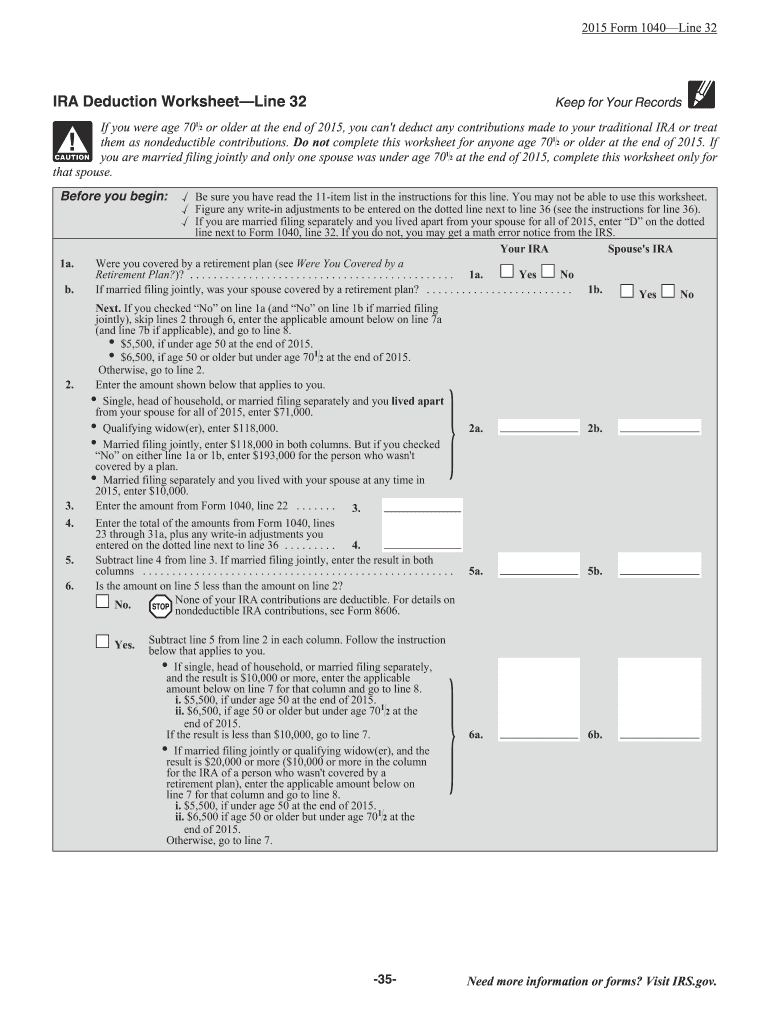







Definition and Purpose of the IRA Deduction Worksheet 2022
The IRA Deduction Worksheet for 2022 is a crucial tool for taxpayers who contribute to a traditional Individual Retirement Account (IRA). This worksheet allows individuals to determine the deductibility of their contributions when filing their federal income tax returns. The IRS uses specific criteria, such as income limits and filing status, to guide taxpayers through the deduction process.
- Contribution Limits: For 2022, individuals can contribute up to six thousand dollars to their IRAs, or seven thousand dollars if they are age fifty or older. Understanding these limits is essential for optimizing tax benefits.
- Eligibility Factors: The worksheet considers whether the individual is covered by a workplace retirement plan, which can affect the deduction. This distinction is crucial as it dictates how much of your contribution may be deductible.
By completing this worksheet, taxpayers can accurately calculate their allowable deductions, ensuring compliance with IRS requirements and maximizing potential tax savings.
Instructions for Using the IRA Deduction Worksheet 2022
Using the IRA Deduction Worksheet involves several key steps intended to guide users through the computation of their deductible contributions.
- Gather Required Information: Before starting the worksheet, gather necessary personal information, including your filing status and total income.
- Assess Coverages: Determine if you or your spouse are covered by an employer-sponsored retirement plan. This step is essential, as it directly impacts the deductibility of your IRA contributions.
- Complete the Worksheet: Input your income figures and filing status into the respective fields on the worksheet. Follow the instructions carefully, as the flow feeds into subsequent calculations that determine your deduction limits.
- Calculate Deductible Amount: Based on your inputs, the worksheet will guide you to calculate your maximum deductible amount, which may vary depending on your circumstances.
Completing these steps accurately will help ensure that you take full advantage of potential tax benefits associated with your IRA contributions.
Who Should Use the IRA Deduction Worksheet 2022
The IRA Deduction Worksheet is beneficial for a wide range of taxpayers, particularly those who are planning for retirement.
- Employees with IRAs: Individuals contributing to a traditional IRA while also covered by a workplace retirement plan will find this worksheet helpful.
- Self-Employed Individuals: Self-employed taxpayers without access to a company-sponsored retirement might benefit significantly from the deductions.
- Spouses: When one partner is covered by an employer plan, both spouses should assess their eligibility to use the worksheet jointly, especially if they file a joint return.
- Low to Moderate Income Earners: Those who earn below specific thresholds may qualify for full deductibility.
Identifying your eligibility umbrella can aid in proper completion and maximize potential deductions.
Key Elements to Consider in the IRA Deduction Worksheet 2022
Understanding the critical elements of the IRA Deduction Worksheet ensures accurate completion and compliance with IRS guidelines.
- Filing Status: Your filing status can affect your contribution limits. For example, single filers have different thresholds compared to married couples filing jointly.
- Income Limits: There are adjusted gross income (AGI) thresholds that dictate the deductibility of contributions. For instance, higher-income individuals may face reduced or zero deductibility.
- Retirement Plan Coverage: Being part of an employer plan will necessitate specific calculations. It is important to differentiate between taxpayer coverage and that of a spouse.
- Contribution Timing: Contributions made up until tax-filing deadlines can count for the prior tax year, thus strategically adjusting the deductions.
These elements collectively influence how the worksheet operates and the amount of contribution that a taxpayer can legally deduct.
IRS Guidelines and Legal Framework for the IRA Deduction Worksheet 2022
The IRA deduction process follows strict IRS guidelines aimed at safeguarding the revenue system and ensuring fairness in taxpayer reporting.
- Compliance with the Tax Code: The IRS stipulates adherence to the Internal Revenue Code in defining eligibility and allowed deductions. Taxpayers must follow these regulations when filling out the worksheet.
- Document Retention: It is crucial for individuals to maintain all documentation related to their IRA contributions, including bank statements and records of any previous returns that may affect current calculations.
- Understanding Penalties: Non-compliance with reporting contributions accurately can lead to penalties. Familiarizing oneself with these repercussions can encourage thorough and honest reporting.
Adhering to these guidelines helps maintain integrity in the tax reporting process, minimizing the likelihood of unwarranted audits or penalties.
Examples of Completing the IRA Deduction Worksheet 2022
Real-world scenarios can illustrate how the IRA Deduction Worksheet is used effectively by taxpayers in various situations.
- Example of a Single Filer: A single taxpayer earning fifty thousand dollars and contributing six thousand dollars to a traditional IRA can use the worksheet to confirm full deductibility since their income is below the threshold.
- Example of a Married Couple: A married couple, where one spouse contributes to a 401(k) plan and the other makes traditional IRA contributions exceeding the income limit, can determine the deductible portion using the worksheet.
- Example of a Self-Employed Individual: A self-employed individual without retirement plan coverage may contribute up to the maximum limit and utilize the worksheet to claim the entire amount as deductible, provided their income qualifies.
These examples underscore the adaptability of the worksheet across diverse filing situations, solidifying its utility.
Filing Deadlines and Important Dates for the IRA Deduction Worksheet 2022
Timely filing is critical for ensuring that taxpayers maximize their deductions.
- Tax Filing Deadline: Traditionally, the deadline for submitting a federal income tax return for the 2022 tax year is April fifteen of the following year, unless extended.
- Contribution Deadline: Contributions to a traditional IRA for the 2022 tax year must also be made by the tax filing deadline, allowing taxpayers to adjust last-minute contributions for maximum benefit.
- Amendments: Taxpayers needing to amend their returns to correct or clarify deductions can do so within three years of the filing date, under scrutiny from the IRS.
Awareness of these dates enables taxpayers to plan effectively, ensuring that all contributions and forms are submitted within appropriate timeframes.




