




01. Edit your hemocue glucose 201 quality control log sheet online
Type text, add images, blackout confidential details, add comments, highlights and more.

Type text, add images, blackout confidential details, add comments, highlights and more.

Draw your signature, type it, upload its image, or use your mobile device as a signature pad.

Send glucometer quality control log template via email, link, or fax. You can also download it, export it or print it out.
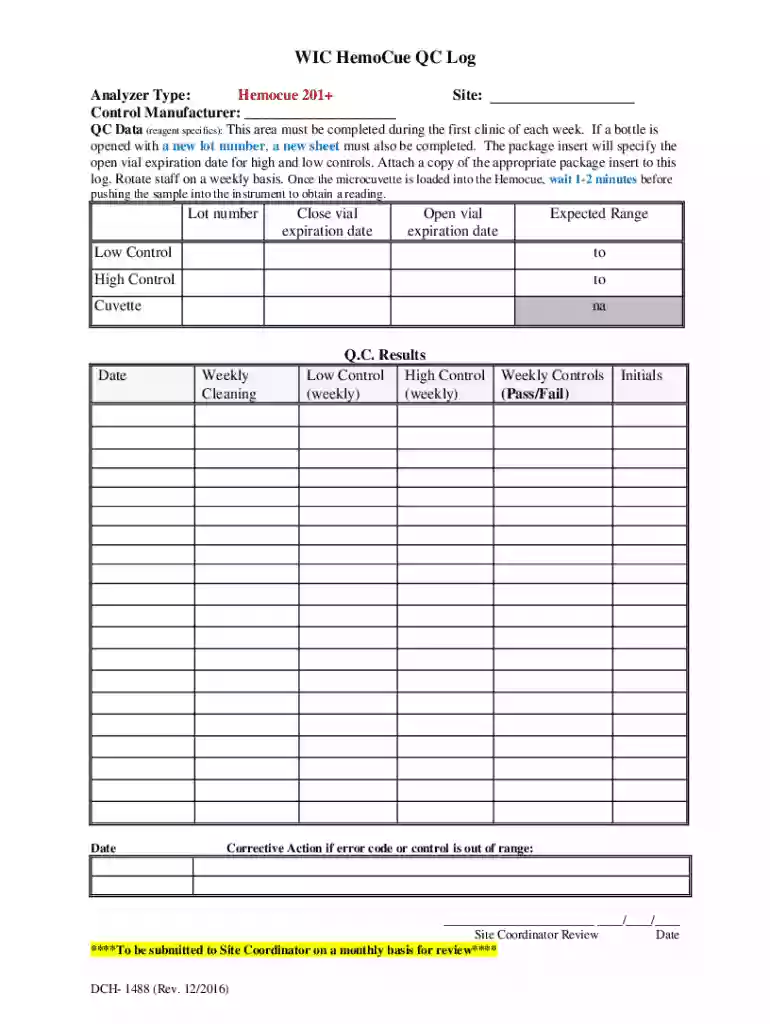
The Hemocue Glucose 201 Quality Control Log Sheet is a crucial document for accurately recording and monitoring quality control data specific to the Hemocue Glucose 201 analyzer. This log serves to ensure that the testing equipment maintains its reliability and performance standards. Clinical settings typically utilize this log sheet to document vital information, which aids in regulatory compliance and operational efficiency.
Maintaining a quality control log sheet serves multiple purposes, including:
By properly utilizing the Hemocue Glucose 201 Quality Control Log Sheet, healthcare professionals can ensure optimal performance and reliability of their glucose testing procedures.
Using the Hemocue Glucose 201 Quality Control Log Sheet effectively involves systematic documentation and careful adherence to best practices.
Document Lot Numbers and Expiration Dates: Begin by recording the lot numbers and expiration dates of the control reagents used in the Hemocue Glucose 201 analyzer. This information is critical for validating the accuracy of test results.
Enter Control Measurements: After performing quality control tests, enter the control glucose values in the log sheet. It is important to record both the expected ranges and the observed results, as this information is vital for trend analysis.
Perform Weekly Cleaning and Maintenance: Document any routine maintenance and cleaning procedures that are conducted on the analyzer. Regular maintenance helps extend the life of the device and ensure continued accuracy.
Staff Rotation Records: To maintain objectivity, consider rotating staff responsible for quality control checks. Document any changes in staff to ensure accountability within your quality control process.
Monthly Review of Data: Conduct a monthly review of the documented data. This review should be performed by the Site Coordinator or a designated staff member to ensure compliance with quality assurance protocol.
Implementing these steps not only enhances the reliability of the Hemocue Glucose 201 analyzer but also fosters a culture of safety and accuracy within the clinical setting.
Essential components of the Hemocue Glucose 201 Quality Control Log Sheet encompass various aspects that are pivotal to maintaining quality control standards.
These components not only facilitate uniformity in testing but also provide valuable data for compliance and auditing.
The use of the Hemocue Glucose 201 Quality Control Log Sheet is subject to certain regulatory compliance measures.
In case of an audit, having a well-maintained quality control log sheet serves as legal documentation that your facility adheres to necessary testing standards and procedures. This protects both the healthcare provider and patients from potential liabilities.
Practical examples can elucidate the importance and application of the Hemocue Glucose 201 Quality Control Log Sheet.
Incorrect Control Values: If quality control samples consistently yield results outside the expected range, documentation can pinpoint recurring trends, allowing staff to investigate potential causes, such as expired reagents or equipment malfunctions.
Maintenance Records Integration: When troubleshooting performance issues with the Hemocue Glucose 201 analyzer, referring back to documented maintenance records alongside quality control results can help identify if recent maintenance correlated with a dip in performance.
In a clinical laboratory setting, for instance, if a new staff member is assigned to quality control testing, having a clearly defined log sheet will not only guide them through the process but also provide a comprehensive historical record that can be referenced to establish norms and identify anomalies.
By maintaining detailed records on the Hemocue Glucose 201 Quality Control Log Sheet, clinical settings ensure consistent patient monitoring and contribute to overall healthcare effectiveness.
We've got more versions of the hemocue glucose 201 quality control log sheet form. Select the right hemocue glucose 201 quality control log sheet version from the list and start editing it straight away!
Signing paperwork on a mobile device is fast, straightforward, and doesn’t require software installation if you have an account with DocHub. Sign in from any browser, complete your blank fields with your information, and click on Sign → Create your signature. You can draw your electronic signature just as you usually do on paper, add its image to your free printable glucometer quality control log, or type in your name and stylize its look. Whatever option you choose, your documentation will be valid.
If you need to edit your hemocue hemoglobin quality control log online easily, it does not matter what web browser you employ. DocHub’s straightforward editing tools are available using any internet browser. Simply open the appropriate tab within our editor, add your file, and fill it out without stress.
At DocHub, your data security is our priority. We follow HIPAA, SOC2, GDPR, and other standards, so you can work on your documents with confidence.


