
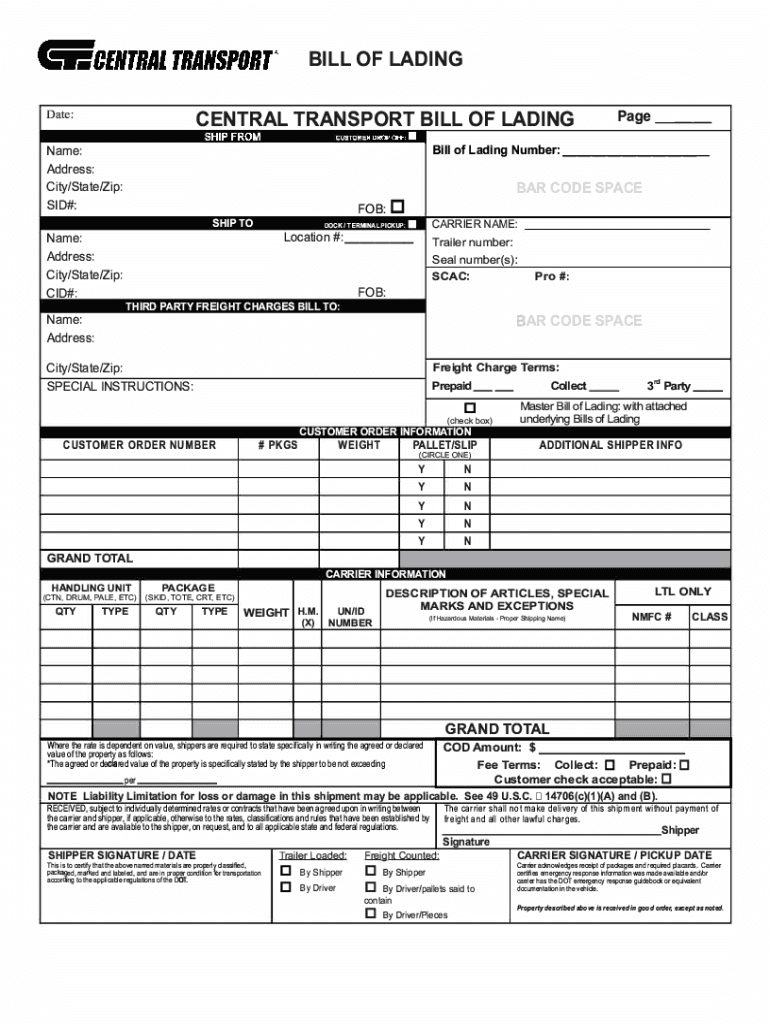







Definition and Meaning of Transport Bilty Format in Excel
The term "transport bilty format in excel" refers to a standardized template used in the transportation industry for documenting the details of goods being transported. A bilty is essentially a delivery receipt, serving as a proof of the cargo being loaded onto a vehicle. It includes critical information such as the senders and receivers’ names, addresses, details of the goods, transportation charges, and liability clauses.
This format, specifically in Excel, is advantageous due to its structured nature, which allows for easy entry, modification, and calculation of relevant data. By using Excel, users can automate calculations, including total freight charges and taxes, ensuring accuracy and efficiency in logistics management.
Additionally, transport bilty formats help in maintaining consistency across documentation within transportation companies and when dealing with different stakeholders, including drivers, receivers, and businesses. This consistency is essential for compliance with legal and regulatory standards that govern the transportation of goods.
How to Use the Transport Bilty Format in Excel
Using the transport bilty format in Excel involves several steps designed to ensure accurate and effective documentation.
-
Open a Template: Start by opening a pre-designed Excel template that fits the required format. This can often be located through various platforms that provide free or paid templates.
-
Input Sender and Receiver Information: Collect the basic details, including names, addresses, and contact numbers of both the sender and the receiver. It is critical to ensure accuracy as these details are used for communication and accountability.
-
Detail the Cargo: Enter the specifics of the cargo, including quantity, description, weight, and dimensions. Logistical details are vital for transportation and can affect the pricing structure.
-
Include Transportation Charges: Accurately calculate and enter all freight charges, including base rates, additional fees for special handling, and any applicable taxes.
-
Review and Save: Before finalizing, review all details for accuracy. After verification, save the document in a secure format that facilitates sharing, such as PDF or maintaining it in Excel format for further edits.
How to Obtain the Transport Bilty Format in Excel
To obtain the transport bilty format in Excel, consider these methods:
-
Online Templates: Numerous websites offer downloadable templates specifically designed for transportation documentation. Ensure to select a template that meets the specific requirements of your industry.
-
Software Applications: Some logistics management software packages include built-in charters and templates for creating transport bili formats. Utilize software that integrates with your broader organizational systems for seamless documentation.
-
Create a Custom Format: If existing templates do not fulfill your needs, consider designing your own format. Start with a blank Excel sheet, adding necessary fields such as sender/receiver information, cargo details, charges, and spaces for signatures.
Steps to Complete the Transport Bilty Format in Excel
Completing the transport bilty format in Excel involves systematic steps to ensure the accuracy and completeness of the document. Prioritize each point:
-
Set Up Document Structure: Create separate sections for sender information, receiver details, cargo description, transportation charges, and any additional notes.
-
Input Data: Fill in the data methodically, ensuring each entry aligns with its categories. Data integrity is key, so double-check entries as they are inputted.
-
Use Formulas for Calculations: Implement Excel’s formulas to automate calculations for totals. This reduces manual errors and enhances efficiency.
-
Include Terms and Conditions: Clearly state any terms, conditions, or liability clauses related to the transport. This adds a layer of legal protection for all parties involved.
-
Final Review: Complete a thorough review of all information for accuracy and completeness before finalizing.
Important Terms Related to Transport Bilty Format in Excel
Understanding key terms associated with the transport bilty format is crucial for effective documentation. These terms include:
-
Bilty: A document serving as a proof of transport and receipt for goods.
-
Sender: The individual or organization shipping the goods.
-
Receiver: The individual or organization receiving the goods.
-
Cargo: Goods carried for commercial gain.
-
Freight Charges: The costs associated with transporting the cargo, which may include base rates and additional surcharges.
-
Liability Clause: Legal statements that define responsibilities and protections regarding loss or damage during transport.
Familiarizing oneself with these terms ensures clarity in communication and adherence to industry norms.
Key Elements of the Transport Bilty Format in Excel
Several key elements are fundamental to the effective use of the transport bilty format in Excel:
-
Sender Information: Name, address, contact information, and any identification numbers.
-
Receiver Information: Similarly detailed information for the recipient is necessary to facilitate the delivery process.
-
Cargo Description: Detailed descriptions including type of goods, weight, volume, and any hazardous nature should be specified.
-
Transport Details: Include mode of transport, vehicle registration details if applicable, and journey specifics.
-
Charges and Payment Details: Itemized freight charges including breakdowns for clarity, payment terms, and due dates.
These elements create a comprehensive record, essential for both operational efficiency and legal compliance.
Examples of Using the Transport Bilty Format in Excel
The transport bilty format can be utilized in various scenarios within the logistics and transportation sector:
-
Freight Forwarding: A freight forwarding company can use the bilty to track shipments for clients, ensuring timely delivery and proof of transport.
-
Warehouse Distribution: Companies handling the distribution of goods can implement bilty formats to document the movement of products from warehouses to retail locations.
-
E-Commerce Shippers: Online businesses shipping goods to customers can use this format to manage orders and provide customers with proof of shipment.
The versatility of the transport bilty format makes it an invaluable tool across various sectors in the logistics industry.


