




Here's how it works
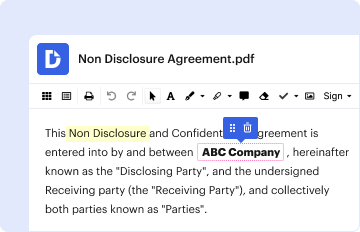
01. Edit your case study consent form online
Type text, add images, blackout confidential details, add comments, highlights and more.
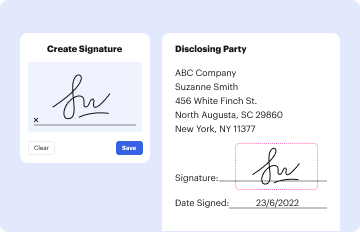
02. Sign it in a few clicks
Draw your signature, type it, upload its image, or use your mobile device as a signature pad.
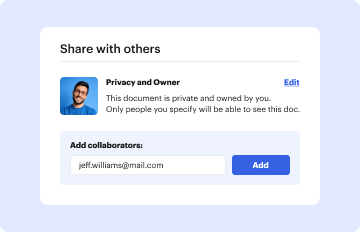
03. Share your form with others
Send it via email, link, or fax. You can also download it, export it or print it out.
How to use or fill out case study consent form with our platform

- Click ‘Get Form’ to open the case study consent form in the editor.
- Read the introductory section carefully. If you have any questions, reach out to your Training Provider for clarification before proceeding.
- In the first checkbox, confirm your understanding of the case study procedure as explained by your Training Provider by clicking to agree.
- Next, indicate your willingness to participate in the case study process by checking the corresponding box.
- Agree to have your photograph taken during this process by selecting the appropriate option.
- Confirm that you are open to being contacted by a member of the External Communications team at Skills Development Scotland (SDS) regarding your experience.
- Acknowledge that your case study may be used across various media outlets and internal communications by checking the final box.
- Finally, provide your signature, name in block capitals, and date at the bottom of the form before submitting it.
Start filling out your case study consent form online for free today!
Fill out case study consent form online
It's free
It's free
See more case study consent form versions
We've got more versions of the case study consent form form. Select the right case study consent form version from the list and start editing it straight away!
| Versions | Form popularity | Fillable & printable |
|---|---|---|
| 2014 | 4.4 Satisfied (53 Votes) |
Got questions?
We have answers to the most popular questions from our customers. If you can't find an answer to your question, please contact us.
Contact us
How do you write a consent form?
Follow these steps to write an effective consent form. Step 1: Title and introduction. Step 2: Description of the activity. Step 3: Risks and benefits. Step 4: Confidentiality and data handling. Step 5: Voluntary participation and withdrawal. Step 6: Consent statement. Step 7: Signature and date. Step 8: Contact information.
What is a consent form in research?
A document with important information about a medical procedure or treatment, a clinical trial, or genetic testing. It also includes information on possible risks and benefits. If a person chooses to take part in the treatment, procedure, trial, or testing, he or she signs the form to give official consent.
What is an example of informed consent for a study?
I participant name, agree to participate or agree to participation of my child participant name in the research project titled project title, conducted by researcher(s) name who has (have) discussed the research project with me. I have received, read and kept a copy of the information letter/plain language statement.
How to get consent for a case study?
Go to Instructions for Authors and then Patient Consent to find the consent form they use. You can create a similar form to obtain consent from your patient. If you have identified a journal already, please consult their requirements and determine if they have a specific consent form they would like you to use.
What is an example of a consent form?
I have read and I understand the provided information and have had the opportunity to ask questions. I understand that my participation is voluntary and that I am free to withdraw at any time, without giving a reason and without cost. I understand that I will be given a copy of this consent form.
Security and compliance
At DocHub, your data security is our priority. We follow HIPAA, SOC2, GDPR, and other standards, so you can work on your documents with confidence.
Learn more


People also ask
How do you write a research consent form example?
I, .., consent to participate in the above research project. I understand that my involvement is voluntary and my responses will be confidential. Ticking the Yes box below indicates that, having read the information provided, you give your consent.
What is the consent form of a study?
A consent form is not simply about a person giving you permission to involve them in research, it is an agreement between the researcher and the research participant outlining the roles and responsibilities they are taking towards one another throughout the whole of the research process.