






Understanding Repair Form Orders
Repair form orders are essential documents used in the automotive repair industry to authorize repairs to vehicles, outline the work to be done, and specify costs for labor and parts. These forms play a vital role in ensuring transparency and accountability between repair shops and their customers. They serve as a legal contract, helping to protect both parties involved in the transaction.
Key Components of Repair Form Orders
A comprehensive repair form order includes several critical elements:
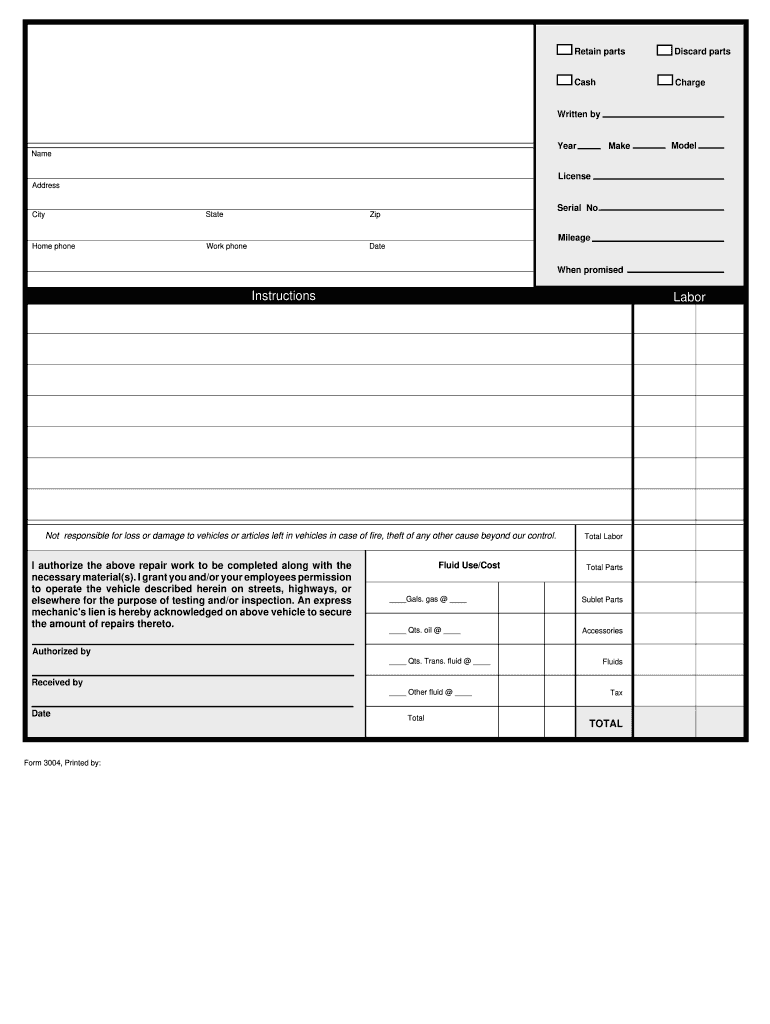
- Customer Information: This section captures the customer's name, contact details, and any specific instructions they may have regarding the repairs.
- Vehicle Details: Essential information about the vehicle, such as make, model, year, and VIN (Vehicle Identification Number), ensures that the repair shop has precise data regarding the item in question.
- Repair Description: This area provides a detailed list of the repairs needed, including specific issues and any necessary parts.
- Labor and Parts Costs: An itemization of labor hours, rates, and the cost of parts is crucial for outlining how much the customer can expect to pay.
- Authorization Statement: A section where the customer signs to authorize the repairs, indicating they agree to the terms and costs outlined in the document.
The Importance of Authorizing Work Before Repairs
One of the fundamental aspects of repair form orders is the authorization process. A signed repair form protects the repair shop by documenting the customer's consent to perform specific work. This clause reduces disputes regarding unauthorized repairs and ensures that the customer is fully informed before any work begins.
- Preventing Disputes: With a clear authorization in place, both the repair shop and the customer understand what work is approved.
- Legal Protection: The signed document acts as evidence of agreement in the event of a legal dispute over the services rendered.
- Customer Communication: This process ensures that the customer is aware of the proposed repairs and costs, fostering trust and transparency.
Fillable Forms and Their Functionality
Most modern repair form orders can be completed digitally through platforms like DocHub. This digital capability allows repair shops to create, edit, and send documents quickly, improving workflow efficiency. Fillable forms include interactive fields for entering various types of data:
- Text Boxes: For customer and vehicle information.
- Checkboxes: To identify the services requested or to confirm specific terms.
- Signature Fields: Enabling customers to sign electronically, streamlining the authorization process.
Being able to create and customize forms to include predetermined responses can further speed up administrative tasks in busy automotive environments.
Security Features for Document Integrity
Considering the sensitive nature of repair form orders, including customer and vehicle information, security is crucial. Here are some essential features that can enhance the protection of these documents:
- Encryption: Documents should be protected using 256-bit SSL encryption to secure data during transmission and storage.
- Authentication Protocols: Secure access methods, such as OAuth 2.0, help prevent unauthorized access to sensitive information.
- Password Protection: For added privacy, form creators can opt to set up password protection for sensitive documents, ensuring that only authorized individuals can gain access.
Exploring State-Specific Regulations for Repair Forms
Repair form orders can be subject to state-specific regulations that impact how they should be structured and executed. Understanding these nuances is important for compliance:
- Disclosure Requirements: Some states require auto repair shops to disclose specific information, such as warranty details or repair estimates, within the repair form.
- Legal Provisions: Individual states may enact laws surrounding consumer protection that dictate how repair forms must be handled, including necessary language about rights, obligations, and liabilities.
- Variations in Documentation: Check whether your state has unique types of repair forms or specific legal language that must be incorporated.
Examples of Repair Form Order Usage
Repair form orders are versatile documents applicable in various scenarios within the automotive industry:
- Routine Maintenance Authorizations: Customers may present repair forms to authorize regular maintenance work such as oil changes or tire rotations.
- Damage Assessments: In cases where vehicles have been involved in accidents, repair forms can serve as a basis for documenting damages and authorizing extensive repairs.
- Warranty Repairs: When warranty services are required, a well-structured repair form orders the necessary work while ensuring compliance with warranty conditions.
Understanding the intricacies of repair form orders yields myriad benefits for automotive professionals and consumers alike, providing a framework for transparent, secure, and legally sound service authorizations.