
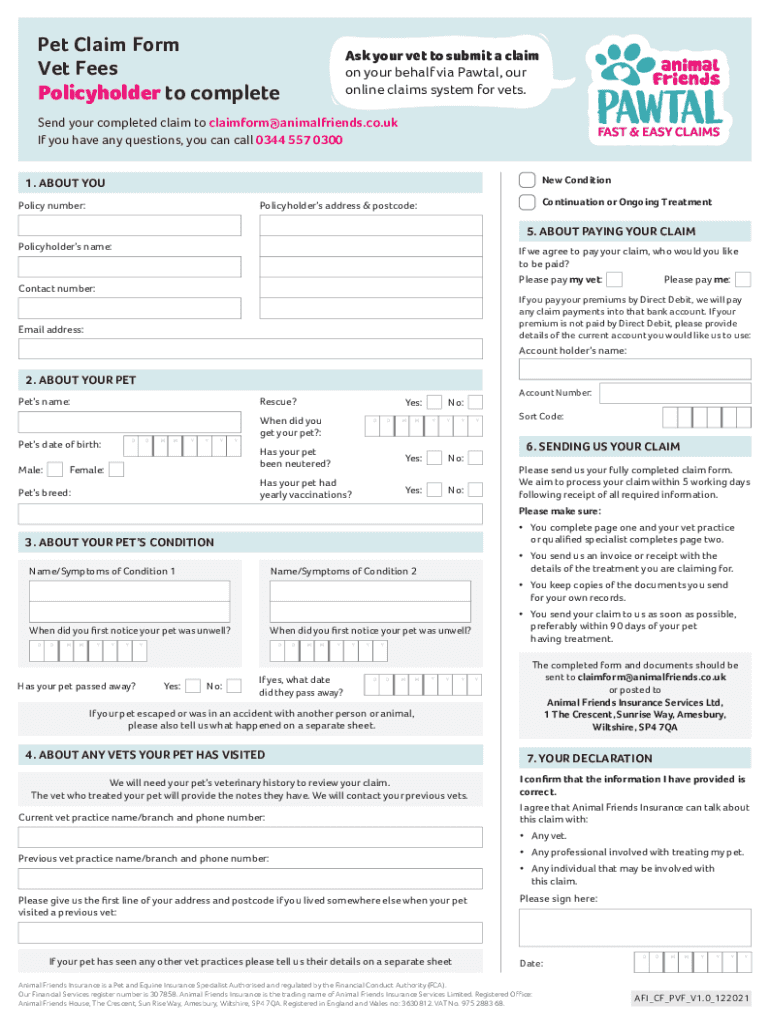







Understanding the Pet Claim Form for Vet Fees
The Pet Claim Form for Vet Fees is a critical document used by pet owners who have insurance policies with providers like Animal Friends Insurance. This form is essential for the submission of claims related to veterinary expenses. By ensuring the accurate completion of this form, policyholders facilitate a smooth and efficient claims process.
Important Information Required on the Pet Claim Form
- Pet Details: Include the pet's name, breed, age, and policy number. This information helps identify the correct policy and associate the claim with the right pet.
- Veterinarian Information: The form requires the name and contact details of the attending veterinarian or veterinary clinic. This ensures that the insurance company can verify the services provided.
- Treatment Details: A detailed account of the condition treated, along with the procedures and treatments administered, should be included.
- Cost Breakdown: Itemize all the costs associated with the veterinary visits, including consultation fees, treatments, surgeries, and medication costs.
Completing the Pet Claim Form
- Gather Information: Collect all necessary information, including invoices, treatment summaries, and your insurance policy details.
- Fill Out the Form: Enter the pet and veterinarian information accurately. Double-check spelling and numbers to ensure there are no errors.
- Attach Supporting Documents: Include copies of all relevant invoices and medical records. Ensure that these documents clearly outline the services provided and their costs.
- Review for Accuracy: Before submission, review the form to ensure all sections are complete and accurate. Missing or incorrect information can delay the processing of your claim.
Submission Methods for the Pet Claim Form
- Online Submission: Many insurance providers offer online portals where forms can be submitted electronically. This method is often quicker due to immediate digital processing.
- Mail Submission: Alternatively, completed forms and supporting documents can be mailed directly to the insurance provider's designated address. Ensure all documents are securely attached.
- In-Person Submission: If the insurer has physical offices, forms can be dropped off in person, although this might be less convenient depending on location.
Who Uses the Pet Claim Form
Typically, this form is used by:
- Pet Owners: Individuals or families with insured pets needing to claim veterinary expenses.
- Veterinarians: Who must often provide detailed treatment information and verify services.
- Insurance Companies: Use this form to verify claims and process payments.
Key Elements of the Pet Claim Form
- Disclosure Agreements: Include a section where the policyholder agrees to terms and conditions related to the claims process.
- Authorization for Release of Information: This allows the insurer to contact the veterinarian for additional information if needed.
- Signature Section: Both the policyholder and the veterinarian often need to sign the form to verify the information provided.
Required Documents for Pet Claim Submission
- Invoices and Receipts: Clear documentation of the veterinary services rendered and their associated costs.
- Medical Records: Treatment summaries from the vet that detail the medical condition and care provided.
- Insurance Policy Number: To match the claim with the correct account.
Legal Use of the Pet Claim Form
The completed form serves both as a legal document for claim processing and as evidence of the treatment provided. Accuracy and honesty in completing these forms are imperative, as fraudulent claims can lead to penalties or legal consequences.
Common Variants of the Pet Claim Form
Different insurance providers may have unique forms or versions that slightly differ in layout or information required. Always use the most recent form provided by your insurer to avoid complications.
Examples and Scenarios for Using the Pet Claim Form
- Routine Check-up: Submitting a claim for routine vaccinations or wellness exams.
- Emergency Services: Navigating more complex claims involving surgery or emergency interventions where detailed treatment and financial breakdowns are necessary.
- Chronic Conditions: Ongoing treatments for chronic conditions require regular submission of updated forms and records.
Penalties for Non-Compliance
Failure to submit complete or accurate forms can result in delays, claim denial, or legal repercussions if information is found to be intentionally misleading. Always adhere to submission guidelines to avoid these issues.




