







Definition and Meaning of Child Care Provider Verification (Form 1863)
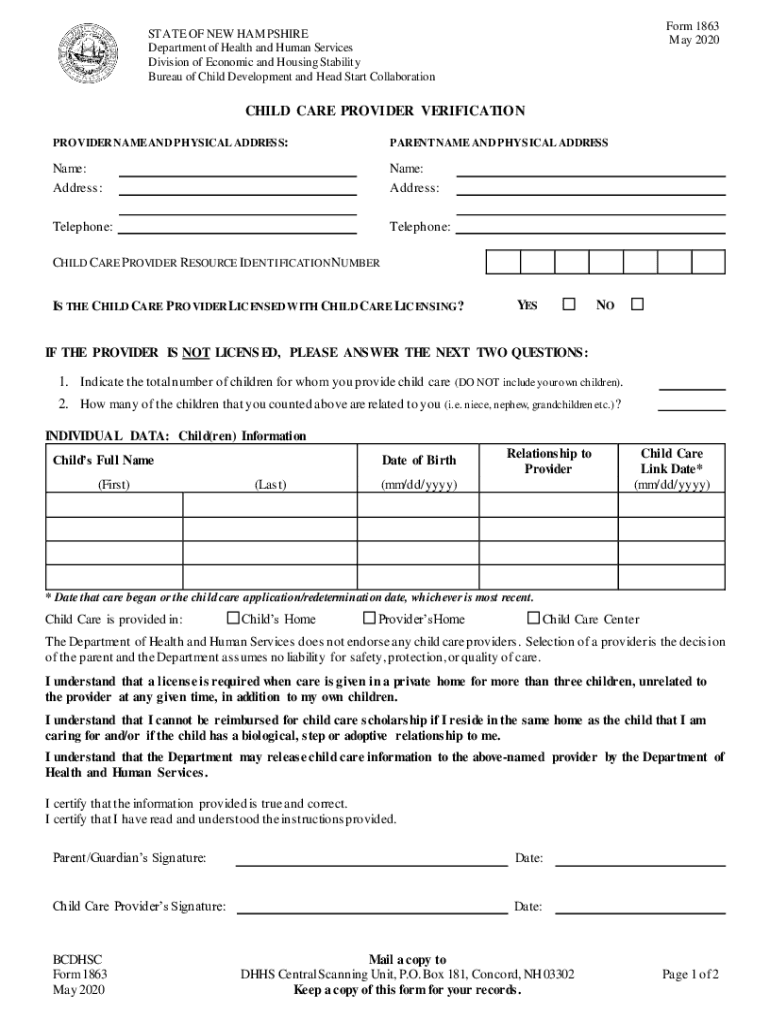
Child Care Provider Verification (Form 1863) is a critical document used by the New Hampshire Department of Health and Human Services. Its primary purpose is to establish a connection between child care providers and children eligible for child care scholarships. This form plays an essential role in the state's child care assistance program, ensuring that parents can access quality care for their children while maintaining compliance with state requirements.
The form requires detailed information about the child care provider, the child, and the parent. It specifically gathers data on the provider's licensing status and the relationship between the caregiver and the child. The information collected is vital for verifying eligibility for assistance, documenting the provider's compliance with state regulations, and ensuring that children receive care in a safe and nurturing environment. By utilizing Form 1863, parents can demonstrate their commitment to finding suitable care options and adhering to the guidelines put forth by the state.
Steps to Complete the Child Care Provider Verification (Form 1863)
Filling out the Child Care Provider Verification (Form 1863) involves several key steps to ensure accurate submission. Following a systematic approach is essential to prevent delays in processing and to meet eligibility criteria for child care scholarships.
-
Gather Required Information:
- Collect details about the child, including their name, date of birth, and any special needs.
- Obtain information about the parent or guardian, such as their name and contact details.
- Research the child care provider’s licensing status and gather any relevant identification numbers.
-
Complete the Form:
- Fill out the sections pertaining to the child’s information first. This ensures that eligibility is clearly demonstrated.
- Provide accurate details about the child care provider, including their name, address, and type of care provided.
- If applicable, indicate any additional requirements for care, such as special accommodations for children with disabilities.
-
Review the Information:
- Double-check all entries for accuracy and completeness.
- Ensure no fields are left empty unless indicated as optional; incorrect information can lead to delays.
-
Submission:
- Decide on the submission method—whether online, via mail, or in person. Follow the chosen submission route's specific requirements to ensure proper tracking and acknowledgment.
- Keep a copy of the completed form for your records. This is useful for future reference and will assist in tracking the application status if necessary.
-
Await Confirmation:
- After submission, monitor any communications from the New Hampshire Department of Health and Human Services regarding the processing of Form 1863.
- Be prepared to provide further documentation if requested.
Who Typically Uses the Child Care Provider Verification (Form 1863)
Child Care Provider Verification (Form 1863) is primarily utilized by various stakeholders involved in child care services. Understanding who typically uses this form can clarify its role and importance within the child care assistance program.
- Parents or Guardians: Most commonly, parents seeking financial assistance for child care use Form 1863. They complete the form to verify that their chosen provider meets the state’s eligibility standards.
- Child Care Providers: These are individuals or organizations offering child care services. Providers need to be adequately licensed and compliant with state regulations, which is a vital part of the verification process.
- Government Entities: State agencies, particularly those related to health and human services, utilize Form 1863 to ensure that the child care providers are properly accredited and eligible to receive funding or benefits under child care assistance programs.
- Social Workers and Case Managers: Professionals working with families looking for child care assistance may assist in filling out this form. They play a role in guiding families through the verification process to ensure they meet all required criteria.


Important Terms Related to Child Care Provider Verification (Form 1863)
Understanding the terminology associated with the Child Care Provider Verification (Form 1863) is essential for comprehending its implications and requirements. Familiarity with these terms can help users navigate the application process more effectively.
- Licensing: This refers to the legal authorization child care providers must have to operate. Licensed providers meet specific regulatory standards set by the state to ensure child safety and welfare.
- Child Care Scholarships: Financial assistance programs designed to help families pay for child care services; eligibility often hinges on verification forms like Form 1863.
- Provider Compliance: This term encompasses the obligations of child care providers to adhere to state guidelines, including health and safety regulations, which are verified through the completion of Form 1863.
- Eligibility Criteria: These are the specific conditions that both parents and providers must satisfy to qualify for child care assistance in New Hampshire.
Legal Use of the Child Care Provider Verification (Form 1863)
The legal framework surrounding Child Care Provider Verification (Form 1863) establishes its validity and necessity within the state’s child care assistance programs. Understanding the legal implications is crucial for parents and providers alike.
- Compliance with State Regulations: Form 1863 is a legally recognized document that aligns with New Hampshire's laws governing child care services. By submitting this form, parents confirm their understanding and adherence to state requirements for eligible providers.
- Binding Agreement: Information submitted on Form 1863 can be considered a sworn statement. Providing false information or omitting relevant details may lead to legal penalties for both the provider and the parents.
- Documentation for Audits: State agencies may conduct audits on child care providers receiving state funds. Form 1863 serves as a crucial document in verifying compliance and relating child care scholarships to approved providers.
- Protection of Child Welfare: The legal underpinnings of the form aim to protect child welfare by ensuring that only qualified providers deliver care, thus maintaining safe and reliable child care services statewide.




