IoT, SPYWARE AND 2026

Get Form
IoT, SPYWARE AND Preview on Page 1

Here's how it works

01. Edit your form online
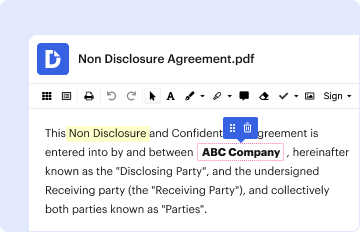
Type text, add images, blackout confidential details, add comments, highlights and more.
02. Sign it in a few clicks
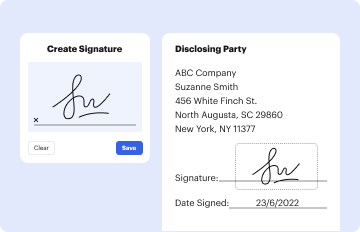
Draw your signature, type it, upload its image, or use your mobile device as a signature pad.
03. Share your form with others
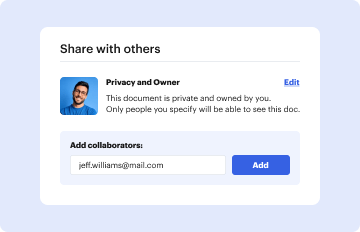
Send it via email, link, or fax. You can also download it, export it or print it out.

How to use or fill out IoT, SPYWARE AND with our platform

Form edit decoration
9.5
Ease of Setup
DocHub User Ratings on G2
9.0
Ease of Use
DocHub User Ratings on G2
  1. Click ‘Get Form’ to open it in the editor.
  2. Begin by reviewing the introductory section that outlines the purpose of the IoT, SPYWARE AND form. This will help you understand the context and importance of each field.
  3. Fill in your organization’s name and contact information in the designated fields. Ensure accuracy as this information is crucial for communication regarding privacy risks.
  4. In the section addressing IoT devices, list all connected devices used within your organization. Be specific about their functions and data collection capabilities.
  5. Next, evaluate and document any existing privacy policies related to these devices. This includes how data is collected, used, and shared.
  6. For the spyware risk assessment section, indicate any known software that may track user behavior without consent. Provide details on how this software operates within your systems.
  7. Finally, review all entries for completeness and accuracy before submitting the form through our platform's submission feature.

Start using our platform today to streamline your document editing and ensure compliance with privacy regulations!

be ready to get more

Complete this form in 5 minutes or less

Get form

Got questions?

We have answers to the most popular questions from our customers. If you can't find an answer to your question, please contact us.
Contact us
The first five Cs connectivity, continuity, compliance, coexistence, and cybersecurity are all important. However, the sixth C, customer experience, will set your device apart from the competition. Users generally experience IoT devices through software and firmware applications.
Consumer IoT From monitoring health to automating daily routines like opening curtains, IoT devices are designed to simplify and enhance everyday life. Common examples include smartwatches, smart glasses, internet-enabled appliances, wearable health trackers, and asset trackers.
However, all complete IoT systems are the same in that they represent the integration of four distinct components: sensors/devices, connectivity, data processing, and a user interface. Well outline what each one means in the sections below and how they come together to form a complete IoT system.
The three types oF IoT security include: Network Security: Users need to protect their devices against unauthorized access and potential exploitation. Embedded: Nano agents provide on-device security for IoT devices. Firmware Assessment: Firmware security starts with assessing the firmware of a protected IoT device.
IoT architecture is an organised network of interconnected devices, sensors, actuators and cloud services that enable the flow of data. It consists of four key layers: Perception/sensing, Connectivity/network, Data processing and User interface/application.

Security and compliance

At DocHub, your data security is our priority. We follow HIPAA, SOC2, GDPR, and other standards, so you can work on your documents with confidence.

Learn more
ccpa2
pci-dss
gdpr-compliance
hipaa
soc-compliance

People also ask

The Internet of Things (IoT) can be categorized into four main types: Consumer IoT, Commercial IoT, Industrial IoT (IIoT), and Infrastructure IoT. Consumer IoT includes devices like smart home gadgets, wearable technology, and personal health trackers, enhancing everyday convenience and personal well-being.
2024 CrowdStrike Global Threat Report Adware. Adware tracks a users web surfing history and activity to optimize advertising efforts. Trojan. A trojan is a digital attack that disguises itself as desirable code or software. Keylogger. A keylogger is a type of spyware that monitors user activity. RootKits.
A level-4 IoT system has multiple nodes that perform local analysis. Data is stored in the cloud and application is cloud-based. Level-4 contains local and cloud- based observer nodes which can subscribe to and receive information collected in the cloud from IoT devices.

Related links