




01. Edit your chiropractic intake forms free online
Type text, add images, blackout confidential details, add comments, highlights and more.

Type text, add images, blackout confidential details, add comments, highlights and more.

Draw your signature, type it, upload its image, or use your mobile device as a signature pad.

Send chiropractic intake form template via email, link, or fax. You can also download it, export it or print it out.
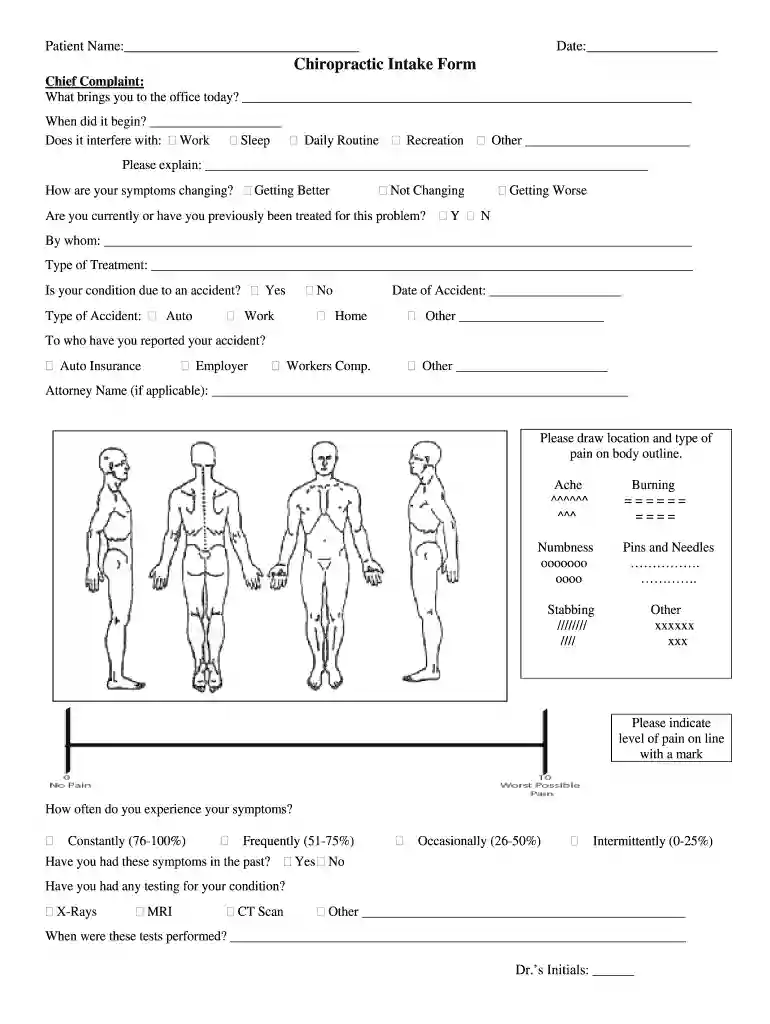
Chiropractic intake forms are essential documents used in chiropractic practices to gather comprehensive information about new patients. These forms are designed to assess a patient’s health history, current condition, and lifestyle habits. By collecting detailed information, chiropractors can better understand the patient’s needs and develop tailored treatment plans. The forms typically include sections for personal details, chief complaints, medical history, and lifestyle factors, making them crucial for effective assessment and treatment.
Personal Information: This section collects basic details such as the patient's name, address, phone number, and emergency contact information.
Chief Complaint: Here, the patient describes the main reason for their visit, detailing the symptoms they are experiencing.
Medical History: Patients provide insight into their past health issues, surgeries, and ongoing medical conditions, which can impact their chiropractic care.
Social History: This segment explores the patient's lifestyle choices, including smoking, drinking, exercise habits, and occupational risks, helping the chiropractor understand factors influencing the patient's health.
Family History: Gathering information about any family health issues can shed light on genetic predispositions to certain conditions that may affect the patient’s health.
Using chiropractic intake forms effectively is vital for a successful patient intake process. These forms should be provided to patients prior to their first visit, allowing ample time for completion.
Distribution: Provide the forms either as downloadable PDFs on the clinic's website, or physically at the reception. A digital option allows for easier access and completion before the appointment.
Completion: Patients should fill out all relevant sections as thoroughly as possible. Ensure there is clear guidance on how to complete the forms, especially for complex medical histories.
Review: After submission, chiropractic staff should review the intake forms for completeness, identifying any areas that might require clarification during the initial consultation.
Integration into Patient Records: Once reviewed, the information should be entered into the clinic’s electronic health record (EHR) system. This integration allows for seamless access during consultations and treatment planning.
Follow-Up: A good practice involves following up with the patient after they have completed their intake forms to clarify any ambiguous responses, ensuring accurate information before the first treatment.
Chiropractic intake forms include several key elements that are critical for ensuring a comprehensive understanding of the patient's health status.
Demographics: Basic information such as age, gender, and occupation is vital for tailored treatment plans.
Symptom Description: Details about the nature, location, and duration of symptoms can guide diagnosis and treatment strategies.
Assessments and Diagnosis: Some forms may also include preliminary assessments or diagnostic criteria that help chiropractors establish the course of treatment.
Signature and Consent: A section where the patient provides their signature, confirming that the information is accurate and that they consent to treatment based on the information provided.
Understanding specific terminology used within chiropractic intake forms is essential for both patients and practitioners.
Chief Complaint: The primary issue or symptom that is prompting the patient to seek chiropractic care.
Medical History: A record of the patient’s past health issues, treatments, and medications that may influence current health.
SOAP Notes: A method for documenting patient information, which stands for Subjective, Objective, Assessment, and Plan.
Consent for Treatment: Legal acknowledgment from the patient allowing the chiropractor to perform assessments and treatment based on the provided information.
Chiropractic intake forms have a specific legal framework governing their use and storage. These aspects are crucial in maintaining patient confidentiality and ensuring compliance with healthcare regulations.
HIPAA Compliance: All patient information must be handled in accordance with the Health Insurance Portability and Accountability Act (HIPAA), ensuring data privacy and security.
Informed Consent: Patients must be provided with clear information regarding the purpose of the forms and how their data will be used, allowing them to make informed decisions about their treatment.
Record Keeping: Clinics are required to maintain and archive these forms for a specific duration, as mandated by state laws, ensuring legal protection against potential disputes.
Data Protection: Implementing robust security measures to protect sensitive patient data, particularly when utilizing electronic forms, is essential to avoid breaches and ensure compliance.
By understanding these legal aspects, chiropractic practices can safeguard both patient and practitioner interests, fostering a trustworthy environment for care.
We've got more versions of the chiropractic intake forms free form. Select the right chiropractic intake forms free version from the list and start editing it straight away!
| Versions | Form popularity | Fillable & printable |
|---|---|---|
| 2012 | 3.9 Satisfied (25 Votes) |
With DocHub, you can rapidly sign your chiropractic forms or any other paperwork on iOS, even without setting up extra programs. You can access your DocHub account from any web-connected browser and fill out and sign your document in any way you like with just a few clicks.
If your go-to electronic mail service is Gmail, it is simple to incorporate your DocHub editor in your work. Modify your chiropractic intake forms pdf with DocHub tools and connect it to your drafts in Gmail. See how easy it is to exchange documents and work together with a swift PDF editing solution at hand.
At DocHub, your data security is our priority. We follow HIPAA, SOC2, GDPR, and other standards, so you can work on your documents with confidence.
by PM Hinton 2010 Cited by 23 Chiropractors utilize standardized outcome and various clinical measures to systematically document patients baseline health status and responses to treatment.Read more
New-Patient Forms. If youre coming to one of our clinics for the first time, please complete the forms below to save time at your first appointment.Read more
The Manual is divided into sections stating Medi-Cal program requirements and regulatory/contractual standards to support you in providing high quality andRead more


