






Overview of a Pre-Task Plan Template
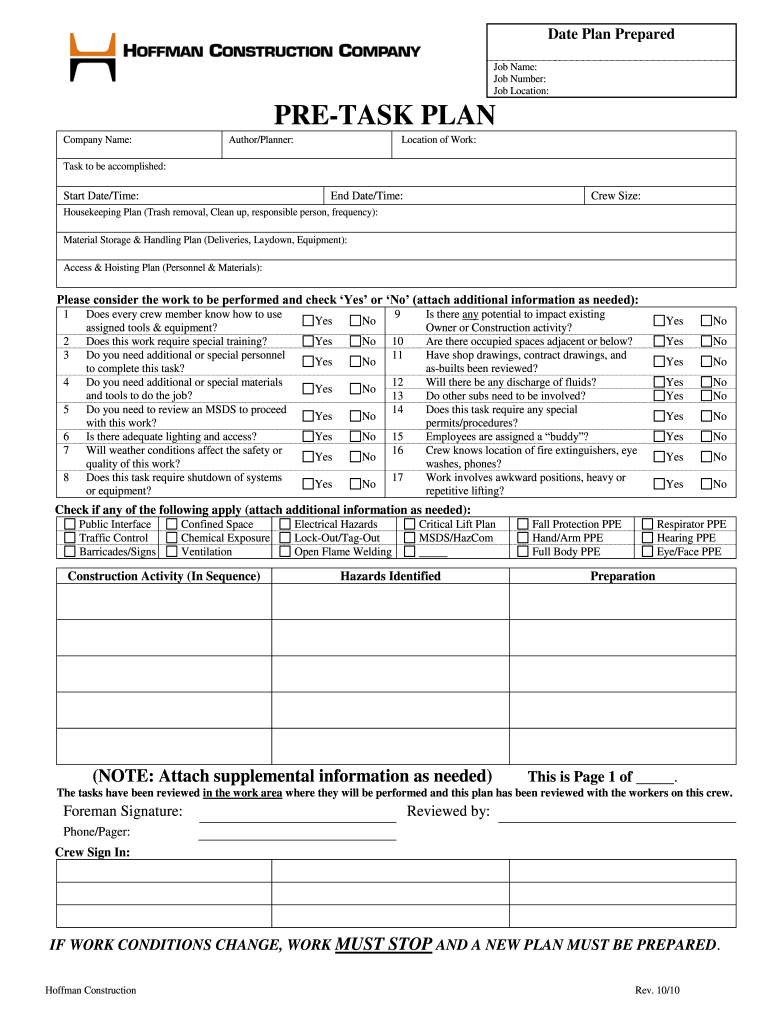
A pre-task plan template serves as a vital document in various industries, particularly in construction. It outlines the essential details regarding a specific job, including the project name, location, crew size, and outlined tasks. Understanding how to effectively utilize a pre-task plan template enhances safety protocols and job execution efficiency.
Key Components of a Pre-Task Plan Template
- Job Identification: Details like the job name and location help in tracking specific work assignments and accountability.
- Crew Information: Including crew size and roles enables better communication and coordination among team members.
- Task Specifications: Clearly defined tasks promote clarity on what needs to be accomplished. Each task should list specific objectives to ensure all workers understand their responsibilities.
Importance of Safety Protocols
A thorough pre-task plan emphasizes safety checks, which are critical before beginning any project. The plan must include:
- Tool Usage Checks: Ensure that all tools comply with safety standards and are suitable for the tasks assigned.
- Training Requirements: Identify any specific training or certifications needed by crew members to perform their tasks safely and efficiently.
- Hazard Recognition: List potential hazards associated with the job, such as equipment risks or environmental factors, to prepare the crew for threat mitigation.
Roles and Responsibilities
Incorporating roles and responsibilities into the pre-task plan template is essential for accountability:
- Foreman Signatures: The foreman must sign off, confirming all safety protocols have been understood and will be adhered to during the task.
- Reviewers: Additional reviewers should also sign off, ensuring that all necessary checks are completed and documented.
Adaptability Based on Changing Conditions
The nature of many jobs can lead to changing conditions which must be documented:
- Revised Plans: If any conditions change, a new pre-task plan is necessary to address updated risks or modifications in procedures.
- Ongoing Communication: Encourage continuous dialogue among crew members regarding safety and task responsibilities throughout the work process.
Documentation and Temperature Checks
Maintaining comprehensive documentation is crucial for safety and compliance:
- Daily Monitoring: Use a daily pre-task safety plan to conduct temperature checks on potential risks. This ensures that all tasks are completed according to the pre-established plans and maintain adherence to safety protocols.
- Electronic Formats: Utilizing a digital pre-task plan template, available in formats such as PDF or Word, enables easier modifications and sharing among team members.
Conclusion: Ensuring Effective Use
Proper utilization of a pre-task plan template enhances project outcomes and fosters a culture of safety. Through systematic documentation of roles, safety checks, and adaptable measures, teams can work efficiently and safely, significantly reducing risks associated with workplace tasks.