






Definition & Purpose of the VSF Form
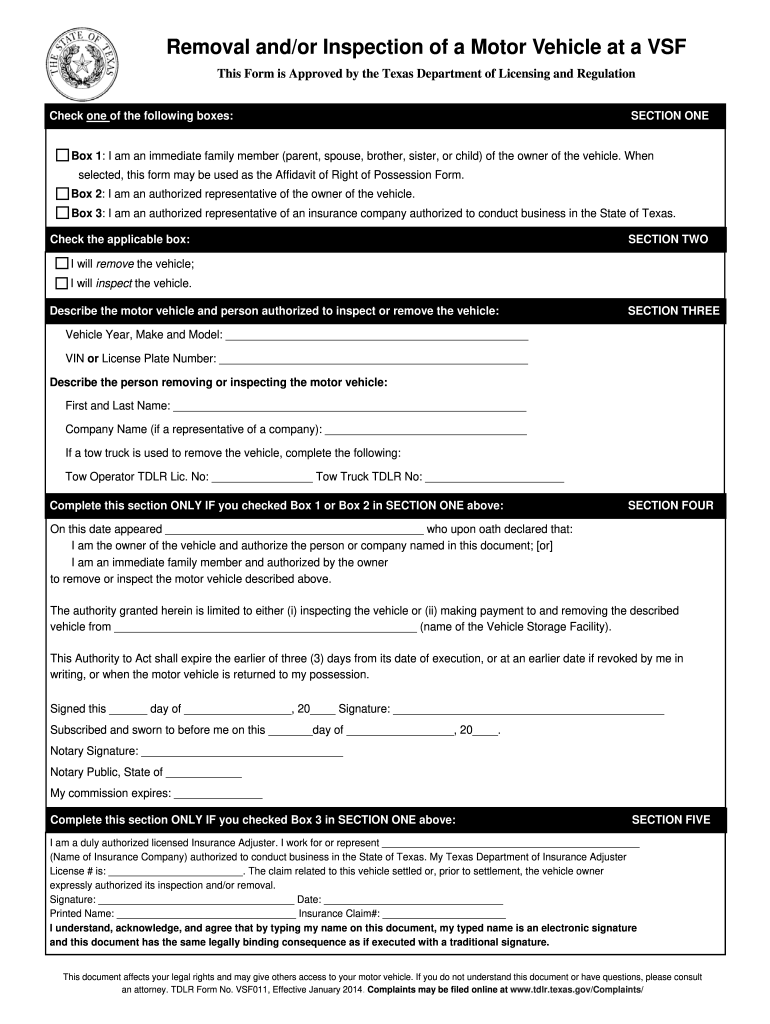
The VSF form, also known as the VSF013 form, is a crucial document used in Texas for retrieving vehicles from impound or storage facilities. This form outlines the procedures for authorized individuals to reclaim vehicles that have been towed or stored, ensuring compliance with local regulations. It is essential for vehicle owners or their representatives to understand the VSF form's purpose, as it establishes legal authority for someone to act on behalf of the vehicle owner.
Key Functions of the VSF Form
- Authorizes Actions: The VSF form allows designated individuals, such as family members or representatives, to act on behalf of the vehicle owner.
- Legal Framework: Adhering to the completion of this form is essential for lawful retrieval of a vehicle, aligning with Texas state laws regarding vehicle storage and towing.
- Information Collection: It collects necessary vehicle and owner details, ensuring that the correct vehicle is being released.
Steps to Complete the VSF Form
Proper completion of the VSF form is vital to ensure the smooth release of a vehicle. The following steps should be followed:
- Obtain the VSF Form: Access the VSF013 form, available through designated offices or online platforms. Ensure you have the correct version for your needs.
- Fill in Owner Information: Provide accurate details of the vehicle owner, including name, address, and contact information.
- Detail Vehicle Information: Include specifics about the vehicle, such as make, model, and VIN (Vehicle Identification Number).
- Designate an Authorized Representative: If someone else is acting on your behalf, clearly state their details in the appropriate section of the form.
- Sign and Notarize: Depending on the requirements, the form may need to be signed in front of a notary public to validate the authorization.
- Submit the Form: Present the completed VSF form to the designated vehicle storage facility along with any required identification or payment.
Common Mistakes to Avoid
- Incomplete Information: Ensure that all sections are filled out completely to avoid processing delays.
- Wrong Signatures: Only the vehicle owner should sign, unless otherwise authorized.
- Missing Notarization: Check if notarization is required for your particular situation; failure to do this may cause complications in the release process.
Legal Implications of the VSF Form
Understanding the legal context of the VSF form is critical for both vehicle owners and their representatives. The form serves as a legally binding document that verifies authorization for vehicle retrieval.
Key Legal Considerations
- Compliance with Texas Law: The VSF form complies with Texas regulations concerning vehicular storage and retrieval.
- Proof of Ownership: This form acts as a record of the request for vehicle recovery, providing legal protection for service providers against unauthorized claims.
- Potential Liability: Incorrectly completed forms may lead to legal issues, including wrongful claims or disputes over vehicle ownership.
Important Terms Related to the VSF Form
Being familiar with key terminology can help in navigating the VSF process more effectively. Here are several important terms:
- Licensed Storage Facility: A facility authorized by the state to store vehicles that have been towed.
- Tow Company: The company responsible for towing the vehicle, which often works in conjunction with storage facilities.
- Impound Fees: Charges incurred daily for the storage of the vehicle, which may affect the total cost of retrieval.
- Authorized Representative: An individual granted permission to act on behalf of the vehicle owner, typically listed and signed on the VSF form.
Examples of Using the VSF Form
Understanding scenarios where the VSF form would be required is crucial for owners and their representatives:
- Vehicle Impound due to Illegal Parking: If a car is towed for parking violations, the owner or an authorized individual must submit the VSF form to reclaim it.
- Accident Recovery: If a vehicle is towed following an accident and held at a storage facility, the VSF form is necessary to retrieve the vehicle.
- Storage After Recovery Operations: In instances where law enforcement seizes a vehicle, the owner must use the VSF form to authorize retrieval once the impound period has ended.
Processing and Submission Methods for the VSF Form
When preparing to submit the VSF form, understanding the submission methods is crucial to ensure compliance and efficiency.
Submission Options
- In-Person at the Storage Facility: The most common approach involves delivering the completed form directly to the vehicle storage location.
- Online Submission: Some facilities may offer an online alternative for submitting the form; verify with the specific facility regarding their policies.
- Mail Submission: If necessary, the form may be mailed to the appropriate vehicle storage facility; however, check for any alternatives to ensure timely processing.
Documentation Required
When submitting the VSF form, you may need to present additional documents, including:
- Proof of Identity: A government-issued ID of the vehicle owner or authorized representative.
- Payment for Fees: Impound or storage fees must typically be settled at the time of retrieval.
- Vehicle Title: In some cases, proof of ownership may also be required.
By following these detailed guidelines regarding the VSF form, you can navigate the vehicle retrieval process in Texas more effectively. Understanding its purpose, legal implications, and submission methods will facilitate a smoother experience when dealing with vehicle storage and recovery.