







Definition and Meaning of UPS Commercial Invoice
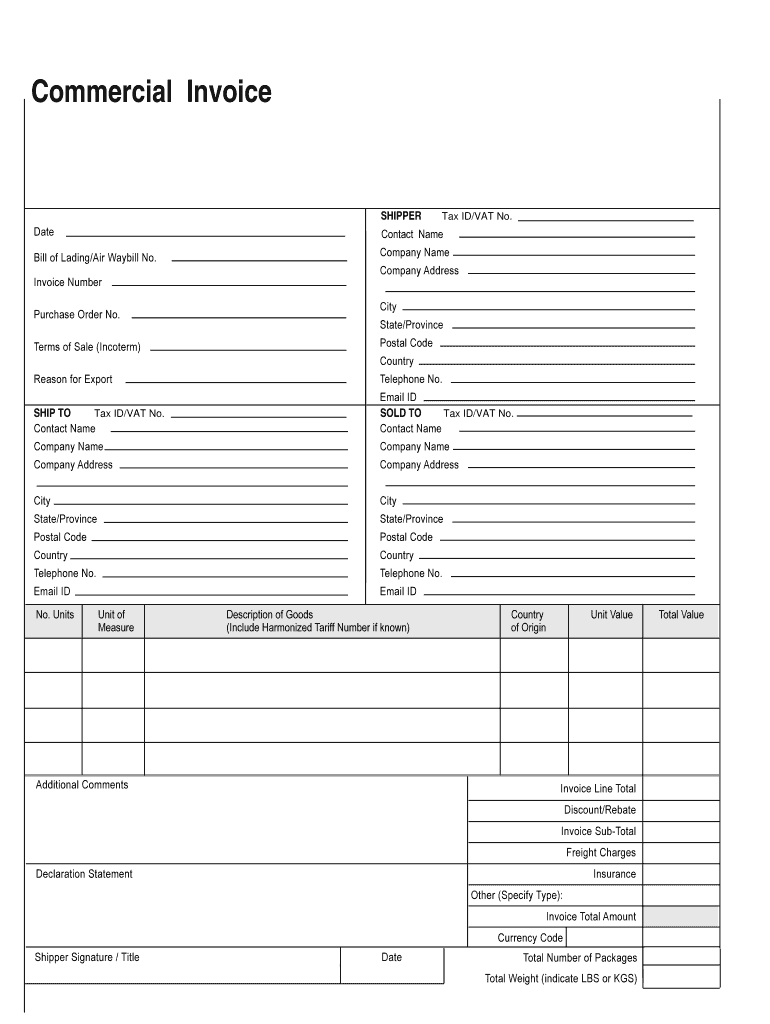
The UPS Commercial Invoice is a detailed document used in international shipping that serves as a formal request for payment and a record of sale. It outlines essential shipment information, including the shipper and recipient's details, terms of sale, a detailed description of the goods, pricing, and the total value of the shipment. The commercial invoice is crucial in customs clearance processes as it provides vital information needed for assessment by customs officials. It includes necessary identifiers such as the invoice number, purchase order number, and tax identification numbers, ensuring compliance with international trade regulations.
How to Use the UPS Commercial Invoice
To effectively use a UPS Commercial Invoice, it is important to ensure that all required information is accurately completed. This includes the shipper's and consignee's contact details, a full description of each item being shipped, including quantity, unit price, and total value, and the country of origin for the goods. Terms of sale or trade terms, known as Incoterms, must be clearly stated to define responsibilities and risks between the buyer and seller. The invoice also requires shipping details, such as shipping date and method, as well as payment terms to ensure smooth transaction processing and accurate documentation for customs clearance.
Steps to Complete the UPS Commercial Invoice
-
Enter Shipper and Recipient Information:
- Fill in the complete contact details of the shipper, including name, address, and contact information.
- Include similar details for the recipient (consignee).
-
Detail the Goods:
- Provide a clear and complete description of the goods being shipped.
- Include the quantity, unit price, and total value for each item.
- State the country of origin for each product.
-
Include Transaction and Shipping Details:
- Specify the date of the invoice and the shipping date.
- Define the payment terms and method of shipment.
-
Affix Identifiers:
- Add unique identifiers such as the invoice number and purchase order number.
-
Sign and Date:
- The shipper must sign and date the invoice to authenticate it as a legal document.
Key Elements of the UPS Commercial Invoice
Essential elements of a UPS Commercial Invoice include:
- Shipper and Consignee Information: Full details for both parties involved in the transaction.
- Itemized List of Goods: Detailed breakdown of items, including descriptions, quantities, and values.
- Trade Terms and Conditions: Clearly defined Incoterms to specify the agreement's terms.
- Identifiers: Unique numbers for reference, like invoice and purchase order numbers.
- Signatures and Dates: Confirmation of terms and transaction validity.
Legal Use of the UPS Commercial Invoice
A UPS Commercial Invoice is legally used to facilitate customs clearance and serve as an agreement between the buyer and seller in international trade. It helps in the calculation of duties and taxes, verifying the legality of the shipment's content and value. Customs authorities utilize the invoice to evaluate compliance with trade regulations. Ensuring that the document is accurately completed and legally compliant is vital to prevent delays and potential legal issues in the shipping process.
Who Typically Uses the UPS Commercial Invoice
The UPS Commercial Invoice is typically used by businesses involved in international trade. This includes exporters, importers, freight forwarders, and supply chain managers who need to ensure that goods are shipped with all necessary documentation for customs. It is critical for companies regularly engaged in cross-border transactions, helping manage and streamline their shipping documentation requirements.


Examples of Using the UPS Commercial Invoice
Businesses commonly use the UPS Commercial Invoice when shipping goods internationally to:
- Export Products: From a US-based manufacturer to a retailer in Europe.
- Import Components: By a US technology firm procuring parts from an Asian supplier.
- Fulfill International Orders: Processed through an e-commerce platform shipping to customers worldwide.
Accurate completion of the commercial invoice ensures a smooth customs process and timely delivery.
Differences Between Digital and Paper Versions
The UPS Commercial Invoice is available in both digital and paper formats. The digital version allows for easier data entry, storage, and electronic transmission, which is environmentally friendly and reduces processing time. The paper version, however, might be necessary in scenarios where a hard copy is required by customs officials or when digital systems are unavailable. Businesses can benefit from the flexibility of choosing the format that best suits their operational needs while ensuring compliance with international shipping regulations.




