




01. Edit your society nomination form pdf online
Type text, add images, blackout confidential details, add comments, highlights and more.

Type text, add images, blackout confidential details, add comments, highlights and more.

Draw your signature, type it, upload its image, or use your mobile device as a signature pad.

Send society nomination form 14 pdf download via email, link, or fax. You can also download it, export it or print it out.
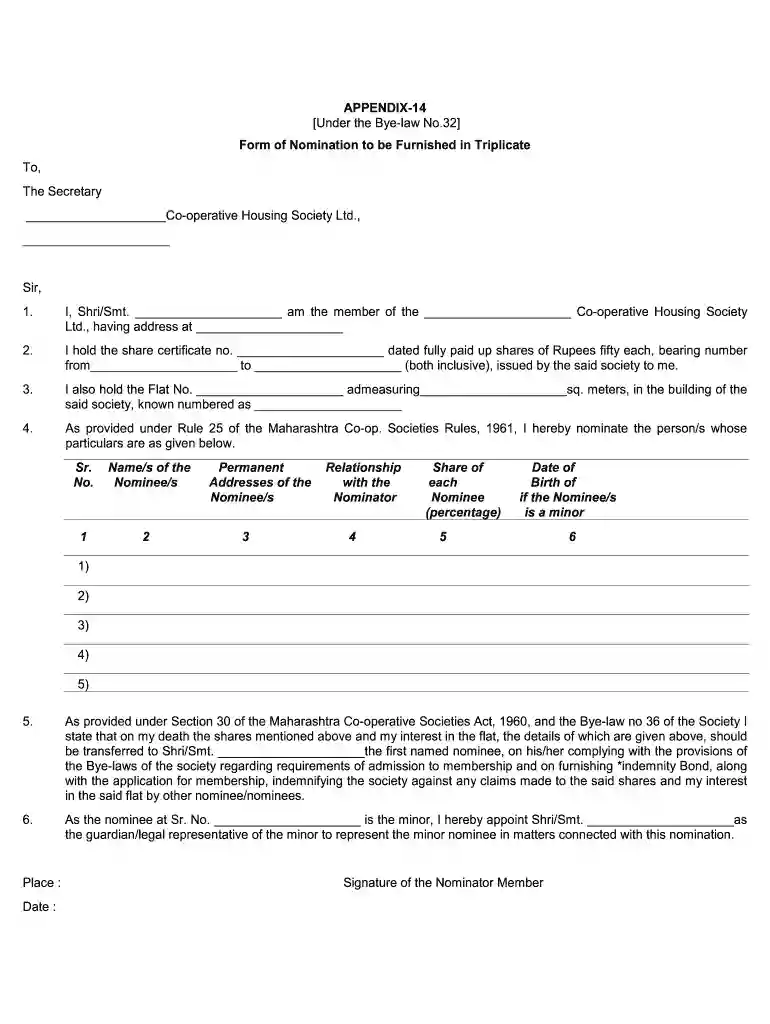
The society nomination form is a crucial document used by members of cooperative societies to designate beneficiaries for shares or ownership rights in the event of the member's passing. This form ensures that shares in a housing society, or associated rights and responsibilities, are transferred smoothly and legally to the nominated individuals, avoiding potential disputes among heirs.
Key purposes include:
Understanding the significance of the society nomination form is essential for every member, as it directs the allocation of shares or property, thereby influencing future management and ownership dynamics within the society.
Filling out the society nomination form correctly is vital to ensure that your intentions are legally recognized and executed. Here are the key steps involved in completing the form:
Download the Form: Obtain a copy of the society nomination form from your housing society's office or official website. You can often find a society nomination form PDF for easy access.
Member Information: Start by clearly filling out personal details, including your full name, address, and membership number. Ensure all information matches what is registered with the society.
Nominee Details: Provide complete information about your nominee(s). This should include their full names, relationship to you, and contact details.
Share and Flat Information: Specify the shares and flat ownership rights being nominated. Include details like the number of shares and the registered flat number to avoid ambiguity.
Witness Signatures: Some societies require that your nomination form be signed by witnesses. Ensure you include their names and signatures to validate the document.
Submit the Form: Once completed, submit the form to your society's management. Check their preferred submission method, whether it’s in person, online, or via postal mail.
It is recommended to maintain a copy of the submitted form for your records.
The society nomination form contains several critical components that need to be filled out accurately to ensure its effectiveness. These elements include:
Paying attention to these elements can prevent future disputes and ensure a smooth transition of property and rights to the nominated individuals.
Eligibility to submit a society nomination form typically involves the following criteria:
Understanding these eligibility criteria can help ensure that your nomination form is valid and accepted by the society.


The society nomination form serves not only as a personal directive but also as a legally recognized document. It is essential to be aware of its legal implications:
Recognizing the legal nature of the society nomination form can help members make informed decisions about their nominations and prevent future complications.
Practical examples illustrate the relevance of the society nomination form in everyday scenarios, which can provide clarity on its usage:
Example 1: A member of a housing society wishes to ensure their spouse receives their rights to the flat and associated shares upon their passing. By filling out and submitting the society nomination form, the spouse is designated as the nominee, solidifying their claim according to the society's rules.
Example 2: An individual with multiple properties in different housing societies can use nomination forms for each, selecting different nominees based on personal relationships and circumstances. This allows for customized arrangements consistent with their wishes.
Example 3: A member who has children may choose to nominate a guardian for minor children in their place, ensuring that the property goes to a responsible individual who will manage the assets until the children are of age.
Using real-life examples emphasizes the form’s utility and the necessity of clear, documented intentions, safeguarding against misunderstandings or disputes after the member’s death.
At DocHub, your data security is our priority. We follow HIPAA, SOC2, GDPR, and other standards, so you can work on your documents with confidence.


