




01. Edit your performance rating in the last rating period sample online
Type text, add images, blackout confidential details, add comments, highlights and more.

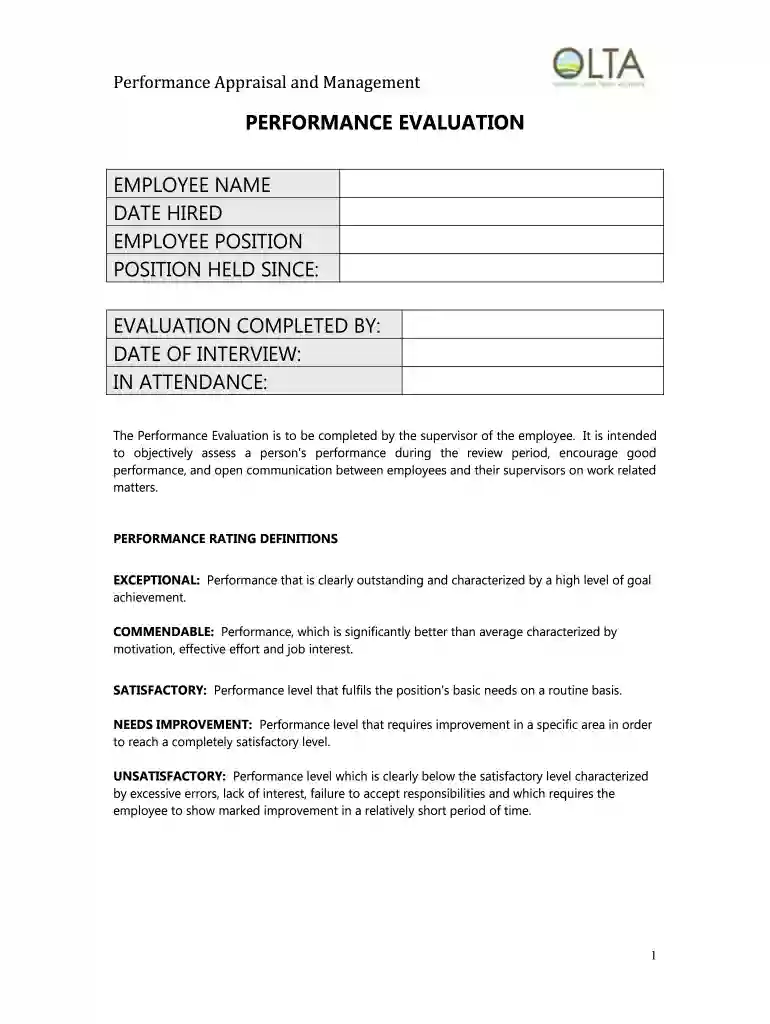
Type text, add images, blackout confidential details, add comments, highlights and more.

Draw your signature, type it, upload its image, or use your mobile device as a signature pad.

Send performance rating sample via email, link, or fax. You can also download it, export it or print it out.
Performance ratings are essential tools for evaluating employee performance within organizations. A performance rating sample typically utilizes a structured framework to assess various competencies and behaviors across different categories, such as job knowledge, communication skills, teamwork, and results. This systematic assessment enables managers to provide objective feedback and support employee development effectively.
Performance ratings can adopt several grading scales, frequently ranging from one to five or from 'Exceptional' to 'Unsatisfactory.' By categorizing employees into defined performance levels, organizations can foster an environment of transparency, encouraging open communication between supervisors and employees. The use of a standardized performance rating sample ensures that evaluations are both fair and consistent, aligning with the organization’s objectives and employee growth.
A comprehensive performance rating sample typically comprises several key elements that contribute to a fair assessment. The following components are crucial for a well-rounded evaluation:
Evaluation Criteria: Common criteria may include adaptability, punctuality, quality of work, and innovation. Clearly defining these criteria helps ensure that both employee and supervisor have shared expectations about what constitutes satisfactory performance.
Rating Scale: Organizations often utilize a numerical or descriptive scale. For instance, a five-point scale might classify performance from ‘Outstanding’ to ‘Needs Improvement,’ providing a nuanced approach to assessment.
Commentary: Including narrative comments alongside numerical ratings allows for more personalized feedback. This qualitative aspect helps clarify the reasons behind the rating, offering employees actionable insights for improvement.
Self-Assessment: Encouraging employees to evaluate their performance fosters ownership of their development. A self-assessment section in the performance rating sample allows individuals to reflect on their successes and challenges throughout the review period.
To ensure the performance rating sample serves its intended purpose, organizations can adhere to the following best practices:
Calibration of Ratings: Before finalizing performance ratings, organizations should conduct calibration sessions where managers discuss ratings and increase consistency across teams. This step helps to mitigate biases and aligns evaluations more closely with organizational standards.
Feedback Sessions: After completing the performance assessment, engaging in feedback discussions between supervisors and employees is vital. This dialogue should cover the rationale behind specific ratings, goals for future performance, and personal career aspirations.
Continual Development: Utilize the insights from performance ratings to create personal development plans. Identifying training opportunities or skill development that aligns with the performance review can benefit both the employee and organization.
Documentation and Tracking: Maintaining records of performance ratings over time enables organizations to identify trends, recognize high performers, and address consistent underperformance effectively.
Utilizing relevant examples can illuminate the practical application of various performance rating samples:
Government Sector: A typical performance rating sample for employees within the government may encompass aspects such as adherence to policies, public service effectiveness, and community engagement. Ratings might involve a combination of self-assessments and supervisor evaluations, resulting in a structured form reflecting public expectations.
Private Company Template: In a private company setting, a performance rating sample may focus heavily on results-oriented metrics such as sales performance, customer satisfaction scores, and team collaboration. Incorporating quantitative outcomes alongside qualitative evaluations promotes a balanced overview.
Filled Sample Appraisal Form: Organizations can also create filled sample forms illustrating the scoring process and feedback provided for hypothetical employees. This documentation serves as a helpful reference during training sessions for new supervisors on administering performance evaluations.
When implementing performance ratings, organizations need to be mindful of legal aspects:
Non-Discrimination: Performance evaluation processes must adhere to anti-discrimination laws. Ensuring that criteria are applied uniformly across all employees mitigates the risk of legal repercussions.
Documentation: Proper documentation is essential for defending performance ratings amidst personnel disputes. Accurate records of performance reviews, employee conversations, and any corrective action taken should be maintained for compliance purposes.
Confidentiality: Protecting employee evaluation data is paramount. Organizations should implement policies to safeguard personal information and discussion related to performance ratings, ensuring confidentiality is upheld throughout the review process.
Adopting a standardized template format enhances clarity and consistency in performance ratings. Common formats include:
Table Format: A visually organized table allows for straightforward comparisons across various criteria, easily highlighting areas of strength and opportunities for improvement.
Narrative Format: This format includes a comprehensive assessment with narrative summaries, which can effectively communicate complex feedback in a more personalized manner.
Hybrid Format: Combining numerical ratings with descriptive narratives offers a balanced approach, ensuring that employees receive both quantitative and qualitative insights into their performance.
By employing these elements and formats in performance rating samples, organizations can cultivate a more robust evaluation process that promotes continuous employee growth and aligns with overarching business goals.
At DocHub, your data security is our priority. We follow HIPAA, SOC2, GDPR, and other standards, so you can work on your documents with confidence.
Common additional components include data quality objectives, QA/QC sampling procedures, a general data analysis plan, and reference to a Contingency Plan forRead more
Below are examples of comments that would support individual ratings. These are generic in nature and examples only.Read more
Use the following descriptions to rate each Job Factor below. Rating. Description. Outstanding. Consistently demonstrates exceptional performance.Read more


