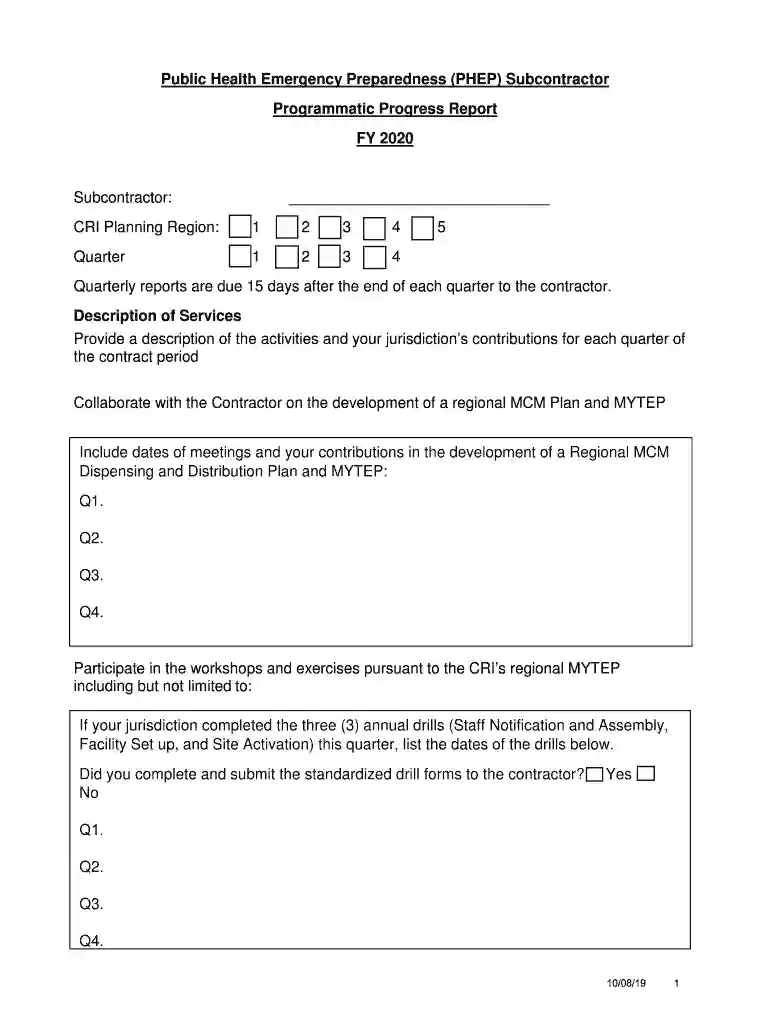
Budget Period 1 Supplemental Massachusetts Department of 2026

Get Form
Budget Period 1 Supplemental Massachusetts Department of Preview on Page 1

Here's how it works

01. Edit your form online
Type text, add images, blackout confidential details, add comments, highlights and more.

02. Sign it in a few clicks
Draw your signature, type it, upload its image, or use your mobile device as a signature pad.

03. Share your form with others
Send it via email, link, or fax. You can also download it, export it or print it out.

Definition and Meaning

The term "Budget Period 1 Supplemental Massachusetts Department of" refers to a form or document used by the Massachusetts Department of Public Health (MDPH) to address public health initiatives. It typically supports emergency preparedness and response initiatives by providing a financial outline for specific fiscal periods. This form usually involves the allocation of resources, setting financial constraints, and ensuring the appropriate use of funds to meet public health objectives.

Steps to Complete the Budget Period 1 Supplemental Massachusetts Department of

Completing this form involves several critical steps to ensure accuracy and compliance. Here are the steps typically involved:

  1. Gather Relevant Information: This includes financial details, objectives of your project, and any supporting documents.
  2. Understand the Requirements: Carefully read through the form instructions to identify mandatory fields and any specific reporting guidelines.
  3. Fill Out the Form: Enter all required information, such as financial summaries, allocation strategies, and project details, into the appropriate sections.
  4. Review and Verify: Double-check all entries for accuracy. Ensure that all calculations are correct and that the information aligns with the outlined objectives.
  5. Submit the Form: Follow the specified submission guidelines, whether it's online or through mail, to ensure timely submission.

Key Elements of the Form

The Budget Period 1 Supplemental form typically includes several sections detailing financial and programmatic information:

  • Budget Summary: An overall financial breakdown, including allocations and expenditures.
  • Program Objectives: Detailed explanation of how funds will aid in meeting emergency preparedness goals.
  • Funding Sources: Information about different funding streams supporting the project.
  • Performance Metrics: Criteria to evaluate the effectiveness of funded activities.

Important Terms Related to the Form

Several key terms are crucial in understanding and completing this form:

  • Fiscal Year (FY): Refers to the Department's operating year for financial reporting and budgeting.
  • Subcontractor: An entity engaged by a primary contractor to provide specific services or tasks.
  • PHEP: Public Health Emergency Preparedness, a program focused on preparing for and responding to public health threats.
  • Allocation: Distribution of funds among various programs and activities.

Who Typically Uses the Form

The primary users of the Budget Period 1 Supplemental form include state health departments, contracted agencies participating in public health initiatives, and subcontractors involved in emergency preparedness projects. These entities utilize the form to outline their financial needs and strategies for accomplishing set objectives.


decoration image ratings of Dochub

Why You Should Use the Budget Period 1 Supplemental Massachusetts Department of

Utilizing this form ensures that funds allocated for public health missions are tracked accurately, promoting transparency and efficiency. It helps in setting clear objectives and performance goals, enabling public health agencies to manage and report on funded activities effectively. Furthermore, it facilitates compliance with federal and state funding requirements, mitigating potential financial discrepancies.

State-Specific Rules for the Form

Massachusetts may have specific regulations and requirements when utilizing this form, which can vary compared to other states. Understanding these state-specific rules is essential to ensure compliance:

  • Local Guidelines: Regulations that may dictate how funds are allocated.
  • State Compliance: Additional compliance measures may be required under Massachusetts law.
  • Regional Adjustments: Adaptation of strategies according to local health needs and resources.

Submission Methods (Online / Mail / In-Person)

The Massachusetts Department of Public Health typically offers multiple methods for form submission:

  • Online Submission: Completing and submitting through an online portal for faster processing.
  • Postal Mail: Mailing the completed form to a designated state department address.
  • In-Person: Hand-delivering the form to ensure immediate receipt and potential clarification.

Examples of Using the Budget Period 1 Supplemental Massachusetts Department of

Case studies demonstrate the diverse applications of this form:

  • Emergency Drill Funding: Allocating resources to simulate public health emergencies and assess readiness.
  • Public Health Reporting: Budgeting for the development of real-time outbreak reporting systems.
  • Community Engagement Initiatives: Financing programs to boost community involvement in health preparedness exercises.

Legal Use of the Form

The Budget Period 1 Supplemental form must be used in accordance with Massachusetts state laws governing financial reporting for public health initiatives. It must accurately represent planned use of funds and comply with federal and state auditing standards to avoid penalties for misrepresentation or misuse of funds.

By addressing each aspect of the form comprehensively, you can ensure that your reporting is thorough, compliant, and reflective of all requirements set by the Massachusetts Department of Public Health.

See more Budget Period 1 Supplemental Massachusetts Department of versions

We've got more versions of the Budget Period 1 Supplemental Massachusetts Department of form. Select the right Budget Period 1 Supplemental Massachusetts Department of version from the list and start editing it straight away!
Versions Form popularity Fillable & printable
2022 4.5 Satisfied (30 Votes)
2020 4.9 Satisfied (47 Votes)
be ready to get more

Complete this form in 5 minutes or less

Get form

Got questions?

We have answers to the most popular questions from our customers. If you can't find an answer to your question, please contact us.
Contact us
Congress occasionally considers legislation that adds money for specific reasons outside of regular appropriations acts and usually after the fiscal year has begun. These pieces of special legislation are called supplementals. They supplement the original appropriation.
The Legislatures FY26 budget funds MassHealth at $22.1 billion, an increase of over $2 billion over the last fiscal year.
An additional budget that provides more money to certain items listed in the final budget.
Supplemental Funding - Increased costs, modifications in design, or a desire to add a closely related component to the ongoing project all within the previously approved performance period - may result in a request for supplemental funds from the sponsor.
Supplemental Budget means a budget through which minor changes are made in respect of receipts or payments for which either no provision is available or the provision available is inadequate in the current years budget.

Security and compliance

At DocHub, your data security is our priority. We follow HIPAA, SOC2, GDPR, and other standards, so you can work on your documents with confidence.

Learn more
ccpa2
pci-dss
gdpr-compliance
hipaa
soc-compliance

People also ask

A supplemental budget provides additional funding to those areas where deficiencies were found. There is no limit to the number of supplemental budgets the Governor may request in a fiscal year, but the funding needs to be available to cover the costs identified in each request.
The Public Finance Management (PFM) Regulations emphasize that supplementary budgets are exclusively for unforeseen and unavoidable circumstances. Any expenditure that was known at the time the original budget was finalized should not be considered unforeseen.

Related links