
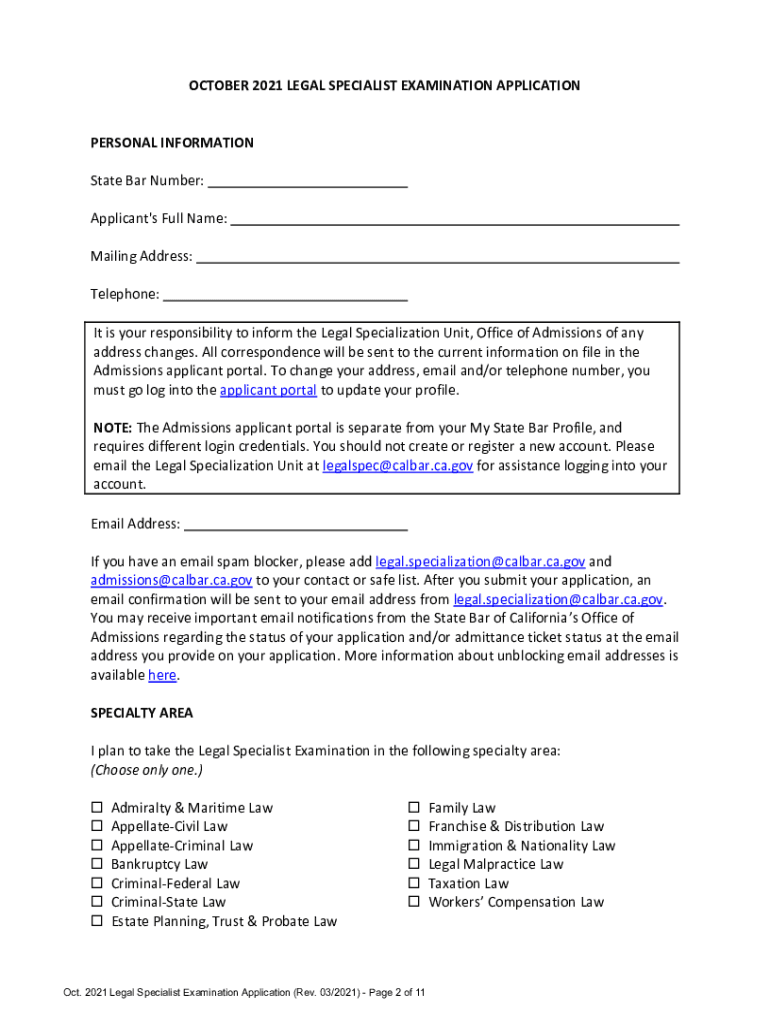







Definition and Purpose of The Florida Bar 2023 Tax Law Application for Certification
The Florida Bar 2023 Tax Law Application for Certification is a crucial document for legal professionals seeking recognition as specialists in tax law. This certification denotes a lawyer’s expertise and commitment to maintaining a high standard of practice in tax law within Florida. By obtaining this certification, attorneys can enhance their professional credibility and marketability.
- Purpose: The certification aims to ensure that attorneys possess the requisite knowledge, skills, and ethical standards necessary to practice tax law effectively.
- Significance: Certified specialists are recognized for their proficiency and receive exclusive rights to identify themselves as certified tax law specialists in Florida.
- Eligibility: The application is open to attorneys who meet specific education and practice requirements outlined by The Florida Bar.
How to Use The Florida Bar 2023 Tax Law Application for Certification
To effectively utilize this form, applicants must understand the procedures and requirements involved in completing the application. The application process is detailed and requires careful attention to ensure completeness and accuracy.
- Review the Requirements: Begin by thoroughly reviewing the eligibility criteria for tax law certification to confirm qualification.
- Complete the Application: Fill out all sections of the form meticulously. The form requests detailed information about the applicant's education, experience, and professional conduct.
- Gather Supporting Documents: Compile necessary documents, such as proof of education, professional experience, and any competitive examinations completed in related fields.
- Submit the Form: After ensuring all sections are completed and supported by relevant documents, submit the form through the designated method: online, by mail, or in person.
Steps to Complete The Florida Bar 2023 Tax Law Application for Certification
Completing the application requires attention to detail and adherence to the specified instructions. Follow these steps for successful completion:
- Personal Information: Provide accurate personal details, including full name, contact information, and Bar membership number.
- Education and Experience: Document relevant educational qualifications and professional experiences, detailing years of practice in tax law.
- Reference and Recommendations: Include contact information for professional references who can attest to your expertise and ethics in tax law.
- Examinations and Continuing Education: List any tax law-specific exams and continuing education courses completed, as these contribute to qualification assessment.
- Certification Fee: Pay the required fee and include proof of payment with the submission.
- Final Review: Conduct a comprehensive review of the completed form to ensure all information and documents are accurate and complete prior to submission.
Eligibility Criteria for Certification
Eligibility is a key factor in determining an applicant's qualification for certification. The criteria encompass education, experience, and ethical standards.
- Educational Background: A JD degree from an accredited law school is mandatory, along with additional tax law coursework.
- Experience Requirements: A minimum number of years practicing tax law in Florida, often requiring demonstrable involvement in specific areas like estate planning or corporate taxation.
- Professional Conduct: Applicants must maintain good standing with The Florida Bar and have no history of disciplinary action.


Required Documents for Application
Applicants must provide comprehensive documentation to support their application, ensuring that all necessary information is readily available to review.
- Educational Transcripts: Official records of law school attendance and tax law courses.
- Verification of Practice: Documentation certifying years of experience in tax law practice.
- Continuing Legal Education (CLE) Certificates: Proof of ongoing education in specialized tax law topics.
- Reference Letters: Recommendations from peers or superiors endorsing the applicant’s capabilities and ethical standards in tax law.
Important Dates and Deadlines
Adhering to all deadlines is paramount to ensure consideration for certification within the intended timeframe.
- Application Submission Deadline: Set well in advance of the certification examination date to allow processing time.
- Examination Dates: Typically scheduled annually, requiring pre-registration.
- Notification of Results: Notified post-examination, with deadlines for any necessary appeals or supplemental submissions.
State-Specific Rules
Applicants must be aware of specific rules and regulations that apply within the state of Florida:
- Bar Membership: Active membership in good standing with The Florida Bar is mandatory.
- Residency Requirements: While not always required, familiarity with Florida's tax statutes and practices is essential for certification.
- State Tax Law Updates: Regularly updated knowledge of changes or amendments in Florida tax law is necessary for compliance.
Penalties for Non-Compliance
Failure to adhere to certification standards or submission guidelines can lead to delays or rejections.
- Application Inaccuracy: Inaccurate or incomplete submissions can result in application denial or requests for additional information.
- Ethical Violations: Non-compliance with ethical standards may lead to disciplinary action and bar from certification.
- Missed Deadlines: Late submissions usually result in disqualification from the examination process for that year.
Form Submission Methods
Understanding the methods for submitting the application is critical for timely and efficient processing.
- Online Submission: The most efficient and preferred method, allowing for electronic verification and prompt processing.
- Mail Submission: Acceptable if postmarked by the submission deadline, though processing times may be longer.
- In-Person Submission: Available for those who prefer direct handover of their application materials for immediate acknowledgment.




