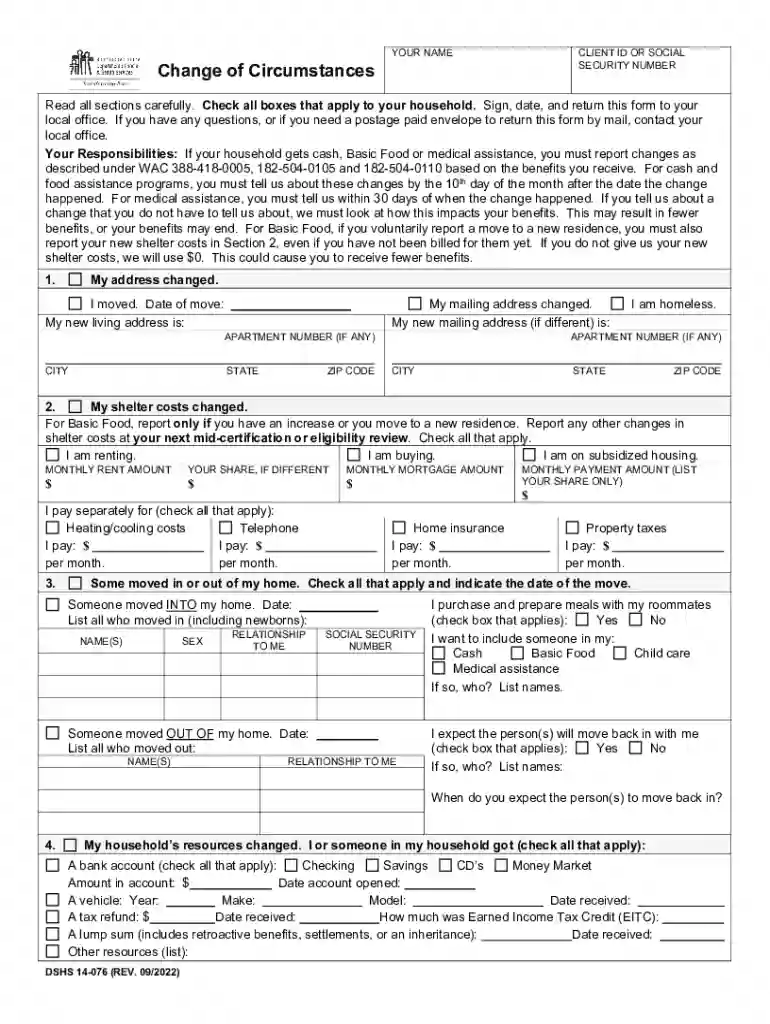
Definition & Meaning
A report form is a structured document used to collect and communicate changes in circumstances that might affect benefits such as cash, Basic Food, or medical assistance. It is a crucial tool in the administrative process, ensuring that a household's reported changes, such as address or income alterations, are accurately documented. The form serves as an official record and aids in determining a household’s eligibility for continued benefits.
- Advantages: Provides a clear framework for communicating necessary changes; helps in maintaining the accuracy of benefit allocations.
- Context of Use: Typically used by individuals receiving government assistance to update relevant authorities on changes impacting their eligibility or benefit level.
- Components: Generally includes sections for personal information, detailed change descriptions, and signatures confirming the accuracy of the information provided.
How to Use the Report Form
Using a report form involves a series of organized steps to ensure all required information is accurately presented. It is essential for maintaining the integrity of your benefits.
-
Identify the Need for Reporting:
- Determine what specific changes need to be reported. This could include a change of address, income adjustments, or updates in household composition.
- Review the reporting requirements typically outlined by the agency overseeing your benefits.
-
Gather Necessary Information:
- Collect all relevant personal documentation, such as identification, pay stubs, or proof of new address.
- Verify the accuracy of all details to avoid potential discrepancies.
-
Complete the Form:
- Fill out all sections of the form including any applicable mandatory fields.
- Ensure all changes are clearly documented, and provide additional explanations in designated areas if necessary.
-
Review for Accuracy:
- Double-check all entered information for accuracy.
- Confirm that all required fields have been completed and any required attachments are included.
-
Submit the Form:
- Choose the submission method most convenient and compliant with requirements, such as online submission, mail, or in-person delivery.
Steps to Complete the Report Form
Completing a report form requires attention to detail to ensure all information is correctly recorded and submitted. The process can generally be broken down into several key steps:
-
Read Instructions:
- Begin by carefully reading the instructions provided with the form to understand which sections relate to your situation.
-
Fill Out Personal Information:
- Enter all personal details accurately, such as name, Social Security Number, and current contact information.
-
Detail Changes:
- Clearly describe any changes in circumstances, ensuring they are correctly documented. Examples include a new job affecting income or a change in household size.
-
Attach Supporting Documentation:
- Include any required documents such as proof of income or change of address documents to substantiate your claims.
-
Review and Sign:
- Carefully review the entire form for completeness and accuracy. Sign to confirm the veracity of the information provided.
-
Submission:
- Submit the completed form according to the provided guidelines, ensuring timely delivery to avoid delays in benefit adjustments.
Key Elements of the Report Form
A report form is structured to capture specific data points necessary for accurate record-keeping. Key elements typically include:
- Personal Information: Sections for basic identifying details like name, contact information, and identification numbers.
- Change Details: Areas to provide detailed descriptions of any changes in circumstances affecting benefits.
- Signature Section: A designated space for signing the form, confirming that all information provided is true and accurate.
- Documentation Checklist: Sometimes included to ensure that all necessary supporting documents accompany the form.
- Instructions Section: Often a part of the form, this helps the user understand how to complete each section accurately.
Required Documents
Completing a report form often necessitates the submission of supporting documents to validate the stated changes. These documents may include:
- Proof of Identity: Such as a copy of your driver's license or passport.
- Income Verification: Recent pay stubs, letters from employers, or tax returns.
- Residency Proof: Utility bills or rental agreements confirming address changes.
- Household Changes: Birth certificates, marriage certificates, or divorce decrees as applicable.
Including these documents ensures that the reported changes are substantiated, facilitating accurate and timely processing.
Form Submission Methods (Online / Mail / In-Person)
The manner in which you submit the report form can significantly affect the processing time:
- Online Submission: Fast and convenient, allowing you to fill out and submit the form electronically. Secure platforms like DocHub facilitate this process seamlessly.
- Mail: A traditional option, requiring physical form completion and mailing to the specified address. Ensure adequate postage and allow additional time for delivery.
- In-Person: Direct submission to the relevant agency office. This method offers the benefit of immediate form receipt confirmation.
Each method has its own advantages, and choosing the right one depends on your access to resources and urgency for submission.
Who Typically Uses the Report Form
The report form is primarily used by individuals and households who receive government benefits to communicate changes that might impact their eligibility or benefit levels. This includes:
- Recipients of Social Services: Individuals receiving support such as food assistance, cash benefits, or medical aid.
- Households with Changing Dynamics: Families experiencing significant changes like job loss, income adjustment, or household member additions or subtractions.
- Applicants in Transition: People undergoing life changes that necessitate updates to their official records to maintain benefit integrity.
Understanding the intended audience ensures the form is used appropriately and effectively for the intended processes.

Penalties for Non-Compliance
Failing to submit a report form or submitting false information can result in significant penalties:
- Benefit Adjustments: Incorrect or delayed reporting may lead to reduction or termination of benefits.
- Financial Penalties: Possibility of fines or repayment obligations for benefits received under false pretenses.
- Legal Consequences: Potential for criminal charges in cases of deliberate fraud or misrepresentation.
Timely and accurate form submission is crucial in maintaining benefit eligibility and avoiding these penalties, underscoring the importance of careful compliance.