





Definition and Purpose of the Missouri Deed Beneficiary
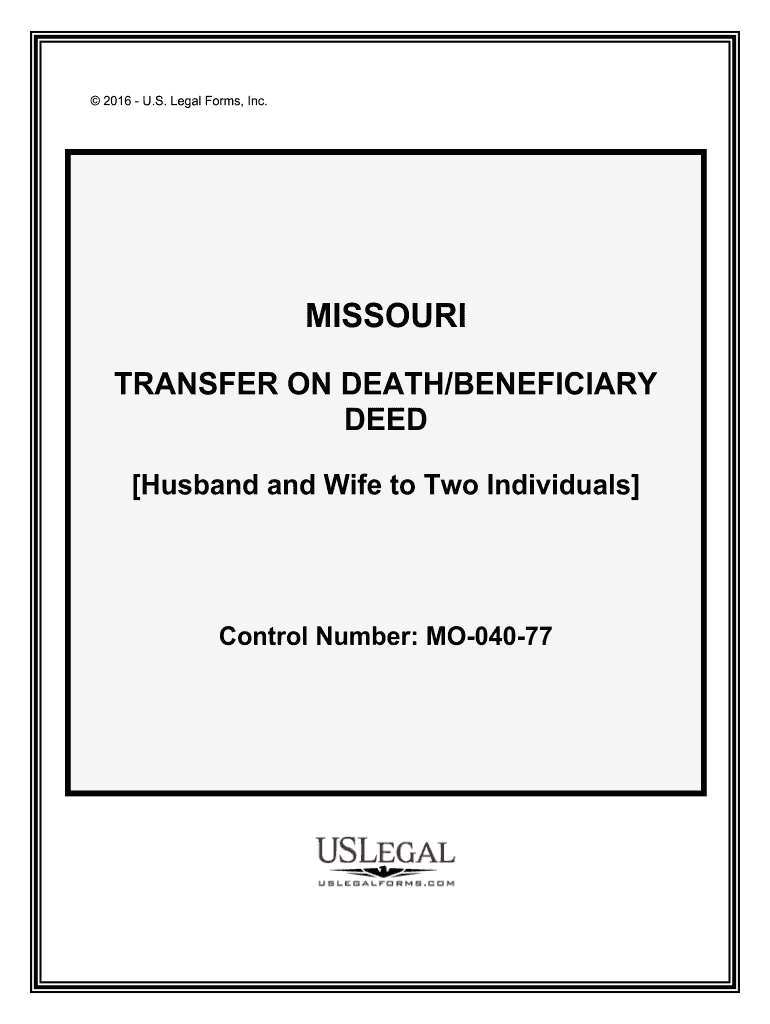
The Missouri Deed Beneficiary, formally known as the Missouri Transfer on Death (TOD) or Beneficiary Deed, is a legal instrument used to transfer property to designated beneficiaries upon the death of an individual or couple. This form allows the property to pass directly to the named beneficiaries without the need for probate, streamlining the transfer process significantly. Unlike traditional wills or trusts, the TOD deed becomes effective only upon the death of the grantor(s), ensuring that ownership remains with them during their lifetime. This deed is particularly useful for those looking to transfer real estate seamlessly, maintaining control over the property while ensuring a straightforward transition after death.
How to Use the Missouri Deed Beneficiary
To effectively use the Missouri Deed Beneficiary, property owners must execute the deed with all necessary legal formalities. This involves:
- Identifying Beneficiaries: Clearly list individuals or entities who will inherit the property.
- Drafting the Deed: The deed must comply with Missouri state laws, including a legal description of the property.
- Signing and Notarization: Both grantors must sign the document in the presence of a notary public.
- Recording the Deed: File the deed with the Recorder of Deeds in the county where the property is located. It is crucial to record the deed to make it legally binding.
This process ensures that the deed accurately reflects the grantors' intentions and complies with legal requirements, providing peace of mind for both grantors and beneficiaries.
Steps to Complete the Missouri Deed Beneficiary
Completing a Missouri TOD deed involves several steps to ensure its legal enforceability:
- Preparation: Gather all relevant information about the property and intended beneficiaries.
- Draft the Deed: Use a legally vetted template or enlist for professional assistance to draft the deed.
- Legal Description: Include an accurate legal description of the property, as outlined on your current deed or property tax statement.
- Signatures and Notarization: Have all grantors sign the deed in the presence of a notary public for authentication.
- Recording: Submit the notarized deed to the local Recorder of Deeds office for recording. This step is essential, as unrecorded deeds may not be recognized legally.
Each step must be completed carefully to avoid nullification of the deed, ensuring a smooth transfer process for the beneficiaries.
Importance of the Missouri Deed Beneficiary
The Missouri Deed Beneficiary is crucial both in estate planning and property management for several reasons:
- Probate Avoidance: It allows property to bypass the probate process, reducing legal expenses and time delays.
- Control: Grantors retain full control over the property during their lives, with the option to revoke the deed at any time.
- Clarity: Provides clear instructions on property distribution, minimizing family disputes and confusion.
- Cost-Effective: It often serves as a cost-effective alternative to creating a complex trust or numerous legal instruments.
Understanding these benefits helps individuals make informed decisions about their estate planning strategies, reducing legal complexities for heirs.
Legal Use of the Missouri Deed Beneficiary
The legal use of the Missouri Deed Beneficiary includes:
- Revocability: Grantors can revoke or change beneficiaries at any point before their death.
- Non-Interference with Debts: The deed does not alter current ownership rights or affect creditors' claims. Any encumbrances on the property at the time of the grantors' deaths remain in force.
- Non-Partnership Interests: The form does not affect joint tenancy or tenancy by the entirety unless specifically stated.
This legal framework ensures that property transitions align with regulatory norms while respecting existing legal obligations.
Key Elements of the Missouri Deed Beneficiary
When drafting the TOD deed, these key elements must be included:
- Grantor(s) Information: Full legal names and addresses.
- Property Description: A precise legal description matching existing property records.
- Beneficiary Details: Full legal names and relationship to the grantor(s), if applicable.
- Execution and Notarization: Signatures of all grantors and notarization to validate the deed legally.
Including these elements ensures the deed's validity and serves as an enforceable document governing property transfer.
State-Specific Rules for the Missouri Deed Beneficiary
Missouri has distinct regulations governing TOD deeds:
- Recording Requirement: The deed must be recorded before the grantor's death to be valid.
- No Consideration Required: The deed is not considered a sale and does not require monetary exchange or consideration.
- Subsequent Transfer Limitations: Any sale or transfer of the property must consider the existing TOD deed, particularly if not revoked.
Adhering to these state-specific rules ensures compliance and leverages the deed's intended benefits for estate planning.
Examples of Using the Missouri Deed Beneficiary
Consider the following practical examples for utilizing a TOD deed:
- Couple to Children: A couple uses the deed to transfer their home to their children, ensuring a simple transfer upon death without involving the probate court.
- Single Individual to Sibling: A single homeowner executes a TOD to transfer their property directly to a sibling, maintaining the home in the family line.
- Business Property to Partner: A deed is used to transfer business real estate to a surviving business partner, facilitating continued business operations without legal interruptions.
These examples demonstrate the diverse scenarios where TOD deeds offer streamlined solutions in estate planning, emphasizing the flexibility and adaptability of the instrument for various property transfer needs.