




01. Edit your form online
Type text, add images, blackout confidential details, add comments, highlights and more.

Type text, add images, blackout confidential details, add comments, highlights and more.

Draw your signature, type it, upload its image, or use your mobile device as a signature pad.

Send it via email, link, or fax. You can also download it, export it or print it out.
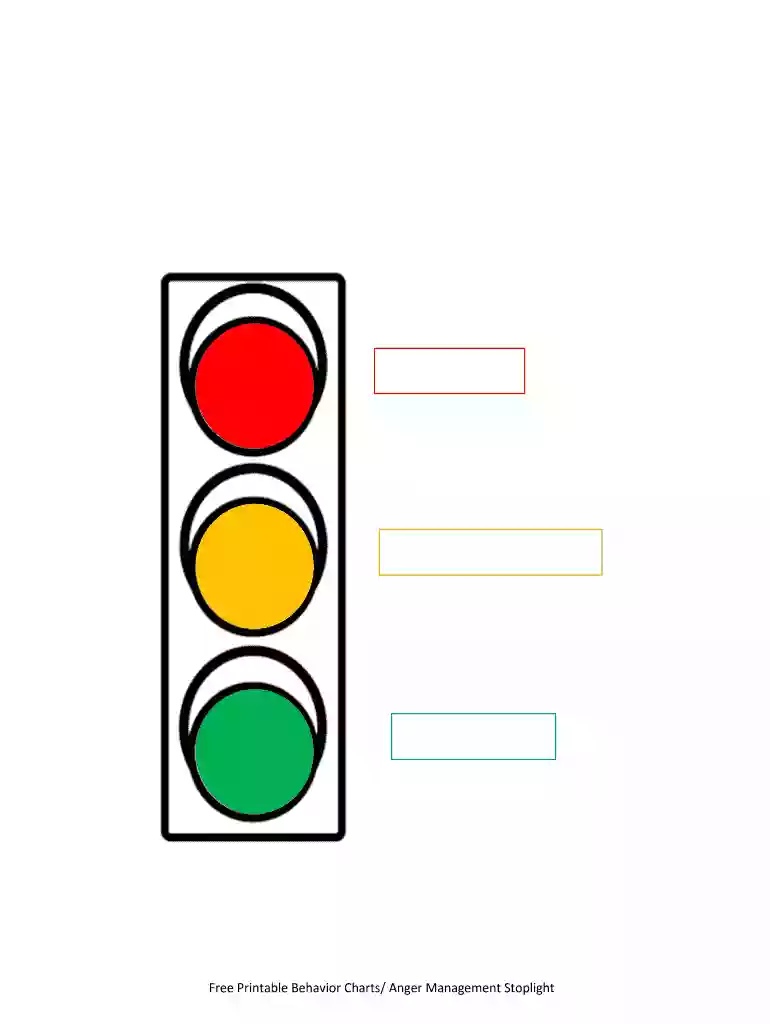
The "Free Printable Behavior Charts Anger Management Stoplight" serves as an educational and therapeutic tool designed to help individuals, particularly children, manage their emotions effectively. This chart uses a stoplight system, which is visually intuitive, to guide users in identifying and regulating their feelings. The stoplight colors—red, yellow, and green—represent different levels of emotional intensity, helping users gauge their emotional state and respond appropriately. By facilitating self-awareness and emotional control, these charts provide a structured approach to anger management.
Using the behavior chart involves engaging with each color on the stoplight to associate specific emotions and actions. Here’s how to effectively use the chart:
Green Light: Represents calm and controlled emotions. Encourage individuals to write down or express what feels good at this stage and the behavior they exhibit.
Yellow Light: Indicates a warning or rising tension. Users should identify what makes them feel uneasy or irritable and note behaviors that might need monitoring.
Red Light: Denotes high stress or anger. Encourage individuals to reflect on what triggers these feelings and explore constructive coping mechanisms like deep breathing or taking a break.
Use regular check-ins to see how users are managing their emotions and to adjust strategies as necessary.
These behavior charts are most commonly used by educators, parents, and therapists within the United States. They serve as an effective tool in schools, therapy sessions, and at home for children who experience difficulty in managing anger or have been diagnosed with emotional regulation issues such as ADHD. Additionally, caregivers might implement these charts as part of a broader behavioral intervention plan.


Print the Chart: Begin by printing the free chart provided. Ensure it's accessible to the user at all times.
Discuss the Colors: Explain what each color represents. Provide examples of emotions and corresponding behaviors for each light.
Encourage Daily Use: Introduce regular times throughout the day where users can assess and mark their feelings on the chart.
Reflect and Adjust: At the end of each week, review the chart to understand patterns in emotional responses. Discuss possible adjustments or interventions if certain colors dominate.
Consider a classroom scenario where a child starts to express frustration during group activities. Using the chart, they identify feeling ‘yellow’ and communicate the need for a quiet moment. The teacher can then provide a calm-down corner to diffuse the situation. In a similar home setting, a parent observing a child's ‘red’ moment might implement a time-out to help the child de-escalate.
Although the focus of these charts is on tangible interaction via printed forms, they can be digitized for use in educational software or apps that monitor emotional behaviors over time. The platform DocHub makes it possible to adapt these charts digitally, allowing for easy integration and annotation. This feature ensures a continuation of emotional tracking via mobile devices or computers, providing flexibility and immediate access to the charts.
The traditional paper version allows for tactile engagement, encouraging kids to mark their feelings physically, which can be beneficial in reinforcing the learning process. However, a digital version, supported by platforms like DocHub, offers advantages such as preservation of records and ease of sharing with professionals or family members, facilitating a more collaborative approach to emotional management.
We've got more versions of the Free Printable Behavior Charts Anger Management Stoplight form. Select the right Free Printable Behavior Charts Anger Management Stoplight version from the list and start editing it straight away!
| Versions | Form popularity | Fillable & printable |
|---|---|---|
| 2011 | 4.2 Satisfied (49 Votes) |
At DocHub, your data security is our priority. We follow HIPAA, SOC2, GDPR, and other standards, so you can work on your documents with confidence.


