




01. Edit your oaas pf 10 online
Type text, add images, blackout confidential details, add comments, highlights and more.

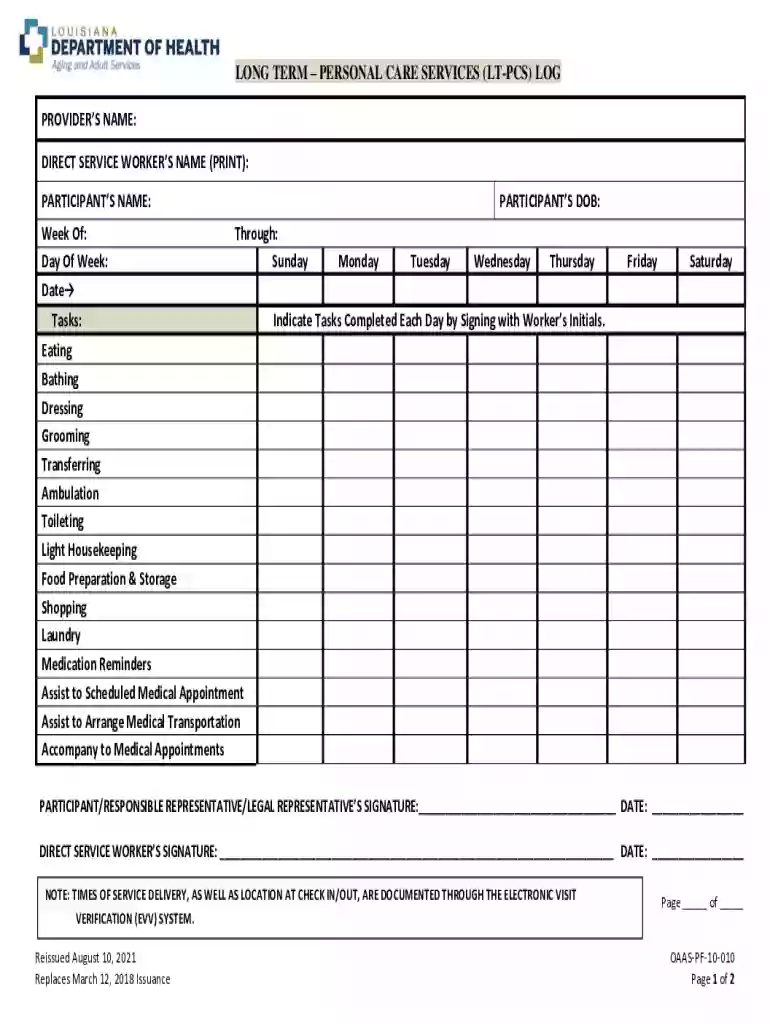
Type text, add images, blackout confidential details, add comments, highlights and more.

Draw your signature, type it, upload its image, or use your mobile device as a signature pad.

Send oaas pf 10 010 via email, link, or fax. You can also download it, export it or print it out.
The "LOG of WEEKLY SERVICES SUPPORTS and DAILY PROGRESS NOTES" is a comprehensive documentation tool used primarily in healthcare and support services settings. This log serves as a record-keeping system for maintaining detailed accounts of the services provided to clients over a specific period. The log includes entries that detail daily tasks completed, the progress notes pertaining to client interactions, and other relevant observations. This type of documentation is vital for ensuring transparency, accountability, and effective communication among service providers. It is often used in conjunction with Long Term-Personal Care Services (LT-PCS) and Community Choices Waiver (CCW) Personal Assistance Services (PAS).
Composing a detailed and accurate log requires attention to several key elements that provide clarity and ensure completeness:
Filling out the log accurately involves a step-by-step procedure to capture all necessary information:
The effectiveness of the log depends on its correct application within daily operations:
The primary purpose of the log is to enhance service delivery through consistent and transparent documentation:
This log is typically utilized by professionals in the healthcare and human services sector, especially those providing direct client care:


This form has specific legal implications and requirements:
Consider the following scenarios where logs effectively improve service provision:
These examples illustrate the log’s role in documenting and verifying daily activities and ensuring quality care delivery.
We've got more versions of the oaas pf 10 form. Select the right oaas pf 10 version from the list and start editing it straight away!
At DocHub, your data security is our priority. We follow HIPAA, SOC2, GDPR, and other standards, so you can work on your documents with confidence.
(b) A separate daily running record shall be kept of all prescribed controlled substances received, indicating the date, name and quantity of prescribedRead more
Oct 1, 2011 NOTE: DAILY SERVICES/SUPPORTS DESCRIPTIONS, COMMENTS AND PROGRESS NOTES ARE TO BE RECORDED ON PAGE 2 OF THIS FORM. ADDITIONAL PAGES MAY BE USED.Read more
A daily medication log, Monthly progress notes, including a description of the services provided and the individuals response to services;


