




01. Edit your form online
Type text, add images, blackout confidential details, add comments, highlights and more.

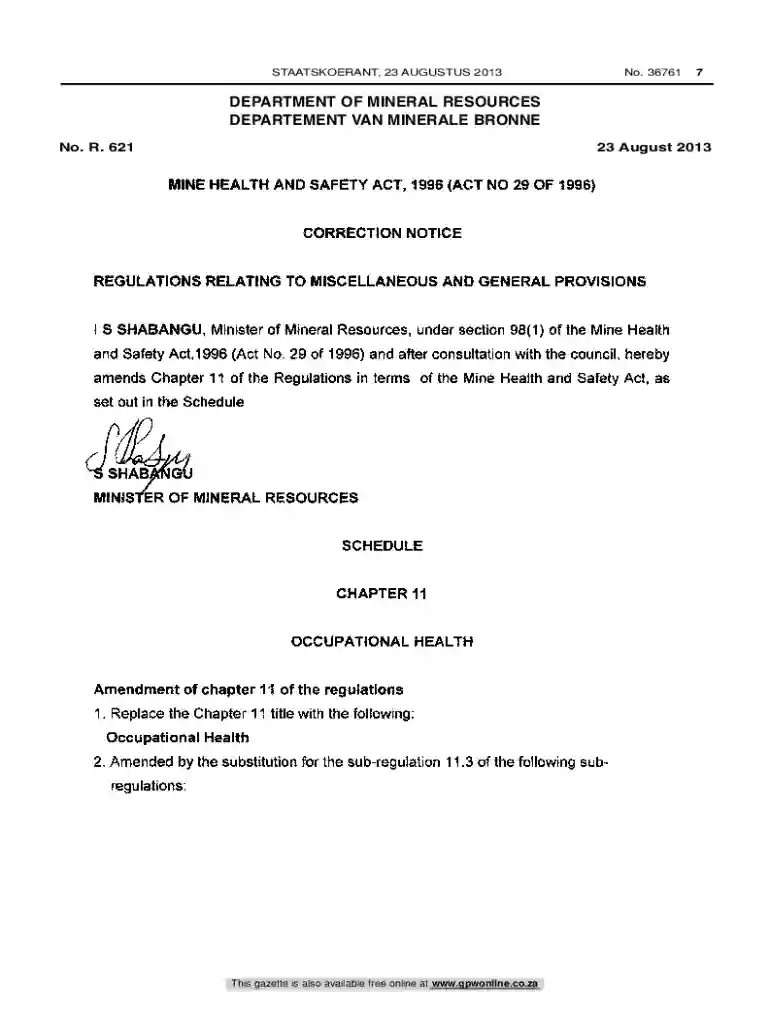
Type text, add images, blackout confidential details, add comments, highlights and more.

Draw your signature, type it, upload its image, or use your mobile device as a signature pad.

Send it via email, link, or fax. You can also download it, export it or print it out.
The "Mine Health and Safety Act: Regulations: Miscellaneous and" is a legislative framework intended to ensure the safety and health of individuals working in the mining industry. It mandates specific protocols and standards that mining operations must follow to protect workers from occupational hazards. This regulation is part of the broader Mine Health and Safety Act, enacted to strengthen and clarify health and safety measures within the mining sector. It covers various aspects, including workplace conditions, safety procedures, and employee welfare.
The regulation encompasses several critical elements designed to maintain health and safety in mining operations:
These elements combine to form a comprehensive approach to maintaining a safe working environment in mines.
Completing the requirements of these regulations involves several steps that mining companies must follow:
Through these steps, mining operations can ensure regulatory compliance and protect employee well-being.
The regulation is primarily utilized by:
These entities play a crucial role in implementing and upholding the standards outlined in the regulations.


Adhering to the "Mine Health and Safety Act: Regulations: Miscellaneous and" is vital for numerous reasons:
Compliance with these regulations ultimately supports a sustainable and responsible mining industry.
Understanding important terminology related to the regulation is crucial for compliance:
Familiarity with these terms aids in comprehending the regulation's requirements and effectively implementing them.
State-specific modifications might exist within the broader framework of the regulation:
Understanding and accommodating these local variations help in aligning with regional compliance needs.
The regulation serves as a legal guide and enforcement tool for maintaining safety standards in mining operations:
The legal use of the regulation reinforces its applicability and urgency in protecting workers and ensuring lawful mining operations.
We've got more versions of the Mine Health and Safety Act: Regulations: Miscellaneous and form. Select the right Mine Health and Safety Act: Regulations: Miscellaneous and version from the list and start editing it straight away!
At DocHub, your data security is our priority. We follow HIPAA, SOC2, GDPR, and other standards, so you can work on your documents with confidence.
The current statutory provisions for the Federal Mine Safety and Health Act of 1977, as amended by the MINER Act of 2006, are available at arlweb.msha.gov/regs/Read more
The provisions of this part marked [Statutory Provision] appear in Title III of the Federal Coal Mine Health and Safety Act of 1969.Read more
These purpose of these Regulations is to implement the Planning and Development. Act, 2000. They consolidate all previous Regulations made under the 2000 ActRead more


