






Definition & Meaning
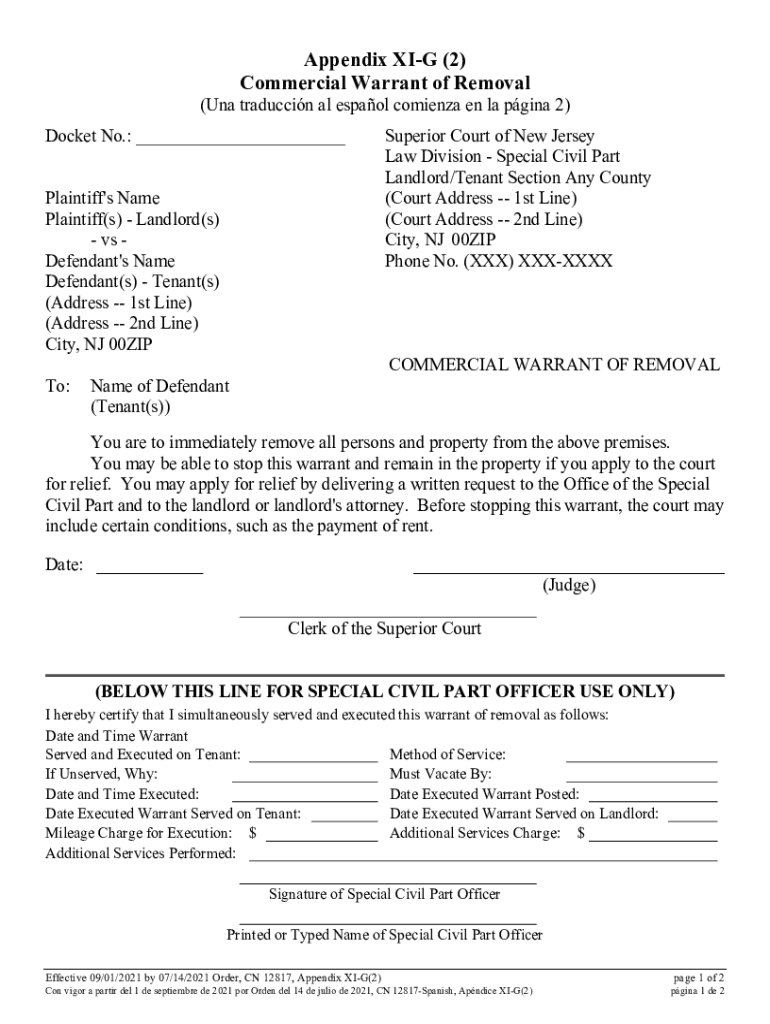
A Commercial Warrant of Removal, also known as "Orden de desalojo de una propiedad comercial," is a legal document issued by the Superior Court of New Jersey. It mandates that a tenant must vacate a commercial property immediately. This document is a crucial part of the eviction process for commercial properties and is typically used when a tenant has failed to comply with lease terms, such as not paying rent or violating other conditions agreed upon in the commercial lease agreement.
Key Elements of the Commercial Warrant of Removal
The Commercial Warrant of Removal contains several key elements essential for its execution:
- Court Details: Information about the issuing court, including jurisdiction and contact details.
- Plaintiff and Defendant Information: Names and contact information of both parties involved—typically the landlord (plaintiff) and the tenant (defendant).
- Certification of Service: Verification by a Special Civil Part Officer that the warrant has been served to the tenant.
How to Use the Commercial Warrant of Removal
For landlords:
- File a Complaint: Begin by filing a complaint in the Superior Court of New Jersey if the tenant defaults or violates lease terms.
- Request the Warrant: If the court rules in favor, request a Commercial Warrant of Removal.
- Serve the Warrant: A Special Civil Part Officer serves the warrant to the tenant.
- Enforce the Warrant: If the tenant fails to vacate, the officer enforces the warrant, facilitating the removal of the tenant from the property.
For tenants:
- Seek Relief: After receiving the warrant, tenants can apply for relief by negotiating with the landlord or taking legal action to stay the eviction. This may involve fulfilling certain conditions, such as paying overdue rent.
How to Obtain the Commercial Warrant of Removal
To obtain the warrant, landlords must:
- File a Court Petition: Initiate the process by filing a detailed complaint with the Superior Court.
- Attend a Court Hearing: Present your case at the scheduled hearing. Provide evidence such as lease agreements, payment records, and correspondences.
- Receive Court Approval: Upon a favorable judgment, the court issues the warrant as part of the ruling.
Legal Use of the Commercial Warrant of Removal
The legal use of the warrant is strictly regulated:
- Compliance with State Laws: Must conform to the New Jersey state eviction laws and procedures.
- Judicial Authorization: Issued only after a court judgment in favor of the landlord.
- Execution by Authorized Officers: Can only be executed by designated civil officers in accordance with legal protocols.
Steps to Complete the Commercial Warrant of Removal
- Obtain the Necessary Forms: Access the official forms from the courthouse or online legal platforms.
- Fill out Details Accurately: Input all relevant information about the property, tenant, and lease conditions.
- Submit the Completed Forms: File with the court clerk and pay any required filing fees.
- Attend Scheduled Hearings: Prepare to present evidence and witness testimonies, if applicable.
State-Specific Rules for the Commercial Warrant of Removal
In New Jersey, the rules include:
- Notice Requirements: The tenant must be given proper notice before the warrant is issued.
- Timeline for Execution: Typically executed within a specified period post-judgment, ensuring compliance with tenant rights.
Examples of Using the Commercial Warrant of Removal
Case Scenario: A retail store tenant consistently failed to pay rent over six months. The landlord served the tenant notices but received no response. The court issued a Commercial Warrant of Removal following a hearing where the tenant’s continuous defaults were proven. Resolution: The tenant vacated the premises within the timeframe stipulated in the warrant, allowing the landlord to lease the space to a new business.
Who Typically Uses the Commercial Warrant of Removal
- Landlords and Property Managers: Primarily responsible for initiating the process to reclaim commercial properties.
- Legal Advisors and Attorneys: Provide guidance and representation through the legal process.
- Government Officials: Execute the warrant through authorized officers ensuring law enforcement.