LT11C Sample 2026

Get Form
ltr 112c Preview on Page 1

Here's how it works

01. Edit your ltr 112c online
Type text, add images, blackout confidential details, add comments, highlights and more.

02. Sign it in a few clicks
Draw your signature, type it, upload its image, or use your mobile device as a signature pad.

03. Share your form with others
Send it via email, link, or fax. You can also download it, export it or print it out.

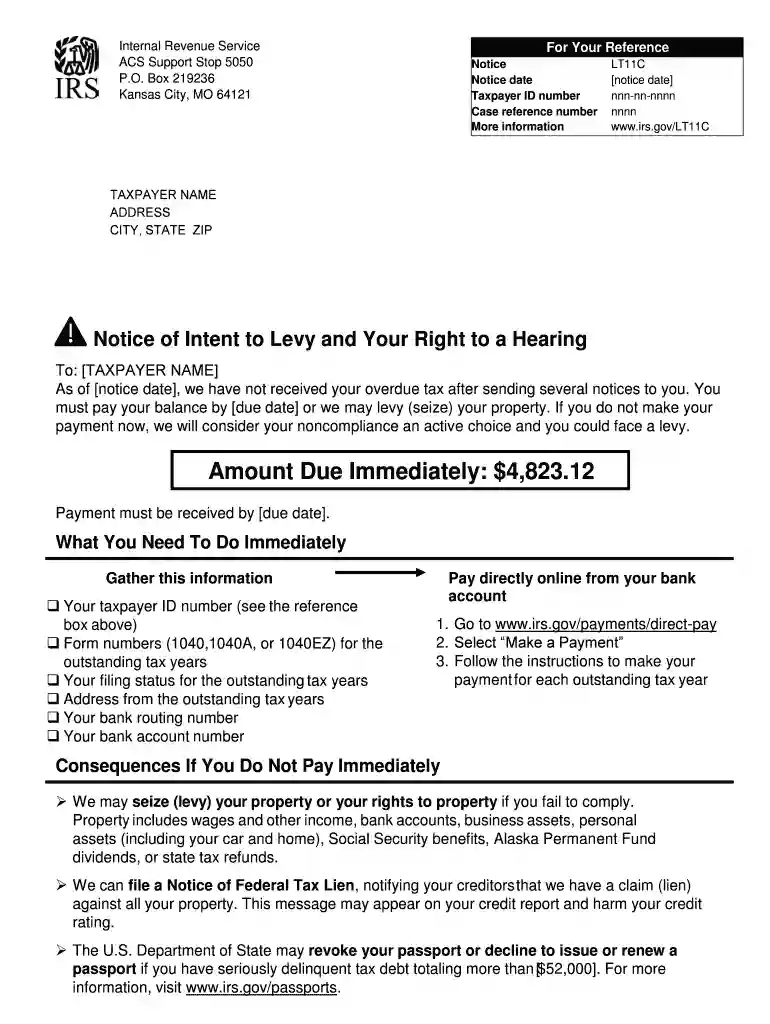
Definition and Purpose of the LT11C Sample

The LT11C Sample is a specific notice issued by the Internal Revenue Service (IRS), directed at taxpayers with an overdue tax balance. This document serves as an official notification of outstanding taxes, detailing the exact amount owed and specifying the due date for payment. It functions as both a reminder and a warning, indicating potential enforcement actions, such as property levies, that could be taken if the taxpayer fails to settle the balance by the stipulated deadline. Understanding the LT11C Sample is crucial for managing tax liabilities and avoiding further penalties.

Key Elements Found in the LT11C Sample

The LT11C Sample notice includes several critical elements that taxpayers must review carefully:

  • Amount Due: Specifies the total tax liability, including any penalties or interest accrued.
  • Payment Deadline: Clearly states the date by which the outstanding balance must be paid to avoid further action.
  • Contact Information: Provides details on how to reach IRS representatives for support or inquiries about the notice.
  • Available Payment Options: Outlines methods for settling the amount due, such as online payments, checks, or installment plans.
  • Consequences of Non-Payment: Describes potential legal actions, such as liens, levies, or wage garnishments, if the balance is not paid.

Understanding these elements can help taxpayers take appropriate and timely action in response to receiving an LT11C Sample.

How to Obtain the LT11C Sample

The LT11C Sample is typically sent directly by the IRS to taxpayers who have overdue tax balances. Taxpayers do not need to apply for or request this form; rather, it is automatically issued when the criteria are met. If you believe you should have received an LT11C Sample but have not, consider checking with the IRS directly. Here’s how you can engage with the IRS if you have questions or require additional forms:

  1. Online through the IRS Website: Many taxpayer inquiries can be resolved through online tools available on the IRS website.
  2. Call the IRS: Use the contact number provided on any IRS correspondence you've received to speak with a representative.
  3. Visit a Local IRS Office: For a more personal approach, schedule an appointment at a nearby IRS office.

Steps to Complete the LT11C Sample

Once you receive the LT11C Sample notice, it is essential to address it promptly to prevent further complications. Here are the steps to follow:

  1. Review the Notice: Carefully read through the document to understand the amount due and payment deadline.
  2. Verify Information: Confirm that all details, such as your taxpayer information and balance, are accurate.
  3. Explore Payment Options: Evaluate the options available for payment, considering personal financial factors.
  4. Contact the IRS for Clarification: If there are discrepancies or questions, reach out to the IRS using the contact information provided.
  5. Submit Payment: Make the payment by the indicated methods before the due date.
  6. Retain Copies: Keep a copy of the notice and proof of payment for your records.

Completing these steps ensures that you address the LT11C Sample adequately and maintains your standing with the IRS.

Why the LT11C Sample Is Issued

The LT11C Sample is issued to serve several critical functions in the tax enforcement process:

  • Inform Taxpayers: Alerts individuals about overdue balances to facilitate resolution before enforcement actions.
  • Formal Record: Functions as official documentation of the IRS's notification to the taxpayer.
  • Enforcement Trigger: Acts as the final warning before the IRS initiates actions like property levies.

Understanding the purpose behind the LT11C Sample can help taxpayers appreciate the importance of timely payment and compliance with IRS regulations.

Legal Use and Implications of the LT11C Sample

The LT11C Sample is a formal legal document that the IRS uses to notify taxpayers of impending actions due to unpaid taxes. It's crucial to recognize the legal weight this document carries:

  • Legal Authority: The IRS has the power to enforce tax collection, including levies and garnishments, following the issuance of an LT11C Sample.
  • Due Process: Taxpayers have a right to a Collection Due Process hearing if they wish to dispute the proposed levies.
  • Documentation for Disputes: Should legal disputes arise, the LT11C Sample serves as pivotal documentation.

Being aware of the legal context and implications of the LT11C Sample helps in effectively managing any interactions with the IRS.

Important Terms Related to the LT11C Sample

Understanding specific terminology related to the LT11C Sample enhances comprehension and effective response to the notice. Key terms include:

  • Levy: A legal seizure of your property to satisfy a tax debt.
  • Lien: A claim used as security for the tax debt.
  • Collection Due Process Hearing: An opportunity for the taxpayer to dispute the tax owed or the proposed levy actions.
  • Installment Agreement: A payment plan arranged with the IRS to pay the owed amount over time.

Familiarity with these terms aids taxpayers in navigating the implications of the LT11C Sample efficiently.

IRS Guidelines Governing the LT11C Sample

The IRS has comprehensive guidelines regulating the issuance and management of the LT11C Sample:

  • Notice Issuance: Sent when balances are overdue, as part of a structured collection procedure.
  • Communication: The IRS provides clear channels for taxpayers to seek clarification or dispute issues.
  • Flexibility in Payment Options: Offers various methods to settle debts, accommodating differing financial situations.

Adhering to these guidelines ensures that taxpayers interact appropriately and effectively with the IRS concerning the LT11C Sample.

Filing Deadlines and Important Dates Related to the LT11C Sample

Timing is critical when dealing with the LT11C Sample. Key dates and deadlines include:

  • Payment Due Date: Clearly outlined in the notice, signifying when the balance must be paid.
  • Deadline for Hearing Requests: Taxpayers typically have 30 days to request a Collection Due Process hearing.
  • Expiration of Payment Options: Some options, like installment agreements, have specific deadlines taxpayers need to adhere to.

Understanding and adhering to these deadlines is vital to prevent adverse actions by the IRS.

The LT11C Sample is an integral document for managing overdue tax balances and maintaining compliance with the IRS. Proper comprehension and timely action upon receiving this notice can significantly mitigate potential financial and legal challenges.

be ready to get more

Complete this form in 5 minutes or less

Get form

Got questions?

We have answers to the most popular questions from our customers. If you can't find an answer to your question, please contact us.
Contact us
Be ready to verify your identity when calling the IRS Social Security numbers and birth dates for those who were named on the tax return. An Individual Taxpayer Identification Number letter if the you have one. Your filing status. The prior-year tax return. A copy of the tax return in question.
After You Verify: What Happens Next? Once the IRS verifies your identity, itll resume processing your return. In most cases, refunds are issued within up to 9 weeks of verification.
CP stands for computer paragraph, and these notices alert taxpayers about potential discrepancies on their tax returns. CP Notices are triggered by certain actions or balances due and sent out by the Services automated notice system.
Letters 5071C, Potential Identity Theft During Original Processing with Online Option, is mailed to taxpayers to notify them that the IRS received an income tax return using your name, Social Security number (SSN) or individual taxpayer identification number (ITIN).
Have the 5071C letter you received and a copy of the tax return listed in the letter. If you havent yet filed your income tax return, youll be able to indicate that on the site. If youd rather speak with an IRS representative directly, you can call the toll-free number listed on your 5071C letter.

Security and compliance

At DocHub, your data security is our priority. We follow HIPAA, SOC2, GDPR, and other standards, so you can work on your documents with confidence.

Learn more
ccpa2
pci-dss
gdpr-compliance
hipaa
soc-compliance
be ready to get more

Complete this form in 5 minutes or less

Get form

People also ask

What this notice is about. You received this notice because you still have an unpaid balance on one of your tax accounts and it requires your immediate attention. This notice also explains the U.S. Department of States ability to deny or revoke a passport if you have seriously delinquent tax debt.
5071C letters are meant to prevent identity theft by requiring manual identity verification. The fact that youve never filed jointly before is one of several ``red flags about a return that make it more likely to be selected for the id verification process.
Taxpayers receive the Letter 5071C if the IRS suspects that someone other than you filed your federal income tax return. The form asks for specific identifying information to confirm that it was you who sent the return.

Related links