


Developing a Living History Character 2026

Get Form
Developing a Living History Character Preview on Page 1

Here's how it works

01. Edit your form online
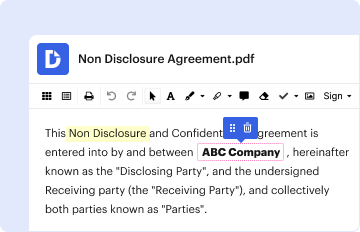
Type text, add images, blackout confidential details, add comments, highlights and more.
02. Sign it in a few clicks
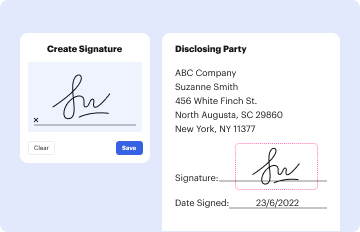
Draw your signature, type it, upload its image, or use your mobile device as a signature pad.
03. Share your form with others
Send it via email, link, or fax. You can also download it, export it or print it out.

How to use or fill out Developing a Living History Character with our platform

Form edit decoration
9.5
Ease of Setup
DocHub User Ratings on G2
9.0
Ease of Use
DocHub User Ratings on G2
  1. Click ‘Get Form’ to open the Developing a Living History Character document in the editor.
  2. Begin by filling out the Character Development Worksheet 1. Start with the character's name, date and place of birth, and significant early life events.
  3. Proceed to the education section, detailing how and where your character was educated. This will help establish their background.
  4. In the Current Life section, describe your character's living situation, occupation, and social status. Use our platform’s text fields to input this information easily.
  5. Next, move on to Character Development Worksheet 2. Fill in local facts about your character’s community and significant events that shaped their life.
  6. Utilize the Character Writing Worksheets to create a narrative voice for your character. Outline key topics they would discuss based on historical context.

Engage with our platform today to bring your living history character to life effortlessly!

be ready to get more

Complete this form in 5 minutes or less

Get form

Got questions?

We have answers to the most popular questions from our customers. If you can't find an answer to your question, please contact us.
Contact us
Reenactment serves history; LARP serves imagination. The common misconception is that both are forms of play-acting. While thats not entirely wrong, it understates the time, skill, and commitment involved. Both demand preparation, craftsmanship, and a willingness to step outside everyday life.
Reenactors often work within organised groups, sometimes portraying specific regiments or historical figures. The goal is to give audiences a sense of what a historical event may have looked and felt like, often in a public, performative setting. Living history, by contrast, is more immersive and interpretive.
Historical reenactment and living history are immersive activities that allow individuals to experience and explore the cultures and daily lives of past societies.
Historical figure is a person who lived in the past and whose deeds exerted a docHub impact on other peoples lives and consciousness. These figures are attributed with certain features that are a compilation of the actual values they proclaimed and the manner they were perceived by others.
Historical reenactment (or re-enactment) is an educational or entertainment activity in which mainly amateur hobbyists and history enthusiasts dress in historical uniforms and follow a plan to recreate aspects of a historical event or period.

Security and compliance

At DocHub, your data security is our priority. We follow HIPAA, SOC2, GDPR, and other standards, so you can work on your documents with confidence.

Learn more
ccpa2
pci-dss
gdpr-compliance
hipaa
soc-compliance
be ready to get more

Complete this form in 5 minutes or less

Get form

People also ask

A bachelors or associate degree is often sufficient to obtain living history jobs. You must have an in-depth knowledge of the history surrounding the era of history you want to perform. You also need dramatic skills to perform the acting duties of the job.
Living history seeks to educate visitors by interpreting how people lived in the past through demonstrations and interaction.
Meaning of living history in English activities that help people learn about the past, such as performing plays about historical events, talking about your own experiences, or living in the same way as people in the past: The museum volunteers share their wartime stories as living history.

Related links