




01. Edit your form online
Type text, add images, blackout confidential details, add comments, highlights and more.

Type text, add images, blackout confidential details, add comments, highlights and more.

Draw your signature, type it, upload its image, or use your mobile device as a signature pad.

Send it via email, link, or fax. You can also download it, export it or print it out.
Form 2290, also known as the Heavy Highway Vehicle Use Tax Return, is used by vehicle owners to report and pay the federal highway use tax on heavy vehicles. This tax applies to trucks, tractors, and buses that possess a taxable gross weight of 55,000 pounds or more and are operated on public highways in the United States. The form ensures that funds are used to maintain and improve the nation's highways, reflecting the wear and tear heavy vehicles cause.
Gather Information: Before filling out Form 2290, collect essential details such as the vehicle identification number (VIN), taxable gross weight, and the first month the vehicle was used on public highways during the tax period.
Complete Part I: This section requires you to input details about the taxable vehicles, including the VIN and the taxable gross weight category. Calculate the tax due based on the vehicle’s weight and mileage.
Part II – Tax Computation: In this section, compute the tax amount owed. Use the provided IRS tax rate tables to determine the correct amount based on the vehicle’s weight and usage.
Sign and Date the Form: After reviewing the completed form for accuracy, provide a signature and the date to certify the details provided.
Submit the Form: Choose a submission method, either electronically filing through an authorized provider or mailing the completed form to the IRS. Ensure all payments are included, if applicable.
The IRS provides specific guidelines for completing Form 2290. These include detailed instructions on calculating taxes, understanding exemptions, and information on installments for partial-month usage. The IRS guidelines stress the importance of accuracy, as incorrect entries can result in processing delays and potential penalties.
Form 2290 has an annual filing deadline of August 31 for any vehicles that were first used on public highways during July. For vehicles first used in another month, the form is due by the last day of the month following the month of first use. Mark these deadlines in your calendar to avoid late filing penalties.
Failing to file Form 2290 on time can result in significant penalties. The IRS generally imposes a fine of 4.5% of the total tax due, accruing monthly until paid, up to five months. Additional penalties may apply for failure to pay the tax by the deadline, usually 0.5% per month. Accurate and timely filing is essential to avoid these charges.
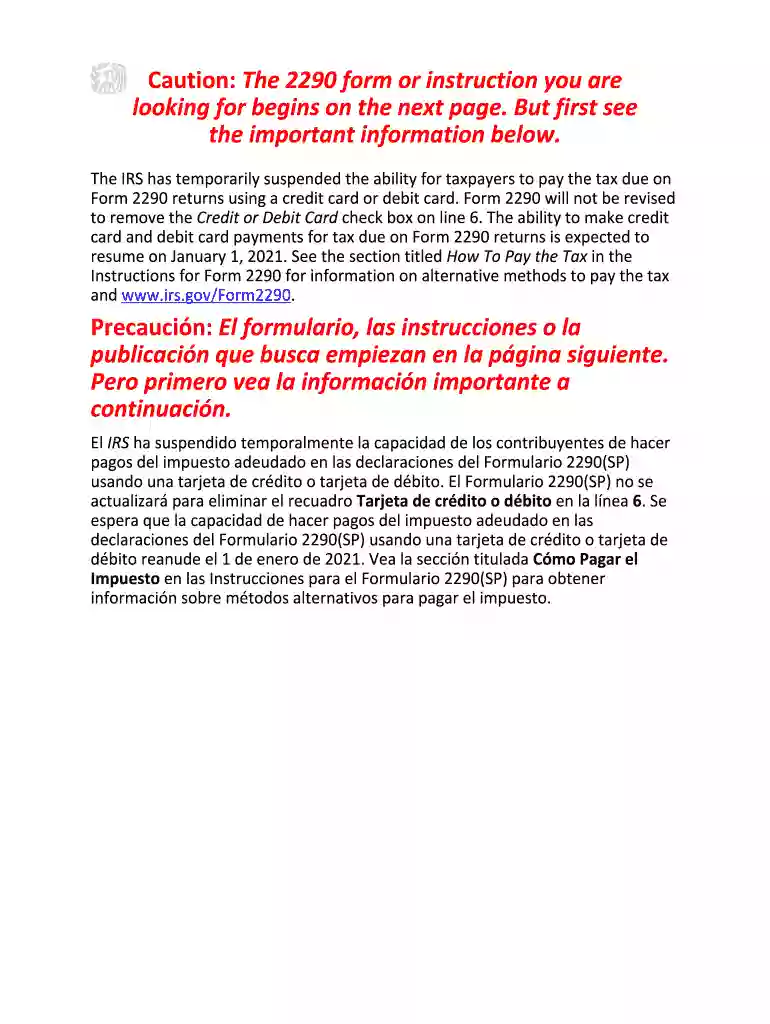
Over the years, Form 2290 has undergone revisions. The latest version, Rev July 2019, incorporates updates and clarifications to improve the filing process. Older forms are available for reference but ensure that the latest version is used when filing to comply with current IRS regulations.
Form 2290 is typically used by owners of heavy vehicles exceeding 55,000 pounds who operate such vehicles on public highways. This includes individuals, LLCs, corporations, partnerships, and various other business entities involved in transportation and logistics.
The IRS is responsible for issuing Form 2290. Filers can obtain the form directly from the IRS website or authorized electronic filing services. Ensure the form used is the most current version to meet IRS requirements and streamline the filing process.
Digitizing the submission process can significantly expedite the filing and payment confirmation, allowing for better tracking and record-keeping. However, paper filing may still be preferred by some for its familiarity and straightforward nature. Both methods should correctly reflect calculations and necessary details to avoid processing issues.
Businesses in the logistics and transportation sectors, such as trucking companies and freight forwarding companies, benefit greatly from accurate and timely filing of Form 2290. This ensures operational compliance and avoids unnecessary penalties or fines that could impact business profitability.
We've got more versions of the Instrucciones para el Formulario 2290(SP) (Rev Julio 2019) Instructions for Form 2290, Heavy Highway form. Select the right Instrucciones para el Formulario 2290(SP) (Rev Julio 2019) Instructions for Form 2290, Heavy Highway version from the list and start editing it straight away!
At DocHub, your data security is our priority. We follow HIPAA, SOC2, GDPR, and other standards, so you can work on your documents with confidence.


