Definition & Meaning
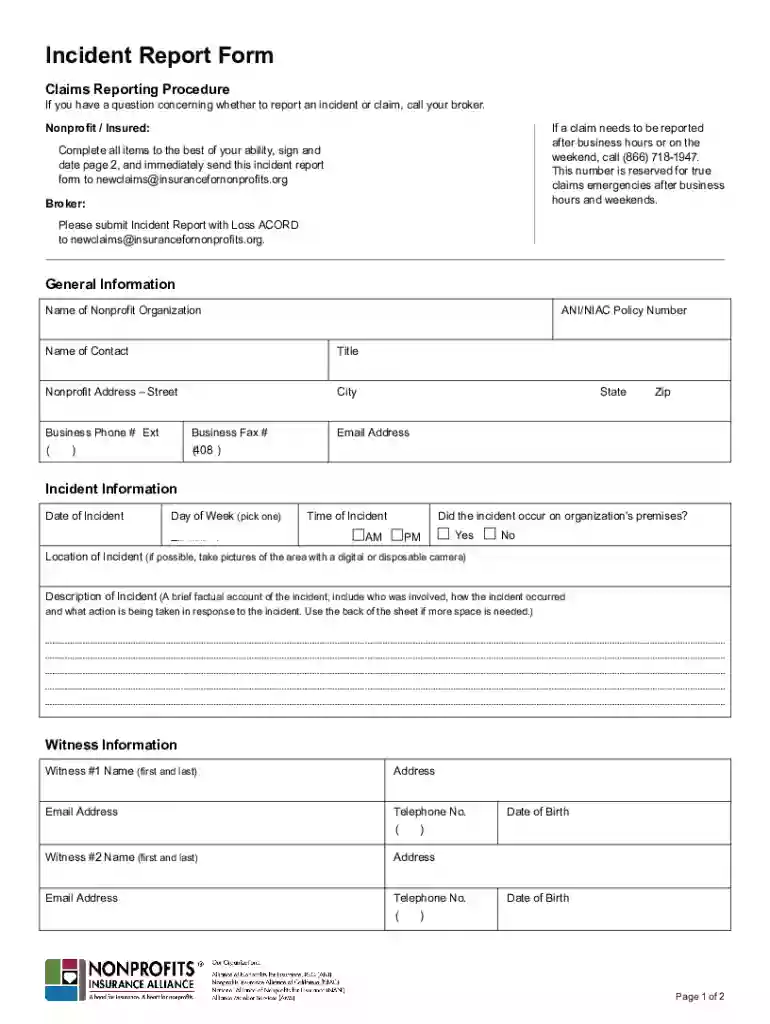
The Incident Report Form is a structured document utilized primarily by nonprofits to document claims and incidents. This form serves as a critical record that captures essential details surrounding any occurrence that may require attention or result in further investigation or action. By systematically documenting the events, the Incident Report Form helps organizations ensure transparency, accountability, and compliance with internal or legal requirements.
Key Components of the Incident Report Form
- Incident Details: Captures the date, location, and time of the incident, along with a detailed description of the events that transpired.
- Involved Parties: Details about individuals involved or affected by the incident, including names, roles, and contact information.
- Witness Information: Documentation of any witnesses to the incident, with contact details to facilitate further inquiries if needed.
- Claimant’s Information: Information regarding the individual or entity filing the report, along with their perspective on the incident.
How to Use the Incident Report Form
The Incident Report Form is designed to be intuitive, but understanding the proper procedure ensures completeness and accuracy.
- Gather Initial Information: Before beginning the form, collect all relevant data pertaining to the incident, including details about individuals involved and any physical evidence available.
- Complete the Form: Accurately fill out each section of the form, ensuring all mandatory fields are addressed. Include as much detail as possible to provide a comprehensive understanding of the incident.
- Review: Verify the information entered for accuracy and completeness, as this will be a vital document for any subsequent actions or investigations.
- Submit: Follow the organization’s protocol for submitting the completed form, which may involve sending it via email or submitting it through an online portal.
Common Challenges
- Incomplete Information: Often, forms are submitted with missing or incomplete details, delaying the resolution process.
- Lack of Witnesses: In some cases, the absence of witnesses can complicate the documentation and verification of claims.
Steps to Complete the Incident Report Form
Completing the form thoroughly is crucial for ensuring the document effectively communicates the incident details.
- Start with Incident Basics: Log the time, date, and location where the incident occurred.
- Detail the Incident: Provide a chronological narrative of the events, focusing on clarity and precision.
- Identify Affected Parties: List all individuals involved, including contact information and their roles in the incident.
- Include Witness Accounts: If applicable, gather and record statements from eyewitnesses to corroborate the reported events.
- Complete the Claimant Section: Ensure the person submitting the form provides their full details and relationship to the incident.
Tips for Accuracy
- Double-Check Information: Accuracy is critical; verify the data for errors before submission.
- Seek Clarification: If any part of the form is unclear, reach out to the appropriate department for guidance.
Why You Should Use the Incident Report Form
Incident Report Forms are indispensable for documenting incidents in a formal and structured manner. They provide an official record that can:
- Facilitate Internal Reviews: Allow organizations to conduct thorough investigations and reviews, leading to informed decision-making.
- Ensure Compliance: Help meet regulatory and legal requirements, protecting the organization from potential liabilities.
- Promote Transparency: Enhance trust and accountability by ensuring all incidents are documented comprehensively and consistently.
Real-World Impact
- Case Study: A nonprofit used the Incident Report Form to document an onsite accident. The precise details captured allowed for swift resolution, improved safety measures, and compliance with occupational safety regulations.
Key Elements of the Incident Report Form
Understanding the core sections of the Incident Report Form helps ensure that all necessary information is captured.
Core Sections
- Header Information: Includes the form title, organization details, and form identification number.
- Incident Description: A detailed narrative section that captures what happened, how, and why.
- Resolution Steps: Outline actions taken immediately following the incident to mitigate impacts or prevent recurrence.
- Administrative Review: Space for an authorized signatory to review, approve, and file the report for official records.
Detailed Breakdown
- Observation: Chronological account of events leading to the incident.
- Impact Assessment: Evaluation of any damage or harm caused, both immediate and long-term.
Form Submission Methods (Online / Mail / In-Person)
Recognizing the options available for submitting the form can streamline the process:
- Online Submission: Many organizations offer the ability to submit the form electronically via email or through an organization-specific portal, providing speed and efficiency.
- Mail: Traditional submission through postal services, suitable when digital submission is not feasible.
- In-Person: Direct handover to the responsible department, ensuring personal delivery and immediate confirmation of receipt.
Digital Advantages
- Quick Processing: Online submissions often allow for faster processing and reduced lag time.
- Remote Accessibility: Facilitates submission from varied locations, enhancing accessibility for all stakeholders.
Examples of Using the Incident Report Form
To better understand its application, consider several scenarios where an Incident Report Form would be essential:
Scenario 1: Workplace Accident
In the case of a slip and fall within a nonprofit’s office, an Incident Report Form helps capture all pertinent details such as the location, the condition of the floor, and any contributing factors like spills.
Scenario 2: Equipment Malfunction
A nonprofit experiences a failure in critical equipment that disrupts operations. By documenting this through the form, the organization can assess the cause, the response implemented, and future prevention measures.
Scenario 3: Client Injury
During an event, a participant sustains an injury. The form captures the specifics of the incident, interventions provided, and any witnesses to ensure a comprehensive understanding and subsequent review.
Legal Use of the Incident Report Form
The Incident Report Form must be utilized within legal frameworks to protect both the submitting party and the organization.
Legal Considerations
- Confidentiality: Adherence to privacy laws when recording personal data.
- Accuracy: Ensures truthful representation to avoid legal repercussions for misstatements.
- Compliance: Aligns with regulations that govern reportable incidents, such as those set by OSHA or state-specific bodies.
Ensuring Legality
- Training: Organizations should provide training on how to correctly complete and process Incident Report Forms.
- Audit Trails: Maintain comprehensive records of all submitted forms for accountability and future reference.
In conclusion, the Incident Report Form is an essential tool in documenting, analyzing, and addressing incidents in a structured, compliant, and effective manner. Each component of the form plays a critical role in capturing a complete narrative of events, facilitating accurate assessment and response.