







Definition and Meaning
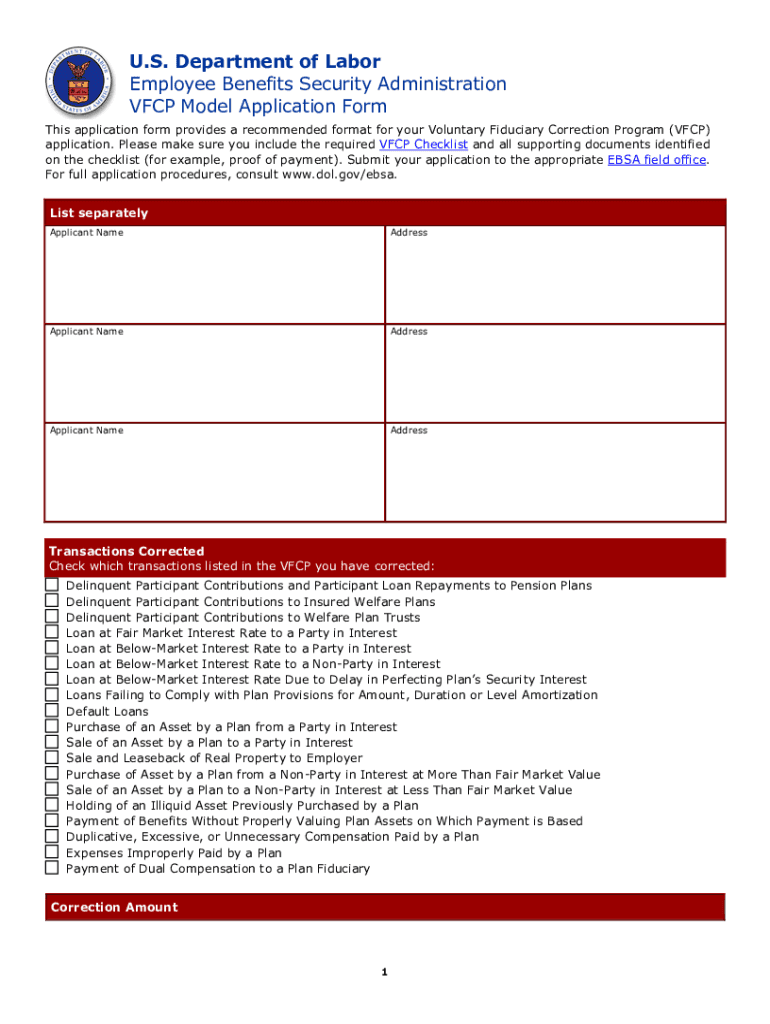
The Voluntary Fiduciary Correction Program (VFCP) is an initiative by the U.S. Department of Labor’s Employee Benefits Security Administration. It allows plan officials to voluntarily correct specific fiduciary violations under the Employee Retirement Income Security Act (ERISA) without facing enforcement actions by the department. This program promotes compliance with ERISA by offering guidance on rectifying breaches. Participants submit a VFCP application to report corrections, provide supporting documentation, and detail the breach and correction methods used in compliance with the regulations. Understanding the form's purpose is central to ensuring accurate filings and successful participation in the program.
How to Use the VFCP Application
Utilizing the VFCP application involves a structured process where plan officials document their fiduciary corrections comprehensively. Start by identifying the specific ERISA violations that have occurred. Reference the VFCP guidelines to verify that the corrections meet all program requirements. The application form requires details on the plan involved, the nature of the breach, the correction measures implemented, and any compensation made to the affected party. Plan officials should ensure all narratives are clearly articulated to avoid discrepancies. Additionally, attaching pertinent documentation strengthens the submission, verifying the rectifications made.
Steps to Complete the VFCP Application
- Identify and Evaluate Violations: Review plan operations to pinpoint violations eligible under the VFCP.
- Gather Supporting Documentation: Collect relevant records, such as transaction details and evidence of losses recouped.
- Complete the VFCP Form: Fill out mandatory sections including the applicant’s information, plan details, and corrected transactions.
- Prepare Narratives: Describe in detail the breach and the corrective actions undertaken, making sure to abide by any legal and regulatory standards.
- Submit Documentation: Include all supporting files and documentation that substantiate the fiduciary corrections made.
- Submission: Send the completed application to the designated Department of Labor office via prescribed submission methods.
Required Documents
Several documents must accompany a VFCP application to illustrate the extent of the ERISA violations and the corrective steps taken. Essential documents include transaction records, evidence of reimbursement or restitution to the plan and participants, and any correspondence related to the breach. Plan officials should also submit narratives explaining the breach's nature and describe, in detail, the methods and compliance steps pursued in correcting these issues. Accurate and thorough documentation is crucial to avoid application delays or rejections.
Eligibility Criteria
To qualify for the VFCP, plan officials must meet specific criteria defined by the Department of Labor. The primary eligibility conditions include: the breach must fall under one of the DOL's approved correction methods, and corrections must be implemented before filing the application. The program excludes certain severe violations and involves plans covered by ERISA — such as private sector employee benefit plans. Eligibility extends to plan sponsors, fiduciaries, and parties in interest who wish to rectify breaches without enforcement repercussions.


Who Typically Uses the VFCP Application
The VFCP application is primarily utilized by plan fiduciaries, sponsors, and other parties in interest managing ERISA-covered employee benefit plans. These users often include human resource managers, financial officers, and legal advisors tasked with ensuring plan compliance with ERISA standards. They leverage the VFCP to correct inadvertent breaches effectively, thus avoiding potential litigation, penalties, or other adverse outcomes that could result from formal Department of Labor enforcement actions.

Key Elements of the VFCP Application
Central components of the VFCP application include detailed descriptions of the fiduciary breach, such as the nature and period of the violation, methods employed for corrections, and documentation supporting the corrective measures. Critical elements also comprise applicant information, such as the name and contact details of the party submitting the application or their representative. The application must also consistently outline the corrective steps aligned with the VFCP’s guidelines to ensure compliance and a favorable response from the Department of Labor.
Legal Use of the VFCP Application
Legally, the VFCP application serves as both a self-correction tool and an opportunity for plan fiduciaries to voluntarily disclose breaches to the Department of Labor under ERISA. Using this application appropriately enables fiduciaries to ensure they have effectively remedied any lapses in compliance without triggering penalties or enforcement actions. Moreover, successful submissions typically offer protection against liability for the disclosed breaches, thus providing a strategic advantage in maintaining fiduciary responsibility vis-à-vis ERISA mandates.
Penalties for Non-Compliance
Failing to comply with ERISA provisions or opting not to use the VFCP when eligible can result in significant penalties for fiduciaries. Such consequences may include Department of Labor enforcement actions, monetary fines, and the possibility of civil litigation initiated by plan participants. Non-compliance can also damage the credibility of the plan fiduciary and potentially hinder future management endeavors. Ensuring adherence to VFCP requirements ultimately minimizes these legal and financial risks.




