
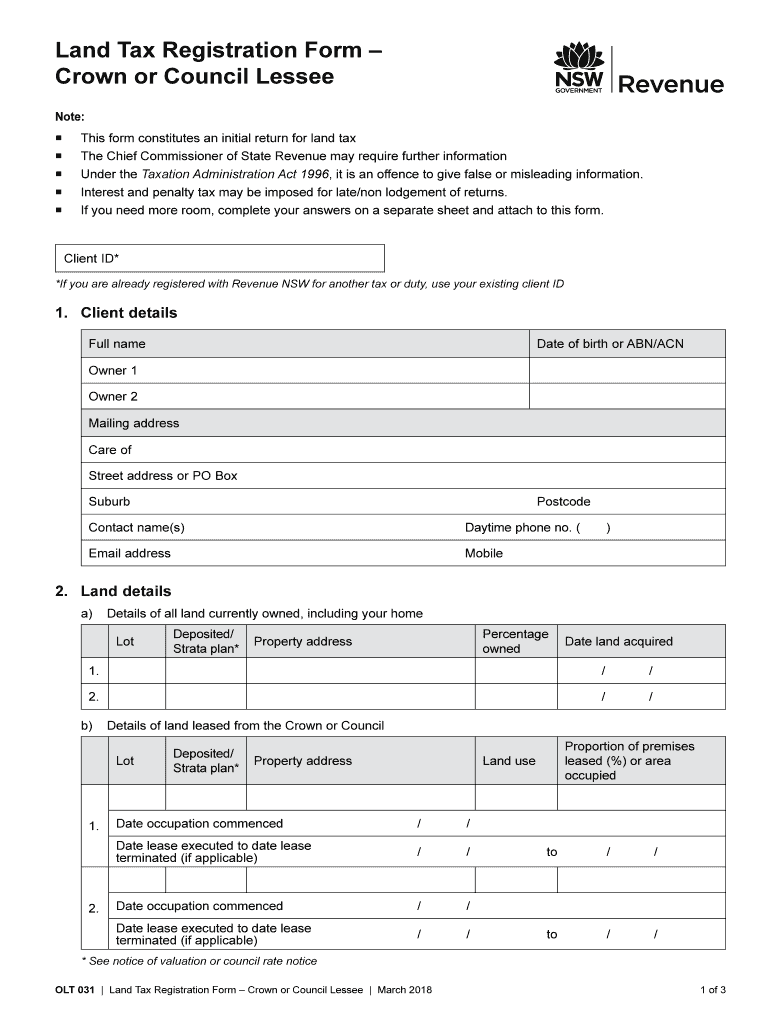







Definition and Meaning of the Land Tax Registration Form
The land tax registration form serves as an initial step in registering landholdings for tax obligations, specifically targeting Crown or Council lessees. It requires comprehensive details about the landowner, including ownership status, any existing leases, involvement with trusts, and whether the owner is considered a foreign person. This particular form facilitates the assessment of land tax liabilities and helps in determining potential tax exemptions such as those available for principal residences or primary production lands. Accurate completion of the registration form is crucial to avoid penalties or future legal complications.
How to Obtain the Land Tax Registration Form
Obtaining the land tax registration form can vary depending on the state or local jurisdiction. Typically, these forms are available through state taxation departments' websites or in-person at their offices. In some cases, electronic copies might be distributed through registered tax agents or legal representatives. For digital-savvy users, downloading the form directly from official government portals ensures access to the most recent version, reducing the risk of utilizing outdated documents. Engaging with an expert or a tax professional can also assist in sourcing the correct form and understanding the accompanying instructions.
Steps to Complete the Land Tax Registration Form
-
Gather Required Information: Before filling out the form, collect necessary documents including property deeds, lease agreements, and personal identification.
-
Complete Owner Details: Enter precise personal information, such as full name, contact details, and identification numbers.
-
Provide Land Information: Accurately detail land parcels, including addresses and titles, ensuring that all sections related to land ownership and usage are thoroughly filled.
-
Declare Trusts and Leases: Specify any trusts or leases associated with the land. If multiple parties are involved, each must be identified accordingly.
-
Foreign Owner Disclosure: Determine and disclose if the landowner meets the criteria for a foreign person, as this could impact tax obligations.
-
Seek Potential Exemptions: Identify if the property qualifies for exemptions due to primary residency or agricultural use, and complete relevant sections.
-
Review and Submission: Verify all provided information for accuracy before submission, either online or via mail, based on jurisdictional preferences.
Who Typically Uses the Land Tax Registration Form
Landowners, lessees of Crown or Council properties, legal representatives, and property managers predominantly use the land tax registration form. Real estate investors and developers who manage multiple properties may also find themselves frequently interacting with this form. Tax professionals and consultants often guide these entities through the registration process. The form is especially pertinent for those entering new land leases or altering existing holdings, ensuring all tax obligations are met promptly and accurately.


Key Elements of the Land Tax Registration Form
- Owner Identification: Collects essential details about the property owner.
- Property Description: Requires an exhaustive description of the land, including its legal title and any existing structures.
- Lease Details: Captures information regarding any leases on the property.
- Trust Information: Involves detailing any trusts that hold interest in the property.
- Foreign Ownership Status: Mandatory disclosure for foreign-owned properties.
- Exemption Claims: Sections for claiming exemptions based on residency or land use.
These sections are designed to ensure comprehensive reporting and facilitate accurate tax assessment.
Legal Use of the Land Tax Registration Form
The accuracy and completeness of the land tax registration form are not only fundamental for tax calculations but are legal requirements. Misrepresentation or omission may lead to legal consequences, including fines or additional tax liabilities. Legal documentation of land ownership and tax status ensures compliance with state-specific tax laws and mitigates disputes. Moreover, submission of this form contributes to a transparent record of land tax obligations, which is critical during property audits and evaluations.
State-Specific Rules for the Land Tax Registration Form
Each U.S. state may have unique provisions and guidelines regarding land tax obligations. Variances can occur in the types of properties liable for tax, exemptions, and submission processes. Certain jurisdictions may have specific forms tailored to their legal requirements, or additional documentation may be required for multi-jurisdictional properties. It’s essential to consult local tax offices or official state websites to understand these nuances and obtain guidance tailored to individual circumstances. Ensuring adherence to state-specific regulations is crucial in maintaining compliance and avoiding potential legal complications.
Penalties for Non-Compliance with the Land Tax Registration Form
Failure to correctly complete and submit the land tax registration form can result in significant penalties. These may include monetary fines, increased tax assessments, and interest on unpaid taxes. In some cases, persistent non-compliance could lead to legal action taken by the state or local authorities. Accurately identifying all land parcels and their respective uses and reporting changes in ownership or use promptly is vital in avoiding these penalties. Hiring a professional to aid in the documentation process can further ensure all regulatory requirements are met efficiently.




