




01. Edit your form online
Type text, add images, blackout confidential details, add comments, highlights and more.

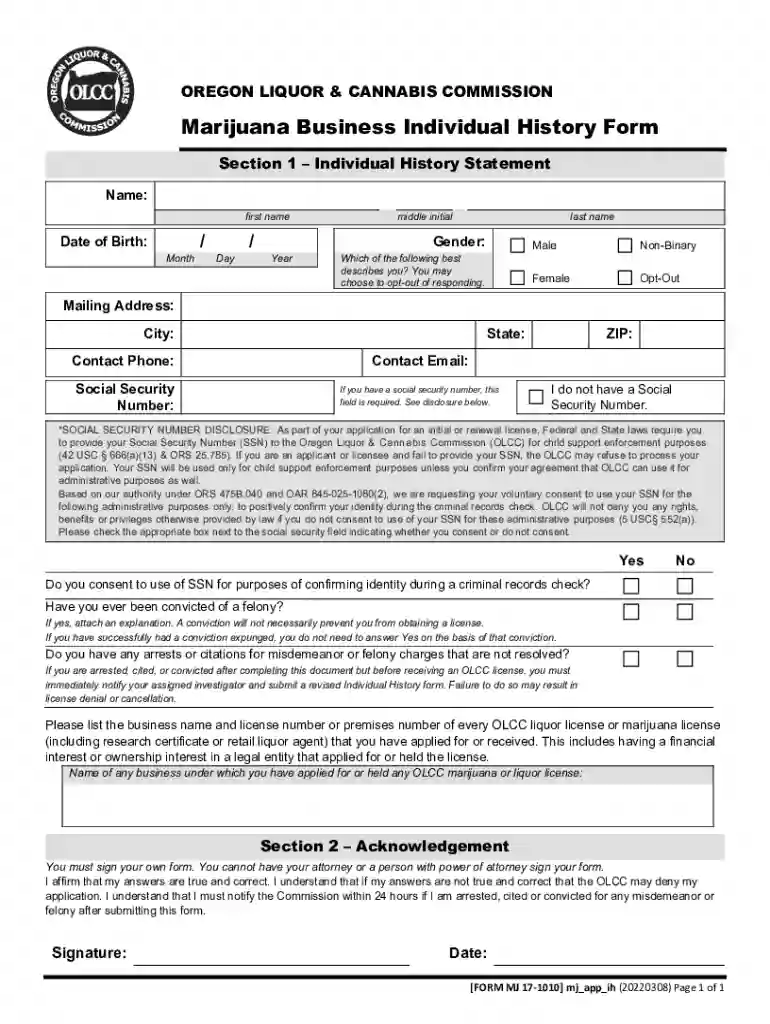
Type text, add images, blackout confidential details, add comments, highlights and more.

Draw your signature, type it, upload its image, or use your mobile device as a signature pad.

Send it via email, link, or fax. You can also download it, export it or print it out.
The Personal History Disclosure Form is a crucial document used to collect detailed background information about an individual. This form is often used in various application processes, where providing a comprehensive account of personal history is required. It asks for information such as employment history, education, and criminal background. The purpose is to ensure transparency and provide the necessary parties with relevant personal data that might affect an individual's eligibility for certain roles or services.
Understanding the core components of the Personal History Disclosure Form is essential. Typically, the form includes:
Each section is designed to gather insights into different aspects of a person's background, and it’s critical that all required fields are completed accurately.
Filling out the Personal History Disclosure Form requires careful attention to detail. Follow these steps to ensure a thorough and correct completion:
The Personal History Disclosure Form is a legal document, and the information provided is used to assess suitability for various positions or licenses. The data disclosed must be truthful, as any false information could lead to legal consequences, including disqualification from the application process or revocation of a granted license. It's important to understand the legal implications of providing incomplete or inaccurate data.
There are several ways to obtain the Personal History Disclosure Form, depending on the issuing body:
Identifying how and from where to procure the form can save time and ensure you start the process smoothly.
While the form is used broadly, some states may have specific requirements or additional components. It's crucial to understand these differences if the form is state-specific:
Always verify state-specific guidelines to ensure compliance with local regulations.
The Personal History Disclosure Form serves multiple purposes in the evaluation process:
By understanding its function, you can appreciate the form's role in various professional and regulatory contexts.
This form is often used by various individuals and organizations:
Recognizing the range of users can help in understanding the context in which the form is utilized.


The form mandates full transparency in disclosing pertinent background information. Required disclosures include:
Failing to disclose necessary information can result in penalties or disqualification, so accuracy and honesty are essential.
We've got more versions of the Personal History Disclosure Form form. Select the right Personal History Disclosure Form version from the list and start editing it straight away!
With DocHub, it’s pretty simple. The service offers users an add-on called DocHub for Gmail, which you can find in the Google Workspace Marketplace free of charge. Set it up and grant it access to your Google account. Open your email with your Personal History Disclosure Form attached and click on the add-on button in the right-side panel. Sign in to your DocHub account, and upload the form to our editor, where you can complete it and sign.
You may complete and sign your Personal History Disclosure Form online, even on a tight deadline. All you need to access high quality editing instruments on any device is a DocHub account, that you can register within a couple of moments. When you register, upload your document or find what you are looking for in our catalog, complete it utilizing the editing instruments you want, and put your electronic signature on it at the end.
At DocHub, your data security is our priority. We follow HIPAA, SOC2, GDPR, and other standards, so you can work on your documents with confidence.
N.J. Admin. Code 19:41A-7.3 - Personal History Disclosure Form 1B (Basic Key Form) 1. Name, including any aliases or nicknames; 2. Date of birth; 3.
The CAURD applicant will use the information from each CAURD True Party of Interest/ Financier Personal. History Disclosure to complete the application. EachRead more
(5) A person licensed or authorized to conduct research with controlled substances listed in schedules II through V shall be authorized to conduct chemicalRead more


