




01. Edit your form online
Type text, add images, blackout confidential details, add comments, highlights and more.

Type text, add images, blackout confidential details, add comments, highlights and more.

Draw your signature, type it, upload its image, or use your mobile device as a signature pad.

Send it via email, link, or fax. You can also download it, export it or print it out.
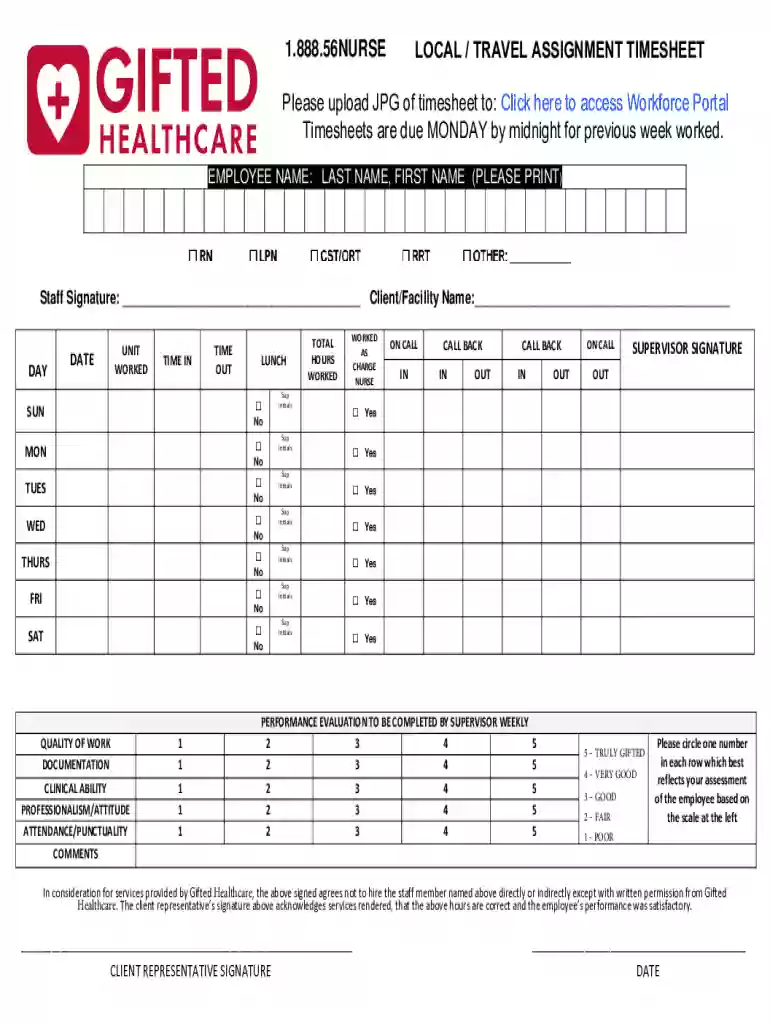
The "9 Printable Weekly Timesheets Forms and Templates" are tools designed to streamline the process of tracking employee work hours over a weekly period. They provide a structured format for documenting workdays, start and end times, total hours, and other relevant data. These templates can be altered to fit various types of employment, including full-time, part-time, freelance, and contract work. Examples illustrate how these forms can be tailored for specific industries, such as healthcare, education, or retail, where weekly time tracking is critical.
These steps ensure that all crucial information is recorded systematically, preventing errors and discrepancies that could impact compensation.
Utilizing these templates simplifies time management and payroll processing. They offer several advantages:
These templates are easily accessible online, providing flexibility:
In healthcare settings, these templates help track hours for nurses working varied shifts. Retail businesses use them to monitor the working hours of cashiers across different store locations. Each example demonstrates the adaptability of the templates to different industries and job roles, ensuring consistent workforce management across organizational structures.
Understanding these terms is essential for comprehending the functionality and purpose of weekly timesheet templates.
These forms meet legal requirements for documenting work hours as per U.S. labor laws. They ensure compliance by maintaining detailed records of employee hours, crucial for audits and resolving disputes. Legal use mandates clear documentation of work hours, off days, and overtime, protecting both employers and employees in workforce management.
We've got more versions of the 9 Printable weekly time sheets Forms and Templates form. Select the right 9 Printable weekly time sheets Forms and Templates version from the list and start editing it straight away!
At DocHub, your data security is our priority. We follow HIPAA, SOC2, GDPR, and other standards, so you can work on your documents with confidence.
INSTRUCTIONS: List the actual hours you have worked under the Program Area that applies. Submit this form with your timesheet. 35.Read more
Weekly Schedule. Time. Sunday. Monday. Tuesday Wednesday Thursday. Friday. Saturday. 6:00AM. 7:00AM. 8:00AM. 9:00AM. 10:00AM. 11:00AM. 12:00PM. 1:00PM. 2:00PM.Read more
The RP-5217-PDF Real Property Transfer Report (RPL Article 9, Section 333) is a one-part, downloadable, barcoded, pdf form used to document the informationRead more


