






Definition and Meaning of the Bill of Sale for Boats
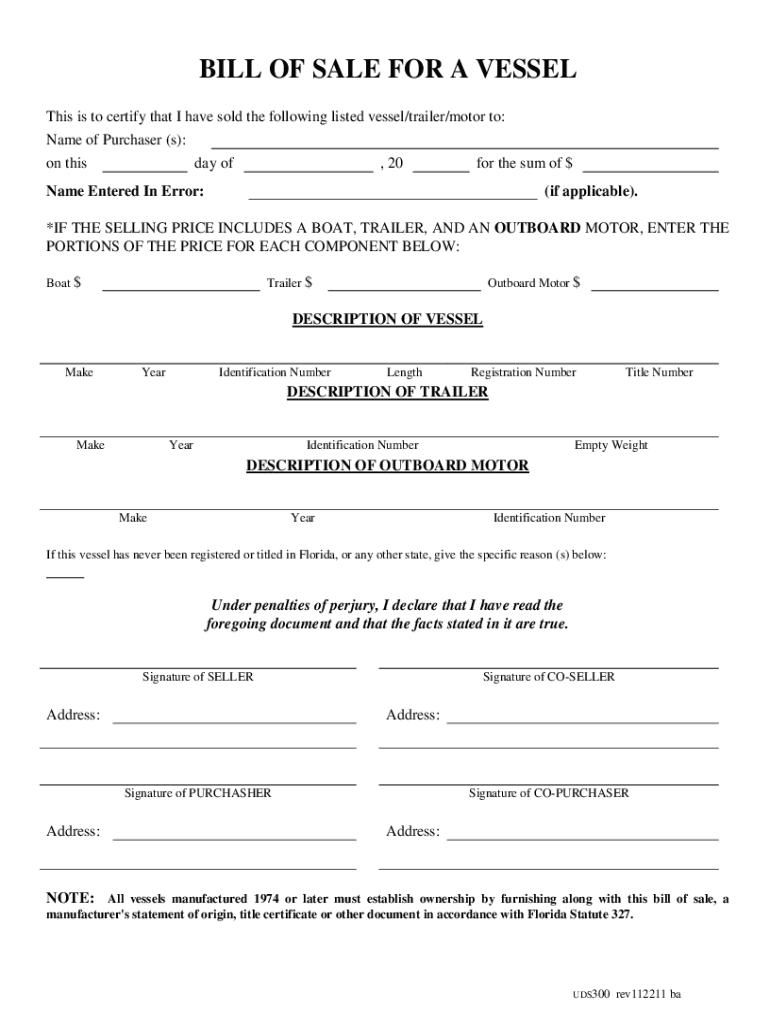
A Bill of Sale for boats is a legal document that formalizes the transaction of a boat from the seller to the buyer. It serves as tangible proof of ownership transfer and outlines the specific terms of sale. This document includes critical details such as the names and addresses of both the seller and buyer, the boat's identification and description, and the selling price. For boats with trailers or outboard motors, these components are typically included in the description to ensure transparency. The legal binding nature of this document underscores the significance of maintaining accurate records to support ownership claims, especially when dealing with vessels manufactured after 1974, which require additional documentation to verify the chain of ownership.
How to Use the Bill of Sale for Boats
Utilizing a Bill of Sale involves a structured yet straightforward process. Initially, both parties must fill in their respective details, ensuring the accuracy of names and contact information. It is important to detail the vessel, including its make, model, year of manufacture, and hull identification number. The contract must state the agreed selling price and any contingencies like unpaid loans or existing liens. Signatures from both the buyer and the seller, including a witness if possible, legitimize the document. Using the form in this manner helps ensure that both parties are protected and that the transaction abides by legal standards.
How to Obtain the Bill of Sale for Boats
Obtaining a Bill of Sale form for boats can be done via several avenues. Legal aid websites often provide downloadable templates that comply with various state regulations. Local Department of Motor Vehicles (DMV) offices might offer standard forms that are tailored to comply with state-specific requirements. Additionally, private sellers and buyers can draft their own document, though it's advised to seek legal assistance or use an existing template to ensure all necessary elements are covered.
Steps to Complete the Bill of Sale for Boats
- Gather Information: Collect all necessary details about the boat, including make, model, serial numbers, and current condition.
- Fill Out Buyer and Seller Information: Complete the sections for buyer and seller with full names, addresses, and contact details.
- Detail the Transaction: Clearly state the selling price, payment method, and any terms concerning deposits or financial agreements.
- Sign and Date: Both parties must sign and date the document. Having a notary witness the signing can add an extra layer of verification.
- Distribute Copies: Ensure both the seller and buyer retain signed copies of the document for their records.
Why You Should Use the Bill of Sale for Boats
Using a Bill of Sale is essential for protecting both parties in a boat sale. It provides a written record of the transaction, which can serve as legal evidence in disputes over ownership or payment terms. Furthermore, it facilitates a smoother transition by outlining responsibilities, such as any final repairs or unpaid taxes the seller might owe. This document also assures a buyer that they are acquiring a vessel with a clear title, devoid of undisclosed liens.
Key Elements of the Bill of Sale for Boats
- Contact Information: Full names and addresses of both the buyer and seller.
- Vessel Description: Make, model, year, hull identification number, and any ancillary equipment like trailers.
- Payment Details: Total purchase price, payment method, and financial conditions.
- Signatures: Signed acknowledgments from both parties to confirm agreement.
- Date of Sale: The official date the transfer of ownership takes effect.
Legal Use of the Bill of Sale for Boats
Legally, the Bill of Sale is pivotal for transferring ownership and registering the vessel under a new name. In the U.S., different states have varied requirements for registration, but generally, the Bill of Sale must accompany a title transfer when updating records with the DMV or equivalent local agency. It's also a vital document for future resale or when insuring the boat, providing a verifiable history of the vessel's ownership lineage.
State-Specific Rules for the Bill of Sale for Boats
Each state may have unique stipulations regarding the format and necessity of a Bill of Sale during boat sales. For instance, some states might require notarization, while others may need additional forms to be completed simultaneously. Consequently, contacting local authorities or consulting state-specific resources can help ensure compliance with all local laws and prevent any legal challenges down the line.