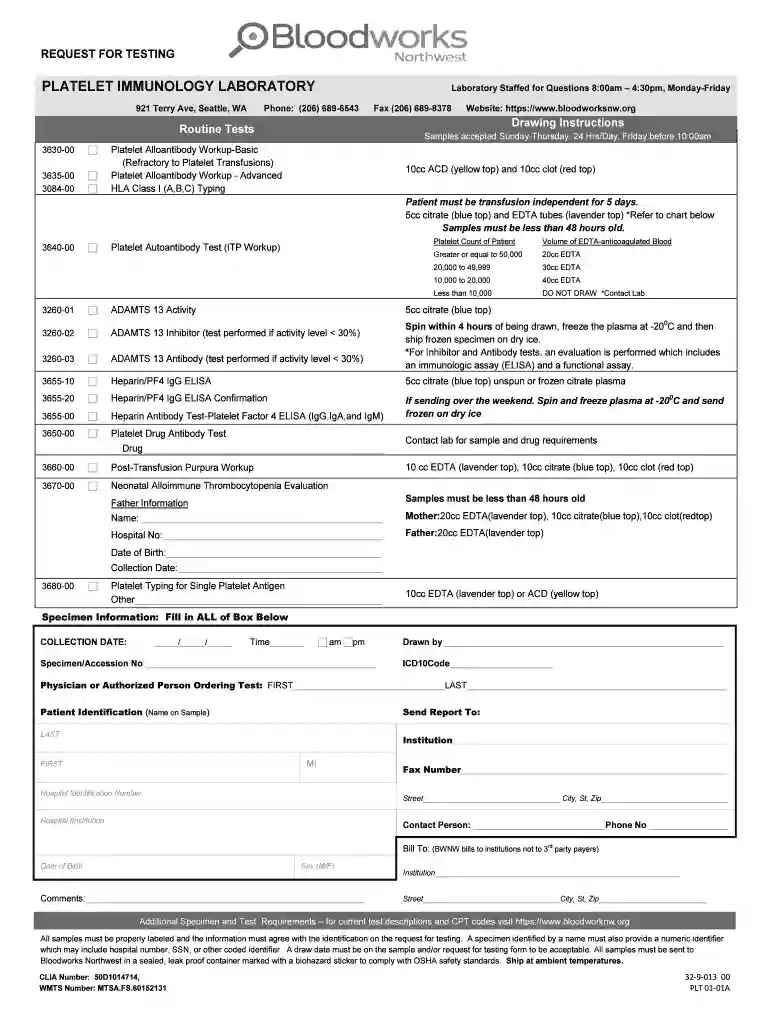
Definition and Meaning of the Platelet Immunology Laboratory
The Platelet Immunology Laboratory specializes in the study of platelet-related antibodies, disorders, and their interactions. Located in Seattle, this laboratory focuses on the analysis and research of platelet disorders, which can include conditions such as thrombocytopenia, immune thrombocytopenic purpura, and other immune-mediated platelet conditions. This specialization supports healthcare providers in diagnosing and managing these conditions by providing detailed test results and insights.
- Focus Areas: The laboratory primarily investigates platelet antibodies and their effects on platelet count and function. Understanding these interactions helps in clinical decision-making related to blood disorders.
- Role in Healthcare: It serves as a critical facility for healthcare professionals seeking detailed analysis and data for diagnosing platelet-related issues in patients.
How to Use the Platelet Immunology Laboratory Services
Healthcare professionals can utilize the laboratory services to obtain precise and specialized information regarding platelet disorders. This process involves a series of steps to ensure accurate results.
- Sample Collection: Collect appropriate specimen types as directed by the laboratory guidelines. This often requires blood samples that must be handled following specific protocols to maintain integrity.
- Submission: Complete the request form detailing the required tests, along with any pertinent clinical information. Submit the form and samples following the laboratory's specified procedures.
- Analysis: The laboratory analyzes the samples to detect any abnormal antibodies or not typical platelet functions, providing insights into the patient's condition.
- Healthcare Integration: Results are usually integrated into the patient's medical records, aiding healthcare providers in establishing or confirming a diagnosis.
Steps to Complete the Platelet Immunology Laboratory Request Form
Completing the request form for the Platelet Immunology Laboratory requires careful attention to detail to ensure comprehensive and correct data submission.
- Identify Required Tests: Determine which specific platelet tests are necessary based on the patient’s symptoms and clinical profile. This could include platelet antibody detection, cross-matching, or platelet function tests.
- Patient Information: Accurately fill out patient details such as name, identification number, and contact information to ensure seamless traceability.
- Clinical Information: Provide pertinent clinical history, including previous test results, current medications, and relevant medical conditions that could affect platelet function.
- Physician Details: Include the ordering physician's information for direct correspondence if necessary.
- Submission Protocols: Follow the form's instructions to package and send the samples, ensuring all guidelines are strictly adhered to for sample integrity.
Key Elements of the Platelet Immunology Laboratory Request Form
Understanding the critical components of the request form is essential for accurate submission and processing.
- Test Selection: Clearly indicated section for specifying the particular tests needed, which guides the laboratory’s analytical focus.
- Patient Demographics: Dedicated fields for entering specific patient data to facilitate proper identification and result communication.
- Sample Handling Instructions: Guidelines on how to prepare, store, and transport samples to prevent degradation or contamination.
- Signature Fields: Space for authorization signatures verifying the request's accuracy and consent for testing.
Who Typically Uses the Platelet Immunology Laboratory Services
Healthcare professionals, including hematologists, immunologists, and general practitioners, are the primary users of the laboratory. Their need for precise, specialized testing of platelet disorders makes the facility an integral component in the diagnostic process.

- Hematologists: These specialists often require detailed platelet analyses to address complex hematologic conditions.
- Immunologists: Utilize the lab for understanding immune-mediated platelet interactions and formulating treatment plans for autoimmune conditions.
- General Practitioners: May refer specimens to the laboratory when faced with unusual platelet indicators in routine blood tests.
Important Terms Related to Platelet Immunology Laboratory
Familiarity with specific terminology aids in understanding and navigating the platelet immunological landscape.
- Thrombocytopenia: Refers to a condition characterized by abnormally low platelet counts, often investigated through these laboratory services.
- Platelet Antibody: Antibodies targeting platelets, which can lead to clotting disorders, a primary focus of testing.
- Immunoassay: A laboratory technique used to detect and quantify platelet antibodies and other proteins, crucial in diagnosing immune platelet disorders.
Required Documents for Submission to the Platelet Immunology Laboratory
Several key documents ensure a smooth and efficient submission process.
- Request Form: Accurately filled-out form detailing the necessary tests and clinical history.
- Patient Consent Form: Documentation that demonstrates patient approval for testing and data sharing.
- Insurance Information: Details to facilitate billing and insurance processing, if applicable.
Form Submission Methods for the Platelet Immunology Laboratory
Facilitating flexible submission options helps accommodate various healthcare provider needs.
- Online Submission: Available for certain facilities, allowing digital completion and submission of forms alongside electronic medical records.
- Postal Mail: Traditional method where forms and samples are sent via postal service, requiring careful packaging to maintain sample integrity.
- In-Person Drop-off: For proximate facilities, this direct method ensures immediate receipt and reduces transit time.
Application Process and Approval Time for Platelet Immunology Laboratory Testing
The timeline for testing typically involves receipt, processing, testing, and results analysis.
- Submission Review: Initial step involves verifying form completeness and sample integrity.
- Testing Phase: Laboratory conducts detailed analytical procedures to obtain accurate results, which may vary based on test complexity.
- Result Analysis and Reporting: Post-analysis, results are reported to the requesting healthcare professional, usually within a specified period.
- Timelines: Completion timeframes can vary but generally aim to meet clinical urgency requirements, from a few days to a week.
In-depth familiarity with these processes and elements ensures effective utilization of the Platelet Immunology Laboratory services, enhancing diagnostic and treatment pathways for platelet-associated disorders.