




01. Edit your form online
Type text, add images, blackout confidential details, add comments, highlights and more.

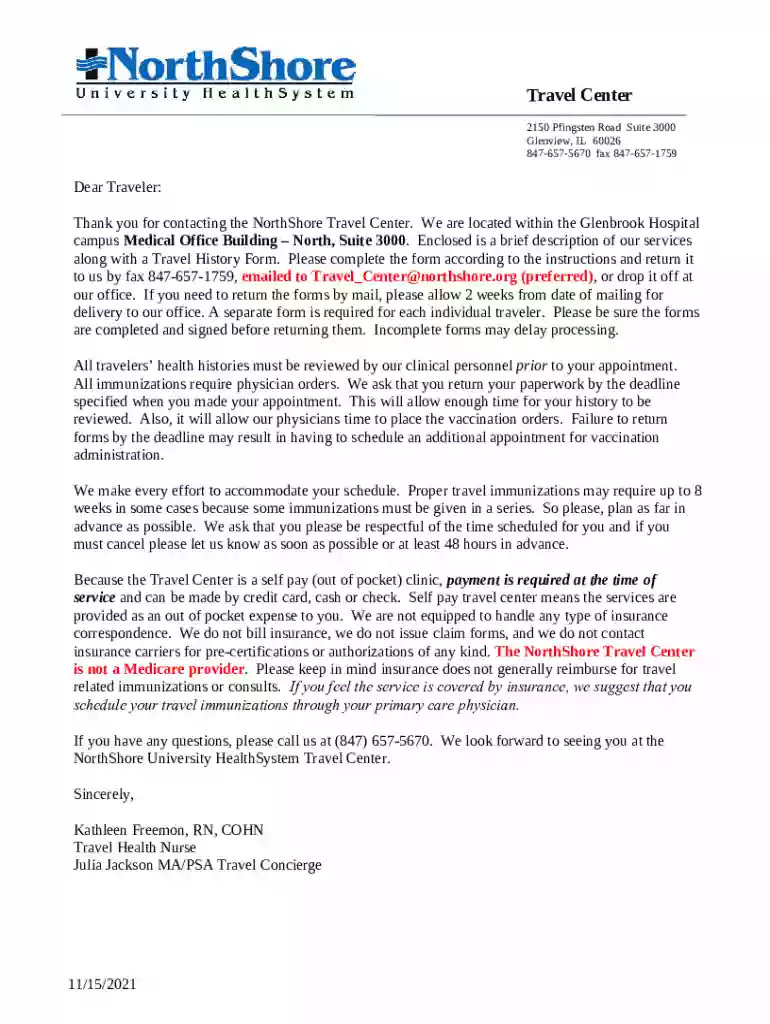
Type text, add images, blackout confidential details, add comments, highlights and more.

Draw your signature, type it, upload its image, or use your mobile device as a signature pad.

Send it via email, link, or fax. You can also download it, export it or print it out.
The "Internship Overview: 3 Steps to Success - northshore shrm" plays a critical role in providing interns with a structured pathway to optimize their internship experience. NorthShore SHRM’s guideline helps streamline the assimilation process into a professional setting, enriching both personal and career development. Understanding these steps is essential for interns aiming to maximize the benefits of their internships, as the document is crafted to align educational experiences with career goals.
These elements are designed to ensure that the internship experience is holistic and rewarding.
To utilize the "Internship Overview: 3 Steps to Success - northshore shrm" effectively, interns should:
Completing the guide efficiently involves:
This guide primarily serves:


Understanding the legal implications and guidelines is crucial:
Familiarity with terminology ensures clarity:
Real-world scenarios:
While not a form in the traditional sense, engaging with the content might involve:
By integrating various aspects of the "Internship Overview: 3 Steps to Success - northshore shrm," interns and organizations are positioned to achieve maximum benefit from internship experiences. Understanding its components and how to apply them in daily practice can significantly impact both personal and career trajectories.
We've got more versions of the Internship Overview: 3 Steps to Success - northshore shrm form. Select the right Internship Overview: 3 Steps to Success - northshore shrm version from the list and start editing it straight away!
Yes, and it’s really easy! DocHub is a web-based PDF editor with advanced document processing capabilities that allow you promptly edit your documents, fill out blank fields and insert new ones for others to fill out, and create eSignatures in several ways. Import your Internship Overview: 3 Steps to Success - northshore shrm, provide information as required, and decide how you want to eSign your document - by typing your name, drawing your signature, uploading its image, or utilizing a QR code.
If you store your files in Google Drive, there is no need to download your Internship Overview: 3 Steps to Success - northshore shrm on your computer and upload it back to our editor. A significantly easier way is to set up a browser extension created by DocHub to streamline this flow. The extension allows editing PDFs right in your internet browser. Alternatively, you may integrate your DocHub and Gmail accounts for more efficient editing.
At DocHub, your data security is our priority. We follow HIPAA, SOC2, GDPR, and other standards, so you can work on your documents with confidence.
Led by an expert, SHRM-certified instructor, this interactive program includes guided discussions, sample test reviews, exclusive test-taking strategies, andRead more
Aug 18, 2025 We find that the two most critical keys to project success are planning and communication. We take very intentional measures to defineRead more


