







Understanding SC2 Fridge Zer Chill Display Temperature Records
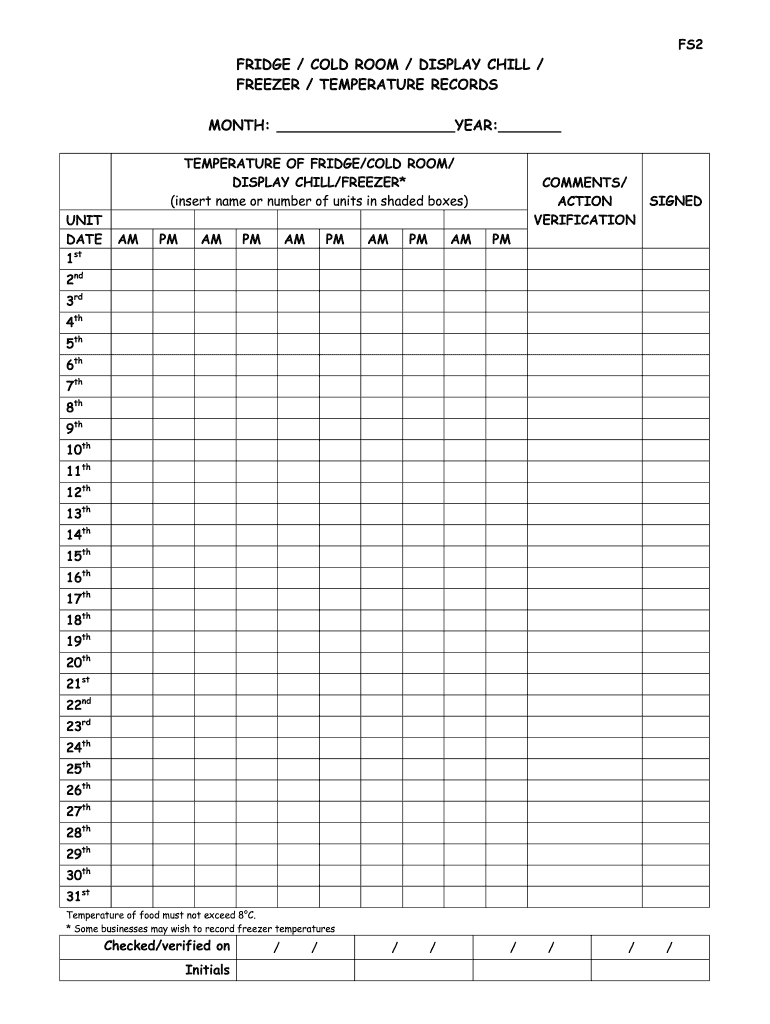
The SC2 fridge zer chill display temperature records form serves to monitor and document the temperature of refrigeration units used in various settings, such as medical facilities, restaurants, and food storage areas. Maintaining appropriate temperatures is vital for food safety and compliance with health regulations. This form aids in ensuring that fridges and chill display units operate within the required temperature ranges, protecting the integrity of perishable items.
Key Aspects of the Temperature Monitoring Process
-
Temperature Monitoring: This form is essential for capturing and logging daily temperatures. All readings should be recorded meticulously to identify any deviations from the established temperature norms to quickly address potential issues before they impact food safety.
-
Temperature Guidelines: It is recommended that temperatures for chilled display units do not exceed 8°C (46°F), while freezer units should remain at or below -18°C (0°F). Recording temperature data helps verify compliance with these guidelines and can aid in inspections.
-
Frequency of Logging: Daily checks are recommended for accuracy. Regularly logging temperature data minimizes the risk of overlooking critical fluctuations in temperature that may compromise food quality.
Utilizing the SC2 Fridge Temperature Record Sheet
-
Design Elements: The record sheet should include sections for entering date, time, temperature readings, comments for any temperature deviations, and verification signatures from responsible personnel. This level of detail ensures thoroughness and accountability.
-
Fillable Fields: Including fillable fields in a digital format allows users to easily input data from different devices, ensuring that all teams can contribute to maintaining the temperature records, whether they are in the kitchen, a storage area, or office.
-
Review and Verification: A process for reviewing and verifying entries should be established. Assigning responsibility for checks helps maintain accuracy and consistency, ensuring all team members remain vigilant.
Legal and Compliance Considerations
-
Health Regulations: Many jurisdictions mandate documentation of refrigeration temperatures as part of food safety laws. Keeping accurate records is essential to adhere to these regulations and safeguard health standards in food service operations.
-
Audit Trails: All entries should be easily accessible for audits. An organized system that includes electronic or physical storage of temperature logs enables quick referencing and verifying compliance during inspections.
-
Training Staff: Ensuring that all staff members understand how to use the SC2 fridge temperature records effectively is crucial. Training should cover how to accurately log temperatures and the importance of maintaining these records from both a legal and safety standpoint.
Practical Scenarios for Effective Use
Utilizing the SC2 fridge temperature records can result in various practical applications leading to improved efficiency and compliance in refrigeration management:
-
Scenario 1: In a medical clinic, the refrigerator storing vaccines must maintain strict temperature adherence. A daily log helps quickly identify any irregularities, triggering corrective actions before vaccine viability is compromised.
-
Scenario 2: A restaurant monitors its chiller display for seafood and dairy products by using the record sheet. Quick identification of temperature spikes ensures product freshness is preserved and health standards are maintained.
-
Scenario 3: Grocery stores often face inspections; regular documentation can provide evidence of compliance, protecting them from potential fines and sustaining customer trust regarding product safety.
Integration with Other Forms and Systems
To enhance data management, the SC2 fridge temperature record can integrate with broader food safety and inventory management systems. Utilizing digital platforms allows seamless updates and real-time reporting.
-
Electronic Documentation: Transitioning to digital records can provide automatic alerts for temperature deviations and streamline compliance reporting.
-
Cloud-Based Solutions: Storing records in a secure cloud environment protects them against data loss while allowing multiple users to access and update logs concurrently, thus increasing overall efficiency.
Conclusion
Maintaining comprehensive temperature records for SC2 fridges and display chill units is crucial in ensuring that food and medical supplies are stored safely and effectively. By employing a structured approach to logging temperatures, understanding compliance requirements, and implementing integration solutions, facilities can uphold high standards of safety and quality.




