







Definition and Meaning
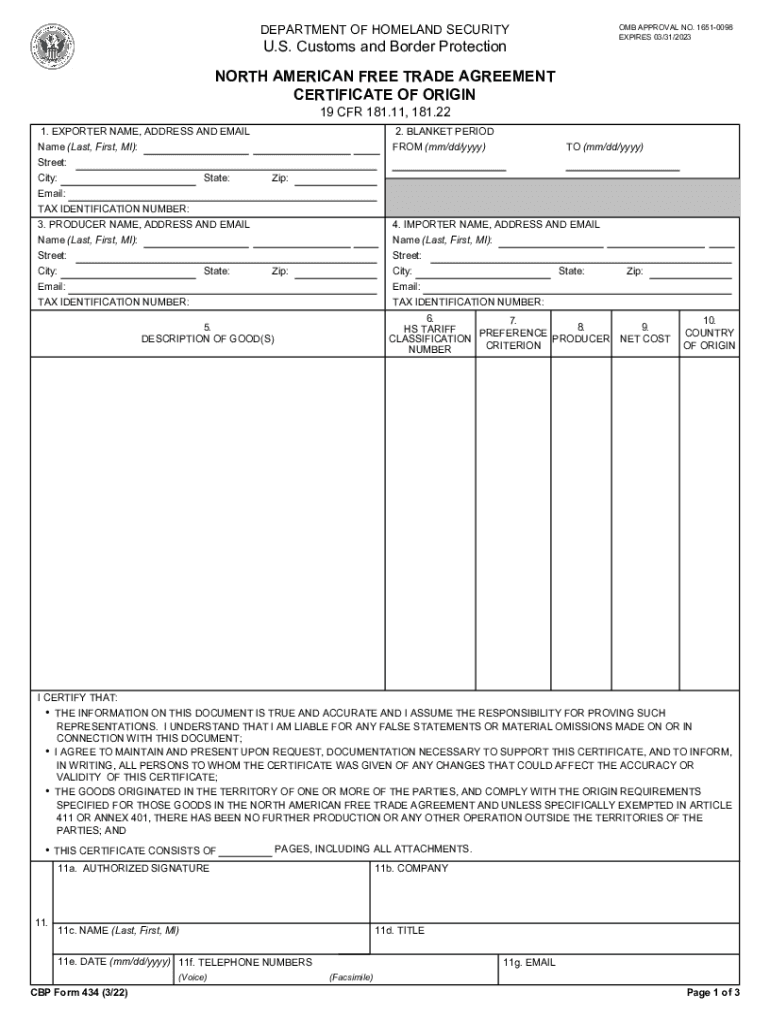
The North American Free Trade Agreement (NAFTA) Regulations and Certificate of Origin are critical components for U.S. exporters engaging in trade with Canada and Mexico. This certificate is essential to qualify goods for preferential tariff treatment under NAFTA. By defining the origin of goods, it helps streamline trade processes and promote economic cooperation among the member countries. Understanding the terminology and obligations associated with this certificate is crucial for any business involved in cross-border trade within North America. The document includes sections detailing exporter and importer information, the origin of goods, and compliance with NAFTA regulations.
How to Use the NAFTA Certificate of Origin
To use the NAFTA Certificate of Origin effectively, businesses must adhere to a structured process. First, ensure the goods qualify under NAFTA rules by carefully assessing their origin and manufacturing details. The certificate predominantly requires detailed information about the production process, materials used, and the respective origin of these materials. After collecting this data, accurately fill out each section of the certificate. This includes providing precise details about the exporter, importer, and a comprehensive description of the goods. Proper documentation and adherence to guidelines significantly increase the efficiency of trade operations and minimize potential legal challenges.
Step-by-Step Completion Instructions
- Gather Required Information: Collect all relevant data, including the names and addresses of the exporter and importer, classification of the goods, and the basis for preference.
- Complete the Exporter Details: Fill in the required fields with accurate exporter related information.
- Describe the Goods: Provide a detailed description of the goods being exported, ensuring alignment with tariff classification codes.
- State the Preference Criteria: Clearly indicate under which NAFTA rule the goods qualify.
- Other Required Fields: Ensure all additional fields, including the producer and importer sections, are accurately completed.
- Sign the Certificate: The exporter or their agent must sign the certificate, certifying the truthfulness of the information provided.
Steps to Obtain the NAFTA Certificate
Obtaining the NAFTA Certificate of Origin involves a series of steps, usually initiated before shipment. Start by downloading the form from the U.S. Customs and Border Protection website or accessing it through trade facilitation platforms. Next, compile the necessary documents that substantiate the goods' eligibility for NAFTA benefits. It is advisable to seek guidance from trade professionals or consultants to ensure all information aligns with regulatory standards. Once completed, the form must be signed by the exporter or their official representative.
Important Terms Related to NAFTA Regulations
Understanding specific terms is vital when dealing with the NAFTA Certificate of Origin. Familiar terms include:
- Exporter: The entity sending goods to another country under NAFTA rules.
- Importer: The recipient of goods in one of the NAFTA countries.
- Tariff: A tax levied on imports or exports between countries.
- Originating Goods: Products that meet the NAFTA-specific rules of origin requirements.
Proper knowledge of these terms facilitates smoother navigation of the certification process and compliance with international trade laws.
Legal Use of the NAFTA Certificate of Origin
The legal use of the NAFTA Certificate of Origin is crucial for maintaining compliance with international trade laws. Exporters must ensure that all information provided on the certificate is accurate and reflective of true conditions to prevent legal repercussions or denial of preferential treatment. Inaccurate or fraudulent submissions can result in penalties, fines, or legal actions. The certificate is a legally binding document that affirms the origin of goods and their eligibility for reduced duty rates, thus necessitating meticulous accuracy in preparation and submission.
Key Elements of the NAFTA Certificate
The NAFTA Certificate of Origin contains several key elements essential for its validity and effectiveness:
- Detailed Description of Goods: Including production process and materials.
- Exporter and Importer Information: Precise identification and contact details.
- Basis for Preference: Criteria under which the goods qualify for NAFTA benefits.
- Certification and Signature: Exporter's affirmation of the accuracy of the information provided.
Each component is integral to ensure compliance and successful application for preferential tariffs under NAFTA.
Penalties for Non-Compliance
Non-compliance with NAFTA Regulations can result in significant penalties. These may include fines, sanctions, and loss of preferential tariff benefits on exports. Exporters providing false information on the Certificate of Origin risk severe legal consequences, ranging from monetary penalties to potential prohibition from future trade under the agreement. Moreover, businesses may face reputational damage that affects their standing in international markets. Adhering to all outlined regulations is essential to maintain eligibility for cross-border trade privileges without incurring additional costs or legal challenges.
Disclosure Requirements
Businesses using the NAFTA Certificate of Origin must comply with strict disclosure requirements. This includes full transparency in the origin of the goods, manufacturing processes involved, and all entities participating in the trade transaction. Complete and accurate records of the certification and supporting documents must be maintained for a minimum of five years after the date of export. This allows for efficient auditing and verification by customs authorities and ensures ongoing compliance with NAFTA's provisions, safeguarding against inadvertent breaches and demonstrating a commitment to legal trading practices.




