
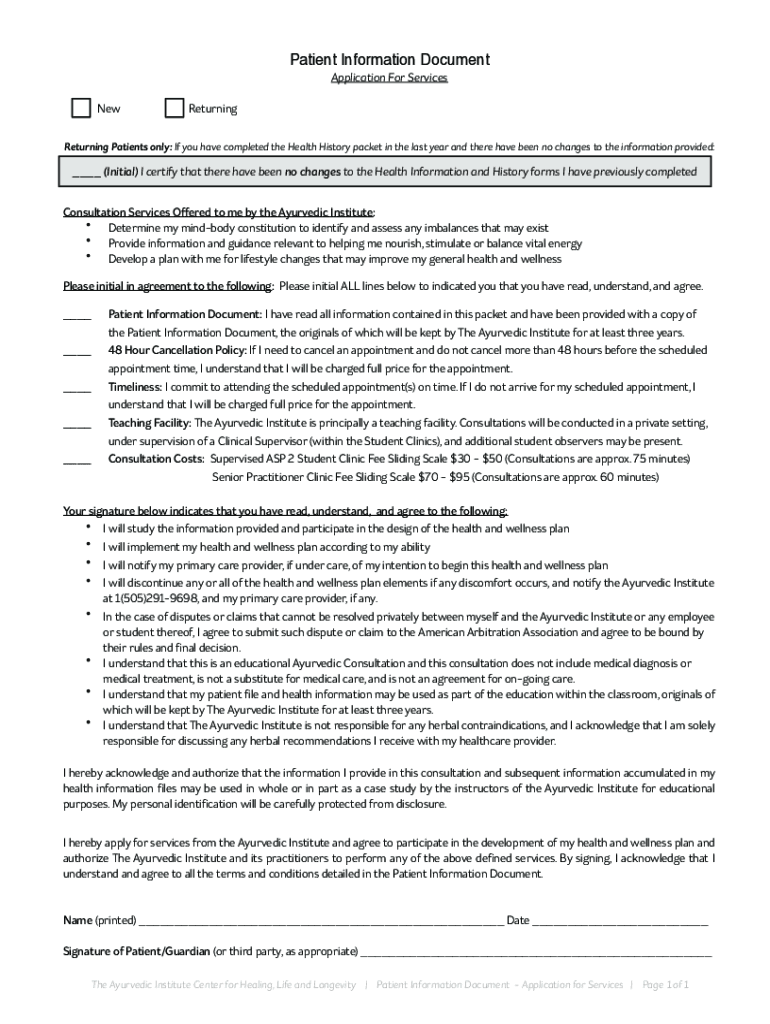







Definition & Meaning of the Ayurvedic Form
An ayurvedic form is a document used within the context of Ayurvedic practices, often serving as an intake form to gather essential patient information for Ayurvedic consultations. This type of form is designed to capture a detailed understanding of an individual’s health condition, lifestyle habits, and specific needs according to Ayurvedic principles, which focus on balancing the body’s doshas—Vata, Pitta, and Kapha. By analyzing this information, practitioners can develop personalized wellness plans that adhere to the holistic nature of Ayurveda.
Importance of Ayurvedic Forms
- Personalized Health Assessments: The form collects unique individual data, which enables a customized approach to wellness.
- Dosha Analysis: Essential for determining the balance of doshas to recommend suitable treatments and lifestyle changes.
- Holistic Approach: Supports a comprehensive view of health, incorporating emotional, physical, and spiritual well-being.
How to Use the Ayurvedic Form
The ayurvedic form acts as a bridge between patients and practitioners, facilitating an organized and thorough exchange of health-related information. Patients are typically required to provide details such as their medical history, current symptoms, lifestyle habits, and dietary preferences.
Detailed Steps for Utilization
- Initial Setup: Collect comprehensive personal data, including age, sex, and existing health conditions.
- Lifestyle Inquiries: Document daily routines, work habits, and stress levels that may impact health.
- Symptom Review: Highlight specific symptoms and concerns for targeted treatment.
- Dietary Habits: Note food preferences, allergies, and dietary restrictions for tailored advice.
- Feedback and Questions: Allow space for patients to add specific questions or comments for the practitioner.
Practical Examples
- An individual with high stress levels might be advised to incorporate meditation and yoga tailored to their dosha.
- Dietary adjustments could be suggested based on food intolerance and dosha balance requirements.
How to Obtain the Ayurvedic Form
Obtaining an ayurvedic form can be done through various avenues, depending on the provider or facility offering Ayurvedic services.
Acquisition Process
- Direct from Practitioner: Most Ayurvedic practitioners provide the form during initial consultations.
- Online Availability: Many Ayurvedic centers offer downloadable forms on their websites.
- Health Clinics and Holistic Centers: Forms can often be obtained in-person at facilities specializing in alternative medicine.
Key Considerations
- Ensure the form is up-to-date and sanctioned by the relevant Ayurvedic practitioner.
- Verify the credibility of online sources before downloading.
Steps to Complete the Ayurvedic Form
Completing an ayurvedic form accurately is crucial for the best possible health assessment and treatment plan. This process often requires collaboration and a thoughtful approach to each section of the form.
Completion Procedure
- Gather Required Information: Patients should prepare any medical records or historical health data.
- Take Your Time: Carefully fill in each section, ensuring all answers are honest and comprehensive.
- Seek Clarification: If unsure about any section, consult the practitioner for precise guidance.
- Review Entries: Double-check the form for completeness and accuracy before submission.
Edge Cases
- For those with multiple conditions, separate supplementary notes may be necessary.
- If completing the form digitally, ensure compatibility with the filling software and that fields are saved correctly.
Key Elements of the Ayurvedic Form
The ayurvedic form features several key elements that are essential for a holistic evaluation. Understanding these sections can help individuals prepare the required information in advance.
Essential Components
- Personal Information: Basic demographic data to establish patient records.
- Medical and Familial History: Background details impacting current health analysis.
- Current Medications and Treatments: Items that affect the risk of interactions with Ayurvedic treatments.
- Lifestyle Factors: Details about stress, exercise, and sleep for comprehensive assessment.
Practical Scenarios
- The information provided can influence the recommendation of specific herbal supplements.
- Lifestyle insights can guide exercise regimens and stress management techniques tailored to the patient’s needs.
Who Typically Uses the Ayurvedic Form
The primary users of ayurvedic forms include both practitioners and patients within the context of holistic health practices aiming for sustainable wellness solutions.


Target Audience
- Ayurvedic Practitioners: Use these forms to develop comprehensive health plans.
- Patients: Individuals seeking health improvement through natural, personalized treatment plans based on Ayurvedic principles.
- Holistic Health Consultants: Other professionals who integrate Ayurveda into broader health solutions.
Common Use Cases
- New patients of an Ayurvedic clinic completing these forms during their first visit.
- Current patients updating their forms for ongoing treatment adjustments.
Legal Use of the Ayurvedic Form
When engaging with Ayurveda, the legal validity of forms and practices is a point of consideration to ensure compliance and protection for both parties involved.
Legal Context and Considerations
- Privacy Compliance: Forms must align with HIPAA regulations to protect patient information.
- Informed Consent: Patients are typically educated about the treatment processes, agreeing to procedures outlined in the form.
Real-world Applications
- Signing a consent for treatments provides legal protection to health providers and reassures patients about the safety and efficacy of offered solutions.
- Accurate completion and signing off on intake forms aid in maintaining a transparent treatment history, should any legal inquiries arise.
State-Specific Rules for the Ayurvedic Form
Each state may have distinct regulations and recognition levels of Ayurvedic practices. Understanding these differences helps practitioners and patients navigate their rights and obligations effectively.
Overview of Regulations
- Licensing Requirements: Vary across states, affecting the necessity for forms and intake records.
- Recognition of Ayurveda: Level of acceptance and regulation by state health departments can influence available services.
Impact on Form Usage
- In states with higher recognition of Ayurveda, practitioners may have more requirements for in-depth record keeping via forms.
- Patients may see variations in privacy laws affecting form completion depending on geographical location.




