
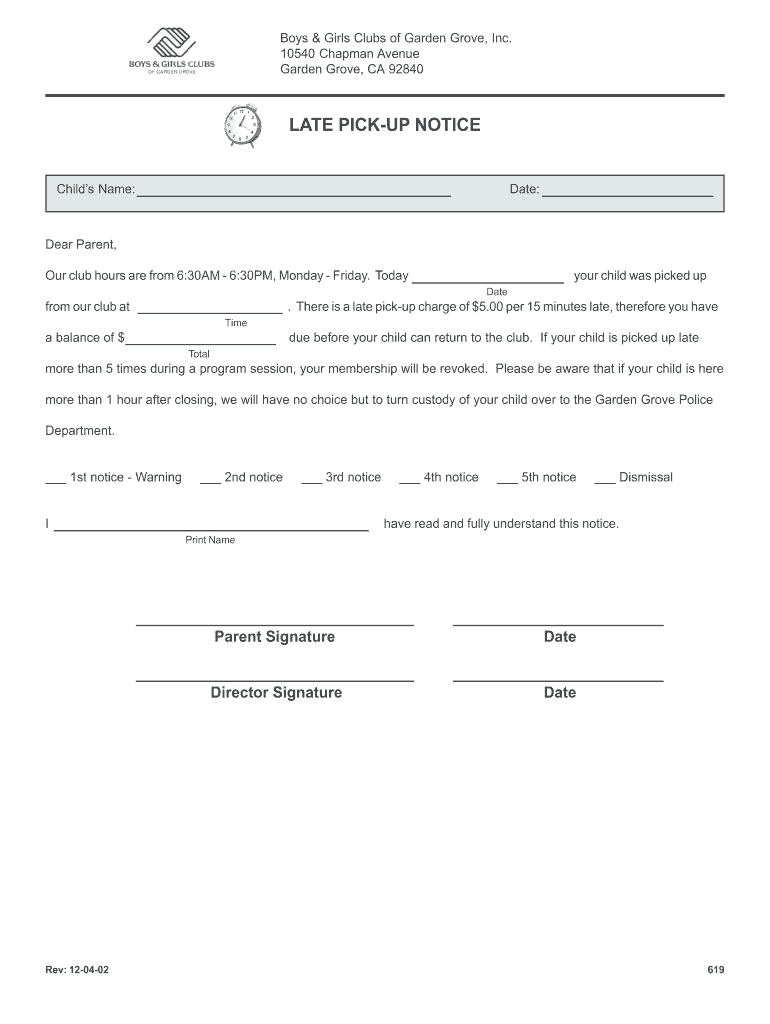







Definition and Importance of a Warning Letter for Late Pick Up
A warning letter for late pick up serves as a formal notification from an educational institution or daycare facility to parents or guardians regarding the repeated late collection of their child. Such letters are crucial, as they maintain clear communication regarding expectations and regulations surrounding pick-up times.
Late pick up incidents can disrupt operations and create safety concerns, and a warning letter outlines the policies in place to address these behaviors. It typically specifies the facility's operating hours, any associated fees for late pick ups, and the potential consequences for persistent tardiness, such as revocation of privileges or, in serious cases, the involvement of law enforcement.
This letter also serves as documentation of concerns raised, demonstrating that the institution is taking responsible steps to ensure child safety and compliance with operational policies.
Common Circumstances Leading to Late Pick Ups
- Unexpected Delays: Traffic or sudden emergencies can cause parents to arrive late.
- Work-Related Issues: Unforeseen changes in work schedules may lead to tardiness.
- Miscommunication: Parents may not be aware of pick-up times or amendments in schedules.
Understanding these reasons can help nurture a supportive environment while ensuring proper boundaries are maintained.
Key Components of a Warning Letter for Late Pick Up
A warning letter for late pick up generally includes several essential elements to effectively convey the message to parents. These components ensure clarity in communication and establish a formal tone.
- Header Information: This includes the institution's name, address, and the date of issuance.
- Recipient’s Details: Names of parents or guardians receiving the notice should be clearly stated.
- Subject Line: A clear subject, such as "Warning Letter for Late Pick Up," helps in quickly identifying the nature of the correspondence.
- Description of Incidents: Specific instances of tardiness, including dates and times, should be detailed. This provides context and a factual basis for the warning.
- Consequences of Continued Late Pick Ups: Clear articulation of the potential repercussions, such as fees or loss of membership, reinforces the importance of adhering to pick-up policies.
By including these components, the institution can effectively communicate expectations while emphasizing the seriousness of the matter.
Potential Consequences for Continued Late Pick Ups
- Late Fees: Accumulation of additional charges for each late collection beyond a specified grace period.
- Policy Review Meeting: A requirement for parents to meet with administrative staff to discuss repeated tardiness.
- Temporary Suspension: Restrictions or suspension from program participation for habitual non-compliance.
These consequences underline not only the significance of punctuality but also the institution's commitment to establishing clear guidelines for all families.
Sample Language for a Late Pick Up Warning Letter
The wording of a warning letter is crucial in maintaining a professional tone while addressing serious concerns. Below is an example of how to structure such a letter effectively.
[Institution Name]
[Institution Address]
[Date]
[Parent/Guardian Name]
[Parent/Guardian Address]
Subject: Warning Letter for Late Pick Up
Dear [Parent/Guardian Name],
This letter serves as a formal notice regarding the late pick-up of your child, [Child's Name], from [Institution Name] on the following dates: [List specific dates]. As stipulated in our parent handbook, all children must be picked up by [specific time] to ensure their safety and allow staff members to manage scheduling.
Regrettably, we noted occurrences of late pick-ups on [specific instances], which disrupt the operational flow of our programs. Continued tardiness may result in [list potential penalties, e.g., late fees or a required meeting].
We value your partnership in providing a safe and structured environment for all children. Thank you for adhering to our pick-up policies moving forward.
Sincerely,
[Your Name]
[Your Title]
This format provides clear, professional communication while addressing the issues at hand.
Effective Communication Strategies When Issuing a Warning Letter
Delivering a warning letter requires careful consideration to strengthen the relationship between the institution and the families it serves. Employing effective communication strategies can enhance understanding and cooperation.
- Be Direct and Clear: Avoid ambiguous language. Use straightforward terms that clearly delineate expectations.
- Remain Professional: Maintain a respectful tone throughout the letter to cultivate positive interactions, even in challenging discussions.
- Offer Support: Encourage dialogue by inviting parents to discuss any potential challenges they face that may lead to tardiness.
These strategies foster a cooperative environment while ensuring that the seriousness of the situation is communicated effectively.
Follow-Up Actions After Sending a Warning Letter
Once a warning letter for late pick up has been issued, follow-up actions are necessary to monitor compliance and address any ongoing issues.
- Schedule a Meeting: If a parent continues to struggle with timely pick-ups, schedule a one-on-one meeting to discuss any underlying issues.
- Document Follow-Up Instances: Keep records of subsequent tardy occurrences and any responses or changes made by the family.
- Reiterate Policies: Periodically remind all parents about the importance of adhering to pick-up policies, perhaps during community meetings or newsletters.
These actions help reinforce expectations and demonstrate the institution’s commitment to maintaining a supportive atmosphere.
By effectively communicating late pick-up policies through structured letters, institutions can ensure parents are aware of the importance of time adherence, and this can result in improved operational efficiency.




