Public University Research Grant Application Budget Form 2026

Get Form
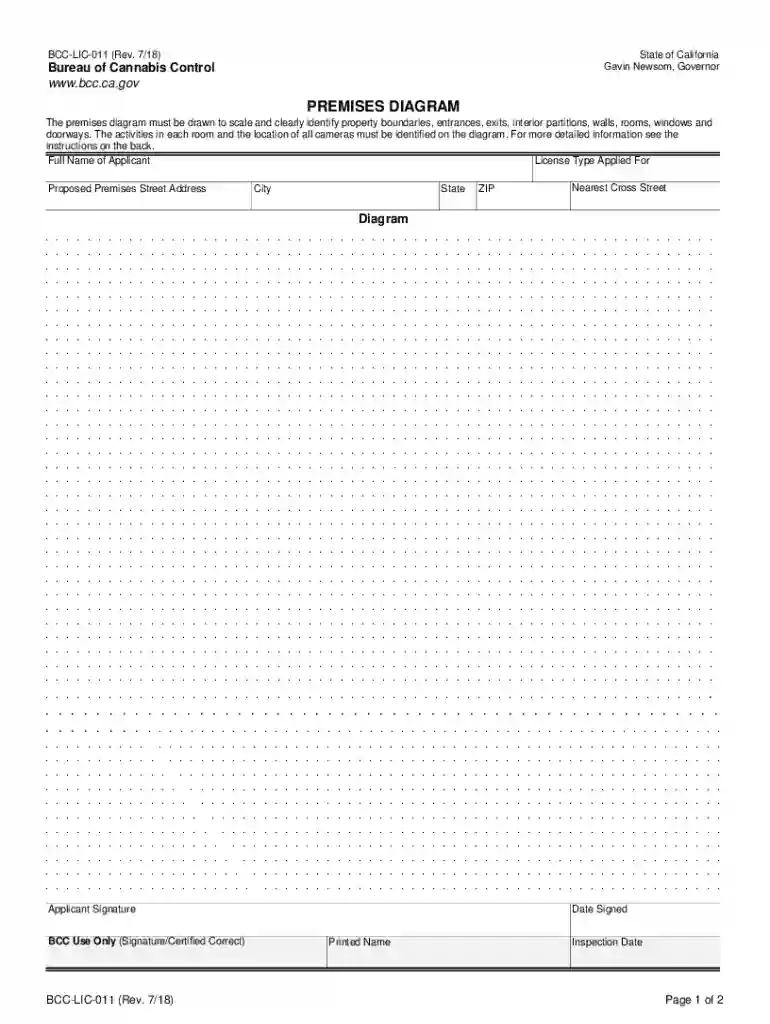
premises diagram Preview on Page 1

Here's how it works

01. Edit your premises diagram online
Type text, add images, blackout confidential details, add comments, highlights and more.

02. Sign it in a few clicks
Draw your signature, type it, upload its image, or use your mobile device as a signature pad.

03. Share your form with others
Send it via email, link, or fax. You can also download it, export it or print it out.

Definition and Purpose of the Public University Research Grant Application Budget Form

The Public University Research Grant Application Budget Form serves as a financial planning tool for individuals or teams applying for research grants at public universities. It is designed to detail the expected expenses related to a research project, ensuring that funds are allocated appropriately and transparently. Typically, this form includes sections for personnel, equipment, travel, and materials, allowing applicants to provide a comprehensive overview of their financial requirements.

Essential Components

  • Personnel Costs: Salaries and wages for faculty, research assistants, and other staff involved in the project.
  • Equipment and Materials: Costs for purchasing or leasing equipment and materials necessary for conducting research.
  • Travel Expenses: Budget for travel related to research, such as conferences or fieldwork.
  • Other Direct Costs: Miscellaneous expenses such as publication fees or consultancy services.

Providing detailed and accurate information in these sections enhances the likelihood of approval by illustrating the financial viability and necessity of the research proposal.

How to Use the Public University Research Grant Application Budget Form

Step-by-Step Instructions

  1. Review the Guidelines: Before starting the form, read any accompanying instructions provided by the funding body or university to understand requirements and limitations.
  2. Gather Necessary Information: Collect financial documents and project estimates to ensure that all requested details can be filled in accurately.
  3. Complete Each Section: Fill out details for each budget category, ensuring clarity and precision in financial estimates.
  4. Review Calculations: Double-check all figures, ensuring that totals are correct and aligned with the narrative of the research proposal.
  5. Submit the Form: Follow specific submission guidelines, whether online or via postal service, and ensure that all required supplementary documents are included.

Following these steps can ensure a comprehensive and successful application process.

Important Terms Related to the Form

Familiarity with certain terms can enhance understanding and accuracy when completing the form:

  • Indirect Costs: Overhead costs associated with the project, such as administration or facility fees.
  • Cost Sharing: Any portion of the project budget that will not be funded by the grant and must be covered by the institution or other sources.
  • Fringe Benefits: Additional compensation components for personnel, such as health insurance or retirement benefits.
  • Line Item: An individual entry representing a specific budget category.

These terms help in accurately interpreting form instructions and ensuring completeness in each section.

Key Elements of the Public University Research Grant Application Budget Form

Detailed Breakdown

  • Abstract and Justification: A narrative section accompanying numerical entries, detailing the purpose and necessity of each budget component.
  • Budget Summary: An overview page that consolidates all financial estimates into a concise summary, typically including automatic calculations for totals.
  • Budget Categories: Distinct sections for each type of expense, allowing for itemized representation and justification.

Incorporating these elements effectively communicates the alignment of funding requests with research goals and institutional standards.

Steps to Complete the Public University Research Grant Application Budget Form

To ensure a thorough and error-free submission, applicants should follow structured processes:

  1. Initial Planning: Prior to beginning the form, develop a comprehensive budget proposal that considers all potential expenses and funding sources.
  2. Draft Budget Figures: Start with draft numbers for each budget line item, adjusting as necessary to align with realistic projections and funder limitations.
  3. Enter Information into Form: Systematically fill out each section, ensuring that all details are consistent with the larger research proposal.
  4. Internal Review and Approval: Have project stakeholders within the university (e.g., department heads) review the budget for accuracy and completeness.
  5. Finalize and Submit: Complete final revisions and ensure the form is submitted in accordance with stated deadlines and protocols.

This sequence ensures a thorough and strategic approach to budget form completion.

Who Typically Uses the Public University Research Grant Application Budget Form

This form is primarily used by researchers and academic professionals seeking funding for research projects at public universities. Users typically include:

  • Faculty Members: Professors and lecturers aiming to secure funding for department-led studies or pilot projects.
  • Graduate Students: Doctoral candidates and postdoctoral researchers needing financial support for dissertation-related research.
  • Research Teams: Collaborations between multiple researchers or institutions requiring pooled resources for large-scale studies.

These groups use the form to access grants that enable academic inquiry and innovation.

decoration image ratings of Dochub

Required Documents for Submission

Completing and submitting the Public University Research Grant Application Budget Form often necessitates additional documentation:

  • Research Proposal: Outlines the objectives, methodology, and significance of the proposed study.
  • CVs or Biosketches: Career summaries for key personnel to demonstrate their capability to execute the project.
  • Institutional Letters of Support: Endorsements from university departments or committees affirming commitment and project alignment with institutional goals.
  • Previous Funding Records: Historical data on past grants and financial management as required by certain funding bodies.

Including these documents alongside the form strengthens the application by providing context and evidence of preparedness.

Application Process and Approval Time

The application process for a Public University Research Grant usually involves several stages:

  1. Pre-Application Consultation: Some universities offer advisory sessions to guide applicants and refine proposals.
  2. Submission: Following completion of the form, submit electronically or by mail according to the funder's instructions.
  3. Review Period: Typically, funding bodies take several weeks to review applications, during which time they may request further information or amendments.
  4. Decision Notification: Applicants receive notification of the outcome, with successful candidates required to formalize agreements before funds are disbursed.

This detailed timeline allows applicants to manage expectations and prepare for each stage of the process effectively.

See more Public University Research Grant Application Budget Form versions

We've got more versions of the Public University Research Grant Application Budget Form form. Select the right Public University Research Grant Application Budget Form version from the list and start editing it straight away!
Versions Form popularity Fillable & printable
2018 4.6 Satisfied (50 Votes)
2017 4.9 Satisfied (21 Votes)
be ready to get more

Complete this form in 5 minutes or less

Get form

Got questions?

We have answers to the most popular questions from our customers. If you can't find an answer to your question, please contact us.
Contact us
The total costs requested in your budget will include allowable direct costs (related to the performance of the grant) plus allowable FA costs. If awarded, each budget period of the Notice of Award will reflect direct costs, applicable FA, and in the case of SBIR or STTR awards, a profit or fee.
It outlines the expected project costs in detail and should mirror the project description. It is presented as a categorical list of anticipated project costs representing the researchers best estimate of the funds needed to support the proposed work.
The budget describes the costs necessary to carry out the activities you have describe in the proposal. You should make clear which of those costs are to be paid by funder you are addressing and which costs may be covered by other sources.
The budget should list all cost details for the year or another appropriate period of time. It should include any applicable salaries wages, fringe benefits, services, supplies, equipment, publications, travel, other direct expenses, and any facility and administrative costs.
Modular Budgets NIH uses a modular budget format to request up to a total of $250,000 of direct costs per year (in modules of $25,000, excluding consortium FA costs) for some applications, rather than requiring a full detailed budget.

Security and compliance

At DocHub, your data security is our priority. We follow HIPAA, SOC2, GDPR, and other standards, so you can work on your documents with confidence.

Learn more
ccpa2
pci-dss
gdpr-compliance
hipaa
soc-compliance

People also ask

Grant budgets will look different depending on what theyre for. But each budget will include direct costs, those expenses related to the project or program youre funding, as well as indirect costs that go along with running an organization.
The budget narrative explains in a clear and concise manner the costs in each budget category, and which budget items will be covered by the grant and which ones will be covered by matching funds (e.g., cost-share or in-kind).

Related links