







Definition & Meaning
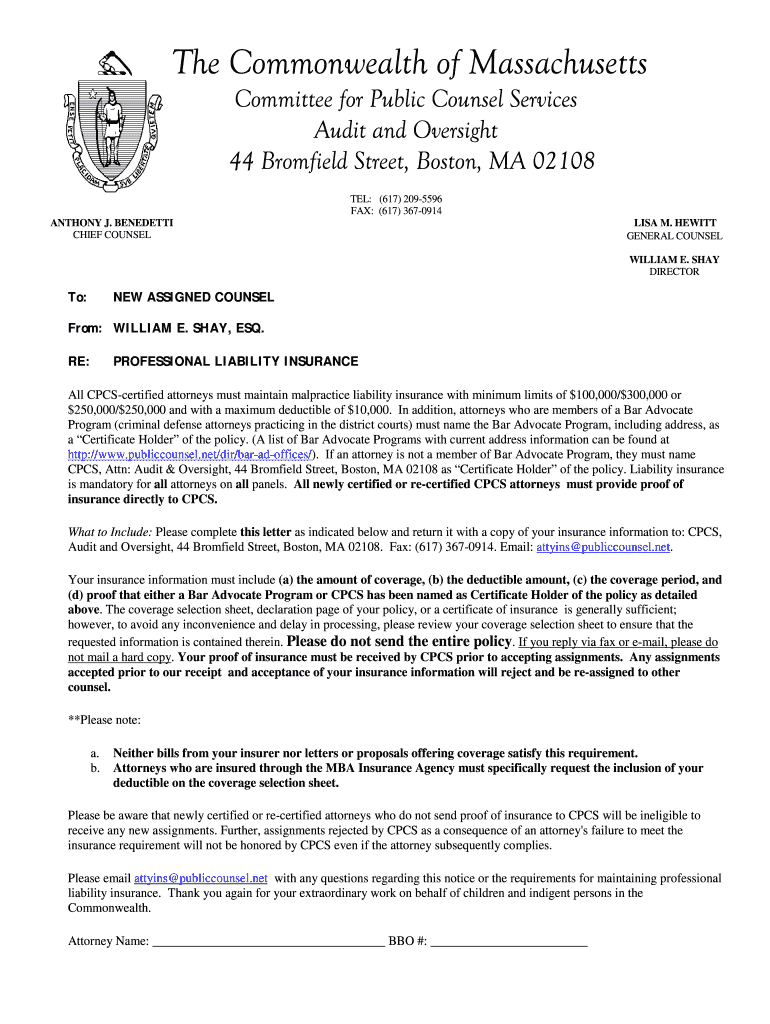
The "Committee for Public Counsel Services Audit and Oversight" form is fundamental for ensuring accountability and transparency within public defense services in Massachusetts. It offers a structured process for reviewing and assessing the operational and financial aspects of the Committee for Public Counsel Services (CPCS). This form serves as a key instrument for ensuring that all public counsel services meet established legal standards and ethical practices.
Public counsel services are crucial in providing legal representation to those unable to afford private attorneys. The audit and oversight process facilitated by this form is essential to maintaining the quality and reliability of such services, protecting the interests of clients, and ensuring public funds are utilized correctly.
How to Use the Committee for Public Counsel Services Audit and Oversight
Proper use of this form involves several detailed steps. Initially, users must gather relevant documentation related to the services being audited. These documents may include financial records, case files, and other operational data that provide insight into the efficiency and compliance of the public counsel services.
- Gather Documentation: Compile financial records, casework files, and operational data.
- Review Criteria: Understand the specific auditing criteria and standards required for CPCS evaluation.
- Complete the Form: Accurately fill out each section, providing necessary details and evidence.
- Submit for Review: Submit the completed form to the designated oversight authority for evaluation.
The details included in the completed form help auditors determine the compliance level of the public counsel services with legal and ethical standards. It is crucial for maintaining the integrity and efficiency of the services provided.
Steps to Complete the Committee for Public Counsel Services Audit and Oversight
Completing this form requires careful attention to detail and a comprehensive approach to data collection and entry. Begin with a thorough review of the required information and ensure all necessary documents are on hand before proceeding.
- Identify Required Sections: Verify all sections of the form that need completion based on the audit focus.
- Data Collection: Systematically collect all necessary data to provide a clear view of financial and operational workflows.
- Verification: Cross-check information to ensure accuracy and completeness before finalizing entries.
- Filling Out the Form: Enter information clearly in the designated fields and attach supporting documents as needed.
- Internal Review: Conduct an internal review to ensure no sections are missed and that all entries are precise.
Detailed completion of each section ensures accurate assessment and enhances the reliability of the audit outcomes, contributing to informed decision-making processes.
Key Elements of the Committee for Public Counsel Services Audit and Oversight
Understanding the critical elements of this form is essential for effective completion. Key components include:
- Financial Analysis: Examination of budget allocations, expenditures, and financial management practices.
- Operational Efficiency: Assessment of processes and procedures to ensure effective delivery of public counsel services.
- Compliance Review: Verification that services adhere to relevant legal, ethical, and procedural standards.
- Quality Control Measures: Evaluation of practices in place to maintain high standards of client service and case management.
Each aspect plays a role in providing a holistic view of the organization's performance and compliance, ensuring sustained service quality and accountability.
Legal Use of the Committee for Public Counsel Services Audit and Oversight
This form serves a legally binding purpose, helping ensure that CPCS adheres to necessary regulations. It verifies that public counsel services maintain the requisite professional liability insurance and follow best practices as dictated by state and federal laws.
Legal use includes ensuring all attorneys employed by CPCS have suitable insurance coverage and that their practices are transparent, ethical, and compliant with standards. Non-compliance may result in significant legal repercussions, making adherence to this process imperative for legal integrity.
Who Typically Uses the Committee for Public Counsel Services Audit and Oversight
This form is primarily utilized by auditors, legal evaluators, and oversight committees tasked with ensuring the efficacy and accountability of public counsel services. Professionals within the CPCS, including department heads and administrative staff, also engage with this form to align their operations with legal standards and procedural expectations.
Additionally, state authorities and legal oversight bodies use this form to perform regular checks and balances on the assembly of public defense, reinforcing the quality and accountability of the legal aid provided to economically disadvantaged individuals.


Penalties for Non-Compliance
Failure to complete or adhere to the requirements set out in the Committee for Public Counsel Services Audit and Oversight form can lead to several penalties. These may include:
- Revocation of Funding: Withdrawal of public or state funding for non-compliant operations.
- Legal Sanctions: Fines and other legal penalties resulting from a failure to meet regulatory obligations.
- Loss of Certification: Suspension or revocation of certifications required to provide public defense services.
Addressing these risks requires rigorous adherence to auditing standards and proactive compliance measures to safeguard the continuation of service provisions.
State-Specific Rules for the Committee for Public Counsel Services Audit and Oversight
Each state might have specific rules and modifications for implementing the audit and oversight form. For Massachusetts, the primary focus lies in aligning CPCS operations with state laws and insurance mandates. Massachusetts requires public counsel services to maintain malpractice insurance with defined minimum coverage limits and deductibles.
These state-specific rules underscore the importance of contextual understanding when completing the form, ensuring compliance with unique state-level legal landscapes and standards necessary for public services.




