
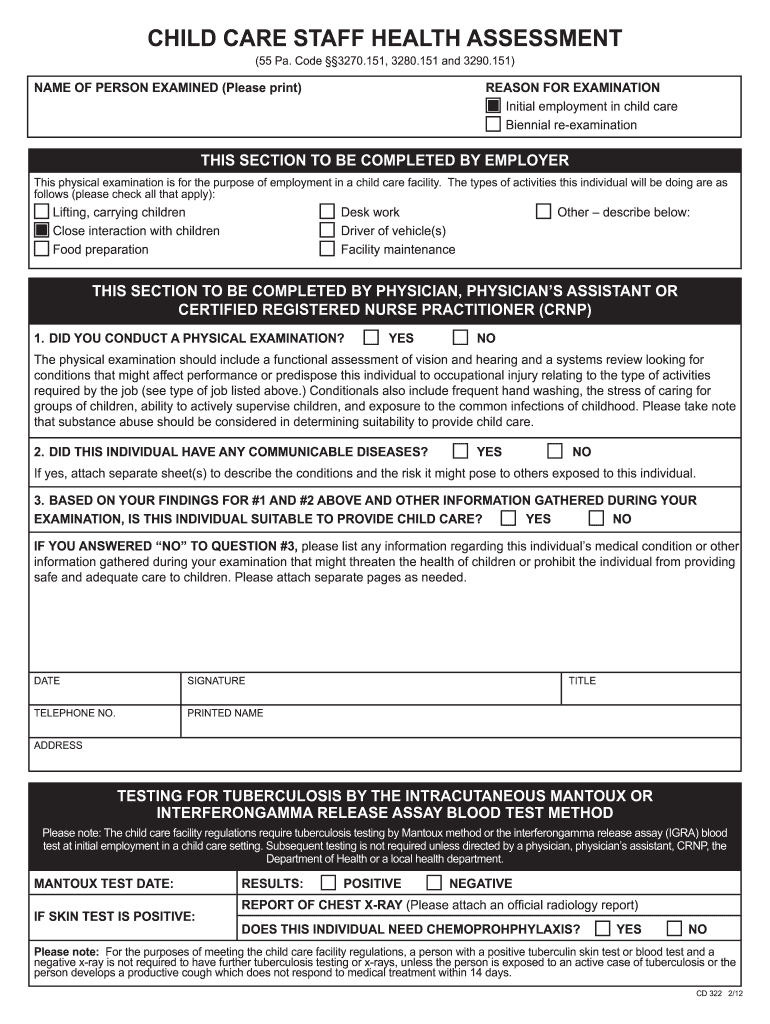







Definition and Purpose of the Child Care Health Assessment
A child care health assessment is a formal process through which the health and well-being of child care staff are evaluated to ensure they are fit for working with children. This assessment serves multiple purposes, including verifying that staff members do not have communicable diseases and possess the physical capabilities necessary to care for children adequately. The overall goal is to safeguard children's health while promoting a safe environment in child care settings.
Key components of a typical child care health assessment include:
- Medical history evaluation
- Physical examination
- Screening for specific health conditions, such as tuberculosis
- Assessment of immunization status
These components ensure that child care centers hire and retain staff who are not only capable of fulfilling their roles physically but also are in good health to minimize risks to the children they supervise.
How to Use the Child Care Health Assessment
Utilizing a child care health assessment involves several critical steps, designed to create a safe environment for children. The process can vary slightly based on local regulations but generally follows a standardized approach:
-
Initial Assessment: New applicants or existing staff members seeking re-evaluation need to complete a health assessment form. This typically includes detailed personal health information and previous medical history.
-
Physical Examination: A licensed health professional will review the submitted form and conduct a physical exam to assess the individual’s readiness for child care responsibilities.
-
Health Screening: Screenings for specific conditions, such as tuberculosis or other communicable diseases, are performed. Results are documented and maintained within the staff member’s personnel file.
-
Follow-Up Actions: If any concerns arise during the assessment, additional follow-up may be required, including recommendations for further medical evaluations or immunizations.
-
Documentation and Record Keeping: For compliance purposes, all health assessments and relevant findings should be documented accurately. Facilities must keep all medical records secure and confidential, following legal guidelines.
Key Elements of the Child Care Health Assessment
Several essential elements characterize a comprehensive child care health assessment, each contributing to the overarching goal of ensuring staff are healthy and capable of caring for children. These elements include:
-
Medical History Review: This initial section gathers data on past illnesses, surgeries, or disabilities that may affect the staff's ability to perform their responsibilities.
-
Physical Examination Findings: A thorough physical checkup assesses general health, noting any relevant issues that could impact work performance.
-
Immunization Records: Proof of immunizations is crucial, particularly for conditions such as measles, mumps, and rubella, to protect children from preventable diseases.
-
Tuberculosis Screening: Many regulations require specific tests for tuberculosis to safeguard against its transmission in child care environments.
-
Health Recommendations: Based on the assessments, health professionals may recommend specific actions, such as health improvements or further evaluations.
Steps to Complete the Child Care Health Assessment
Completing a child care health assessment typically follows a structured set of steps to ensure thoroughness and compliance:
-
Gather Required Information: Collect necessary documentation, including prior health records and immunization histories.
-
Complete the Health Assessment Form: The child care staff must fill out the assessment form accurately, indicating any pre-existing health conditions or recent medical treatments.
-
Schedule a Physical Examination: An appointment with a licensed medical provider must be arranged to conduct a physical evaluation.
-
Undergo Specific Health Screenings: Participate in the required screenings, ensuring that any tests for communicable diseases are completed as per local regulations.
-
Submit Documentation: Return the completed health assessment form, along with any medical findings from the examinations and screenings, to the designated personnel at the child care facility.
Legal and Compliance Aspects of the Child Care Health Assessment
The legal framework surrounding child care health assessments is primarily designed to protect the health of children and their families. Compliance with federal and state regulations is crucial for all child care facilities. Important points to consider include:
-
State-Specific Regulations: Each state may have distinct requirements regarding who must complete the health assessment and how often re-evaluations are needed.
-
Confidentiality Laws: Facilities must ensure that all health-related information is kept confidential and secured properly to comply with various privacy laws.
-
Potential Penalties for Non-Compliance: Failing to adhere to mandated health assessment protocols may expose a child care facility to legal liabilities, including fines, license revocation, or civil lawsuits.
-
Documentation Standards: Compliance requires accurate and organized record-keeping systems to facilitate inspections and audits by state authorities or licensing agencies.
Understanding these legal aspects ensures that child care facilities can maintain a compliant and safe environment for children, aligning with public health standards.




