




01. Edit your form online
Type text, add images, blackout confidential details, add comments, highlights and more.

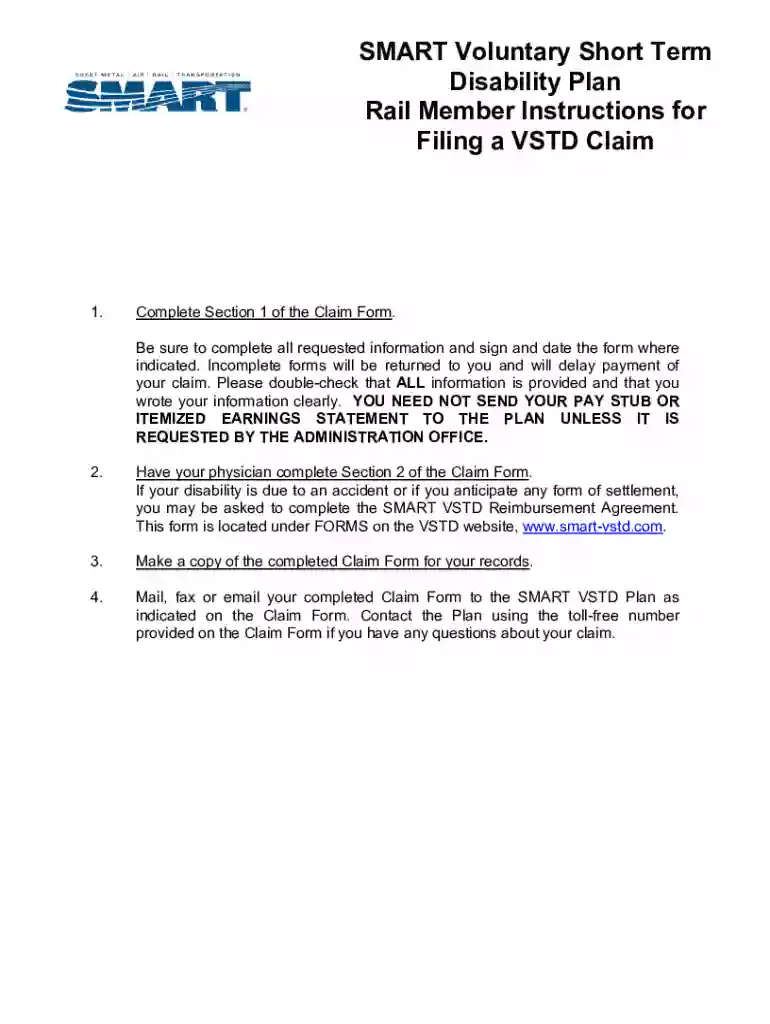
Type text, add images, blackout confidential details, add comments, highlights and more.

Draw your signature, type it, upload its image, or use your mobile device as a signature pad.

Send it via email, link, or fax. You can also download it, export it or print it out.
Short-term disability claim payments are typically financial benefits offered to individuals unable to work temporarily due to a medical condition. These payments help replace part of the individual's income during their period of disability. In the United States, short-term disability insurance is often provided by employers or can be purchased privately. The primary purpose of these payments is to ensure that individuals have some degree of financial stability when they cannot earn a salary due to illness or injury. Understanding whether these payments are considered taxable income is crucial for accurately filing tax returns.
The IRS provides specific guidelines on how short-term disability claim payments should be treated for tax purposes. Generally, if the premiums for short-term disability insurance were paid with pre-tax dollars, the benefits received are considered taxable income. Conversely, if premiums were paid with after-tax dollars, the benefits usually are not subject to income tax. However, if your employer covered the premium costs on your behalf, any benefits you receive can be considered taxable income. It is advisable to consult the IRS or a tax professional for clarification on how these rules apply to your situation.
Eligibility for short-term disability benefits typically depends on several factors, including the severity and duration of the medical condition as well as employment status. Employees must usually be covered under a short-term disability insurance policy at the time they become disabled. Most plans require that individuals provide medical certification from a healthcare provider to verify their disability. Additionally, there may be a mandatory waiting period before benefits begin. It is important to check your specific policy or consult with your human resources department to understand the eligibility criteria applicable to you.


Several key elements must be understood when dealing with short-term disability claim payments. These include the amount of the benefit, the duration for which benefits will be paid, and any waiting period. The benefit amount is generally a percentage of the individual's regular salary, often ranging from 50% to 70%. Duration can vary significantly, with benefits typically provided for up to six months. Understanding these elements is essential for effective financial planning during a period of disability.
Filing for short-term disability benefits requires several documents to verify the claimant's eligibility. Commonly required documents include a completed claim form, medical certifications, and, in some cases, employment verification. The claim form generally needs details of the claimant's condition and how it affects their ability to work. Medical certification from a qualified healthcare provider must also accompany the claim, substantiating the diagnosis and expected recovery period. Ensure all documents are completed accurately to facilitate a smooth claims process.
In the United States, short-term disability regulations and benefits can vary by state. Some states offer state-mandated short-term disability benefits, while others do not. States with such programs often have specific rules regarding eligibility, benefit amounts, and duration. For example, California, New York, and New Jersey have state disability insurance programs, each with unique features. It is essential to understand the specific rules within your state to ensure compliance and maximize benefits.
To complete the short-term disability claim form, follow these general steps:
Understanding the various methods for submitting your short-term disability claim form is essential for a smooth process. Typically, there are three main submission methods: online, by mail, and in person. Online submission is often the most efficient and allows for easier tracking and quicker processing. Mailing the form can be reliable but might take longer due to postal services. Some programs or employers enable in-person submission, where you can hand in documents directly. Always confirm the preferred submission method with your insurer or employer.
Using short-term disability payments correctly is important for legal compliance and to ensure beneficiaries receive appropriate benefits. Recipients should use these payments to cover essential living expenses during their period of disability, such as rent, utilities, and groceries. Misuse of funds could result in penalties or termination of benefits. Always remain informed about potential legal obligations and restrictions associated with receiving short-term disability benefits.
We've got more versions of the Are Short-Term Disability Claim Payments Considered form. Select the right Are Short-Term Disability Claim Payments Considered version from the list and start editing it straight away!
At DocHub, your data security is our priority. We follow HIPAA, SOC2, GDPR, and other standards, so you can work on your documents with confidence.
Where it appears from all the pertinent facts that the parties have agreed to exclude such activities from hours worked, payments for such time will be regardedRead more
During the time you are paid short-term disability benefits, you are considered to be in an unpaid status with Vanderbilt. Unpaid status with Vanderbilt willRead more
Sep 30, 2025 You must report as income any amount you receive for your disability through an accident or health insurance plan paid for by your employer.Read more


