
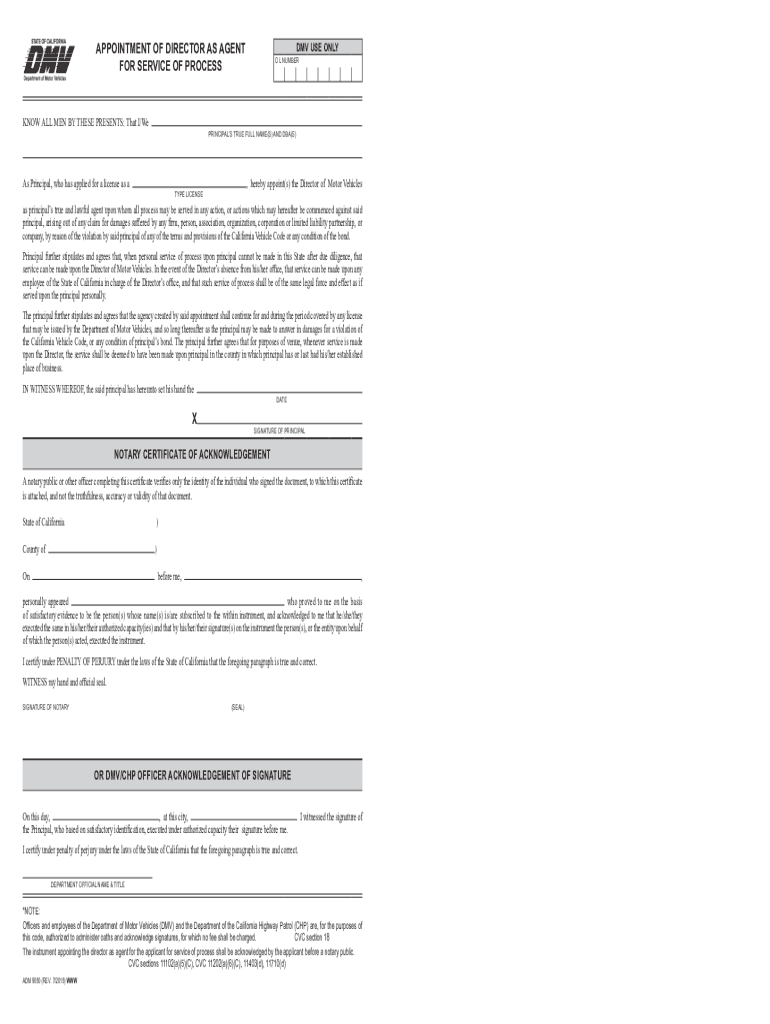







Definition and Meaning of ADM 9050
The "ADM 9050" form is a crucial legal document, often used as a means for individuals to authorize a representative or agent to receive legal process on their behalf. It is typically associated with appointing the Director of Motor Vehicles as an official agent for service of process in legal proceedings related to violations of the vehicle code. This form is particularly significant in ensuring that the designated agent can accept service in cases where personal service is not feasible, thereby facilitating legal actions when the direct recipient cannot be personally reached.
How to Use the ADM 9050
To utilize the ADM 9050 effectively, understanding the necessary steps and conditions outlined in the form is essential. The form should be completed accurately, designating the specific agent or agency that will act on your behalf. Once filled, it should be submitted according to the instructions provided, ensuring full compliance with state requirements. Users must also be aware of any specific conditions under which the service can be executed, such as the duration of the appointment or any limitations on the agent's authority.
How to Obtain the ADM 9050
Obtaining the ADM 9050 form is generally straightforward, available through the Department of Motor Vehicles (DMV) or the appropriate state agency websites. Physical copies can often be picked up at DMV offices or requested via mail. For online availability, downloading a printable version from official websites is common. Knowing the correct source ensures the form is current and valid.
Steps to Complete the ADM 9050
- Fill in Personal Details: Enter your name, address, and other identifying information as required.
- Agent Designation: Clearly specify the appointed agent, typically the Director of Motor Vehicles, along with any details of their role.
- Specify Conditions: Outline the conditions under which service is to be made, especially in scenarios where personal service is ineffective.
- Review for Accuracy: Carefully check all entries for accuracy, ensuring all necessary sections are complete.
- Submission: Submit the form to the designated agency or office as instructed.
Following these steps ensures proper completion and submission of the form, thereby facilitating efficient processing.
Why You Should Use the ADM 9050
Utilizing the ADM 9050 form offers various legal benefits, primarily ensuring that legal services or notices related to vehicle code violations are handled appropriately. It provides peace of mind by knowing that an authorized agent will manage these notifications on your behalf, reducing the risk of missing critical legal deadlines due to unserved notices.
Who Typically Uses the ADM 9050
The ADM 9050 form is predominantly used by individuals involved in legal proceedings related to vehicle code violations who require a proxy for service of process. This includes drivers, car owners, and business entities owning fleets. It is particularly useful for those who travel frequently or have changed addresses and may not be readily available for direct service.


Important Terms Related to ADM 9050
- Service of Process: The procedure of delivering legal documents to a party in a lawsuit.
- Agent for Service: An appointed representative authorized to receive legal documents on someone's behalf.
- Vehicle Code Violations: Any infractions or legal violations related to the use or operation of a motor vehicle.
Understanding these terms is crucial for correctly completing and utilizing the form.
Legal Use of the ADM 9050
The ADM 9050 form legally appoints an agent to receive service of process, thereby ensuring compliance with legal requirements and facilitating the due process. Its use mandates adherence to specific legal criteria and guidelines, safeguarding both personal and legal interests in vehicle-related legal actions.
State-Specific Rules for the ADM 9050
Different states may have various rules and stipulations regarding the use of the ADM 9050. While the form's primary function remains consistent, details such as submission methods, filing instructions, and required additional documentation can vary significantly. It's vital to consult local DMV guidelines to ensure full compliance with state-specific regulations when completing and submitting the form.


