






Definition and Meaning
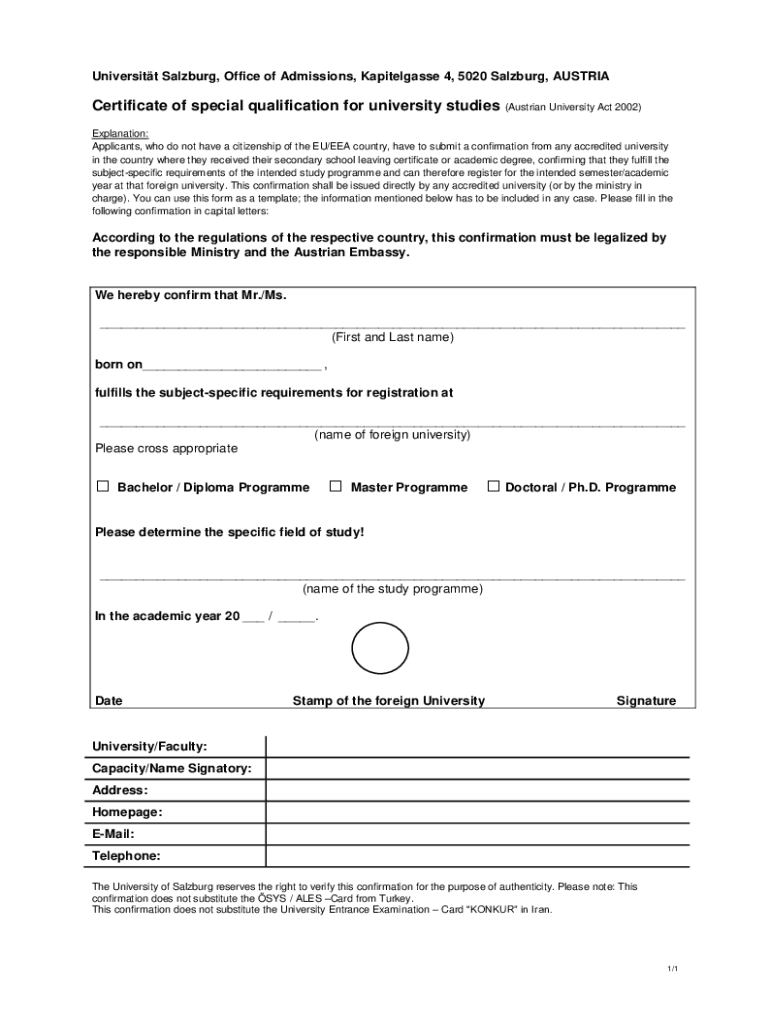
The "Certificate of Special Qualification for University Studies" is a critical document for non-EU/EEA applicants aiming to study at universities like the University of Salzburg. It serves as evidence that the applicant is eligible for a particular course in their home country. This certificate is not merely a formality; it is a legal document that helps universities ascertain whether the academic credentials of international students match the institution's requirements.
Purpose of the Certificate
- Verification of Eligibility: Confirms that an applicant is qualified for their intended program of study.
- Legal Documentation: It requires legal authentication, making it a binding document that reassures universities of the applicant's academic standing.
- International Standardization: Allows universities to standardize the qualifications of applicants from diverse educational systems.
How to Use the Certificate
The certificate acts as a bridge between different educational systems and supports applicants during the admission process. Once obtained, it must be submitted to the admissions office of the target university as part of the application package.
Submission Guidelines
- Include with Application: Attach the certificate to the university application documents.
- Keep Copies: Retain certified copies for personal records and future reference.
- Check Requirements: Each university may have specific submission guidelines. It’s essential to adhere to them for the application to be considered.
How to Obtain the Certificate
Securing this certificate involves several steps, asserting the applicant’s eligibility comprehensively.
Steps to Acquire
- University Confirmation: Obtain an official document from an accredited university in the applicant's home country, verifying eligibility for the desired program.
- Legalization Process: Get the confirmation legalized by relevant authorities, such as the Ministry of Education and the Austrian Embassy.
- Document Preparation: Ensure all parts of the document are complete, accurate, and properly formatted.
Involved Parties
- Home Country University: Issues the initial eligibility confirmation.
- Government Authorities: Legalize the confirmation to meet international standards.
Steps to Complete the Certificate
Completing the certificate involves careful preparation and legal procedures.
Process Overview
- Compile Necessary Information: Gather personal and academic details as required.
- Verification by Home University: Present academic transcripts or credentials for verification.
- Legal Formalities: Submit the documents to appropriate ministries and embassies for legalization.
- Submit to Target University: Deliver the completed and legalized certificate with your application materials.
Why Obtain the Certificate
Obtaining the "Certificate of Special Qualification for University Studies" provides crucial advantages for non-EU/EEA students. It validates their educational background and facilitates smooth admission processes at international institutions.
Benefits of the Certificate
- Credential Verification: Ensures that your qualifications match the required academic criteria.
- Enhanced Application Profile: Strengthens your case as a viable candidate for international programs.
- Legal Assurance: Provides legal evidence recognized across international academic institutions.
Who Typically Uses the Certificate
The certificate primarily benefits non-EU/EEA students planning to pursue higher education abroad. It serves as an essential document for those applying to universities like the University of Salzburg.

Target Audience
- International Students: Particularly those from countries with different educational frameworks.
- University Admissions Offices: Facilitates the assessment of international credentials.
- Legal Authorities: Utilize it as a means to ensure compliance with academic and immigration standards.
Key Elements of the Certificate
Understanding the key elements included in the certificate can be valuable for applicants during preparation.
Essential Components
- Personal Information: Name, birthdate, and nationality.
- Academic Credentials: Details of prior education and qualifications.
- Legal Authentication: Confirmation of authenticity by relevant governmental and legal bodies.
Required Documents
The process mandates several documents to establish the applicant's academic standing and authenticity.
Document Checklist
- Educational Transcripts: Official records from previous studies.
- University Confirmation Letter: A letter from an accredited institution confirming eligibility.
- Legalization Stickers and Stamps: Authenticated by your country's educational authorities and the Austrian Embassy.
Form Submission Methods
Various methods are available for submitting the completed certificate to the university.
Available Options
- Online Submission: Through university application portals.
- Mail: Certified copies sent by international post.
- In-Person: Direct submission at the university’s admissions office.
Legal Use of the Certificate
The certificate is a legal document that underpins the authenticity of the qualifications presented by the applicant. It must adhere to specific legal standards to be deemed valid by international universities.
Legal Processes Involved
- Authentication: Involves notarization and apostillation as per international education laws.
- Compliance Checks: Ensures all components of the certificate meet legal requirements.
The completion and submission of this certificate are crucial for students aspiring to advance their education internationally. Understanding and following the detailed process ensures that students are prepared and qualified for their academic pursuits abroad.