




01. Edit your form online
Type text, add images, blackout confidential details, add comments, highlights and more.

Type text, add images, blackout confidential details, add comments, highlights and more.

Draw your signature, type it, upload its image, or use your mobile device as a signature pad.

Send it via email, link, or fax. You can also download it, export it or print it out.
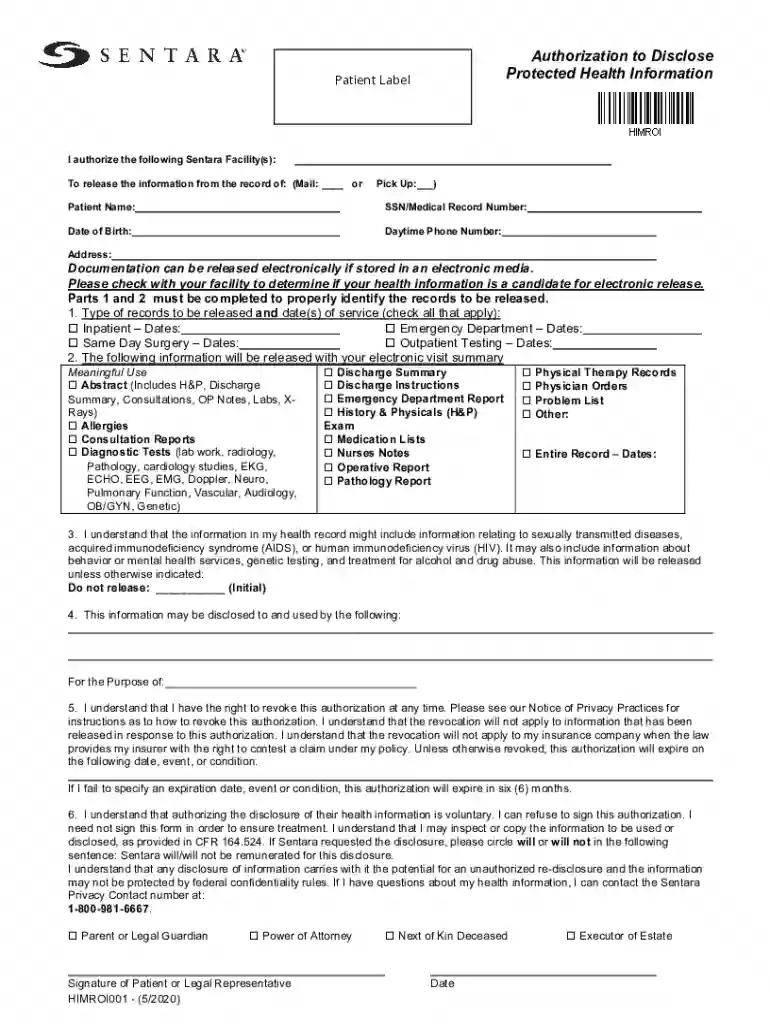
The "Authorization to Disclose Patient Label Protected Health" form is a legal document used to permit healthcare providers to share a patient's protected health information (PHI) with designated entities or individuals. This form is compliant with the Health Insurance Portability and Accountability Act (HIPAA), ensuring that PHI is disclosed in a manner consistent with federal regulations. The form safeguards patient's privacy by detailing the specific information that can be shared and for what purpose.
To ensure accurate and efficient completion, follow these steps:
The Authorization to Disclose Patient Label Protected Health is predominantly used by:


This form is pivotal in maintaining HIPAA compliance. It legally permits the sharing of PHI under specific conditions, ensuring:
Understanding specific terminology enhances comprehension and proper use:
The efficacy of the authorization form is determined by several elements:
While the form adheres to HIPAA, state laws might impose additional obligations:
Real-world scenarios underline the form’s utility:
We've got more versions of the Authorization to Disclose Patient Label Protected Health form. Select the right Authorization to Disclose Patient Label Protected Health version from the list and start editing it straight away!
At DocHub, your data security is our priority. We follow HIPAA, SOC2, GDPR, and other standards, so you can work on your documents with confidence.
Patient Name (First, Middle, Last). Date of Birth. Address. City/State/Zip Code. Telephone Number. I am requesting my protected health information (PHI) from.Read more
Complete the following by indicating those items that you want disclosed. The signature of a minor patient is required for the release of some of these items.Read more


