




01. Edit your form online
Type text, add images, blackout confidential details, add comments, highlights and more.

Type text, add images, blackout confidential details, add comments, highlights and more.

Draw your signature, type it, upload its image, or use your mobile device as a signature pad.

Send it via email, link, or fax. You can also download it, export it or print it out.
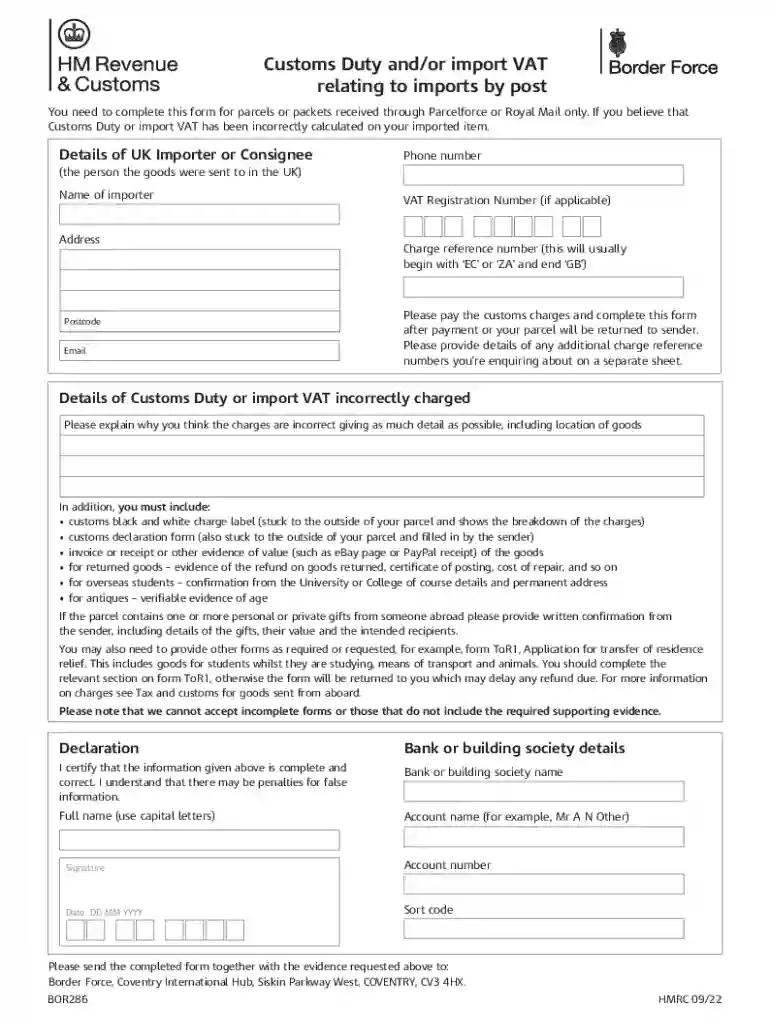
The "Report incorrect Customs Duty or VAT on items imported by post (BOR286)" is a specific form used for addressing discrepancies in customs duty or VAT amounts charged on imported goods. This form serves as a formal request to correct financial inaccuracies in taxes levied on postal imports. The intention is to ensure that duties and VATs are assessed correctly in accordance with the actual value and category of the imported items. Resolving such errors ensures that importers are not overcharged and that customs processes remain accurate and fair.
To effectively utilize the BOR286 form, one needs to identify the error in the customs charge, whether it's an overcharge or miscalculation. Begin by gathering all related documents, such as invoices, customs declarations, and charge reference numbers. Complete the form using precise details of the item and the nature of the error, including corrected figures if known. Submitting the correctly filled form alongside documented evidence will help expedite the review process by customs authorities, ensuring prompt adjustments.
The BOR286 form is typically available through customs authorities or their official websites, allowing users to download and print it for manual completion or fill it out online. Some postal services may also provide this form upon request when customs discrepancies are reported. Accessing the correct version of the form is crucial, as it ensures all necessary information can be properly filled out and that it complies with current customs regulations.
Filing the BOR286 is essential for maintaining financial integrity in international transactions. Correcting discrepancies helps avoid overpayment and ensures compliance with import rules. Additionally, using the form helps importers maintain precise financial records, crucial for audits. The form acts as an official communication tool with customs, facilitating corrections and providing a record of claims for future reference.
The BOR286 form is predominantly used by importers who believe they've been incorrectly charged customs duty or VAT on parcels received through postal services. It is relevant to individuals and businesses engaged in importing goods for personal or commercial purposes. Frequent users include small business owners, online retailers, and individuals with direct-to-consumer imports, all of whom need to ensure cost accuracy in their supply chain.


The BOR286 must be used in accordance with customs law, ensuring that any discrepancies reported are legitimate, well-documented, and pertain strictly to miscalculations in customs charges. The form serves as a legal appeal to rectify errors but must not be used to evade lawful tax responsibilities. Penalties may apply if the form is misused or submitted with fraudulent intent. Importers should ensure accuracy and honesty when filing to maintain compliance with customs regulations.
We've got more versions of the Report incorrect Customs Duty or VAT on items imported by post (BOR286 form. Select the right Report incorrect Customs Duty or VAT on items imported by post (BOR286 version from the list and start editing it straight away!
At DocHub, your data security is our priority. We follow HIPAA, SOC2, GDPR, and other standards, so you can work on your documents with confidence.


